

copper peptides
Copper Peptides and Skin Elasticity: What GHK-Cu Can Do After 30

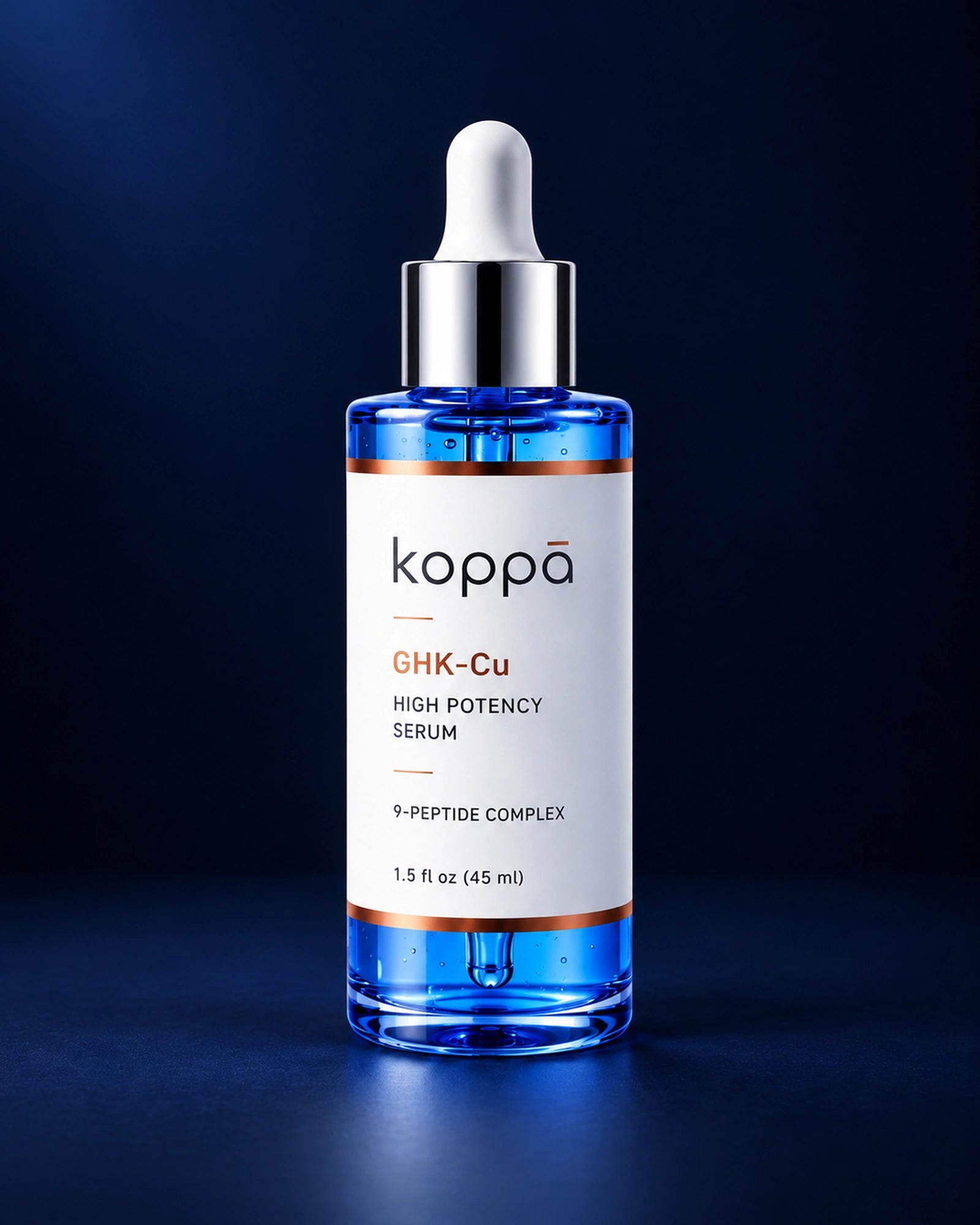
Copper peptides support skin elasticity, with lab research and human studies behind them. In cell studies, GHK-Cu gets skin cells making more elastin and collagen, the two proteins behind bounce. In human studies, creams with it left skin looking less lax and measuring denser. For a daily step on face and neck, koppā's GHK-Cu 2% High Potency Serum pairs 2% GHK-Cu with six additional peptides in a water-light, fragrance-free base that absorbs fast, for smoother, firmer-looking skin.
This guide covers what skin elasticity actually is, how it changes from your 30s, what the research on copper peptides shows, how other "firming" ingredients compare, and a sensible routine. For the broader benefits, see copper peptides for skin.
What is skin elasticity?
Elasticity is skin's ability to stretch and snap back. Pinch the back of your hand and let go: the speed it flattens out is elasticity at work. It comes from three things in the dermis, the thick layer under the surface, working together.
- Collagen gives strength. It's the rope that stops skin stretching too far.
- Elastin gives recoil. It's the spring that pulls skin back into place.
- Glycosaminoglycans, water-holding molecules such as hyaluronic acid, fill the space between them and keep the dermis cushioned.
When researchers measure elasticity, they usually use a small suction probe. It pulls the skin up gently, lets go, and records how far it stretched and how completely and quickly it returned. That's worth knowing, because "firmer-looking" in a product claim and "more elastic" on a probe are not the same measurement.
How does skin elasticity change after 30?
Elasticity doesn't fall off a cliff. It drifts. In a 2008 study in Skin Research and Technology, Ryu and colleagues measured 96 women aged 20 to 75 on the face, upper arm and back. Elasticity measures fell steadily with age, and the face changed more than the arm or back.
Why the face? It gets the most sun. A 2019 review in the International Journal of Molecular Sciences[1] describes sun-driven ageing as the kind that brings laxity and deeper wrinkles, while ageing from time alone brings finer lines and thinner skin. UV breaks down both collagen and elastin, and the fibres that are left become disorganised.
By your 30s, most people notice it in small ways: a pillow crease that lasts past breakfast, skin under the eyes that takes longer to smooth out. For the collagen side of the story in depth, read skin ageing and collagen. If you are already past 35, skin after 35 covers what shifts next.
Do copper peptides improve skin elasticity? What the evidence shows
In the lab
A 2016 study by Badenhorst and colleagues[2] treated adult human skin cells with GHK-Cu (copper tripeptide-1) and found it increased both elastin and collagen production at every concentration tested.
A 2015 review in BioMed Research International[3] adds the cushioning side: GHK-Cu raised glycosaminoglycans such as dermatan sulfate and chondroitin sulfate, and decorin, which helps collagen fibres line up. There's a copper angle too. The enzyme that cross-links elastin and collagen into stable fibres, lysyl oxidase, depends on copper, and GHK carries copper in a form the body can use.
On people
The best-known study, a 12-week trial in 71 women with sun-aged skin, found a GHK-Cu facial cream reduced laxity and left skin denser and thicker, according to a 2018 review by Pickart and Margolina[4]. The 2015 review also lists better elasticity and firmness among results from cosmetic products containing GHK-Cu.
How do other firming ingredients compare?
"Firming" on a label can mean very different things. Here's where each common option works.
| Ingredient | What it does for bounce | How long it lasts |
|---|---|---|
| Hyaluronic acid | Holds water in the surface layers, so skin looks plumper | Hours. Great for comfort, not a structural change |
| Retinoids | Boost collagen and reduce fine lines, per the American Academy of Dermatology[5] | Builds over months; can irritate, so start slowly |
| GHK-Cu | Supports elastin, collagen and water-holding molecules | Builds over months; generally well tolerated |
| Other signal peptides | Varies widely by peptide and dose | Depends on the evidence for each one |
They work well together: hyaluronic acid for comfort today, retinoids and GHK-Cu for the long game, and sunscreen to protect what you have.
A simple routine for skin elasticity
- Sunscreen every morning. UV breaks down elastin and collagen faster than anything else you can control. Broad-spectrum, SPF 30 or higher, and take it down to your neck.
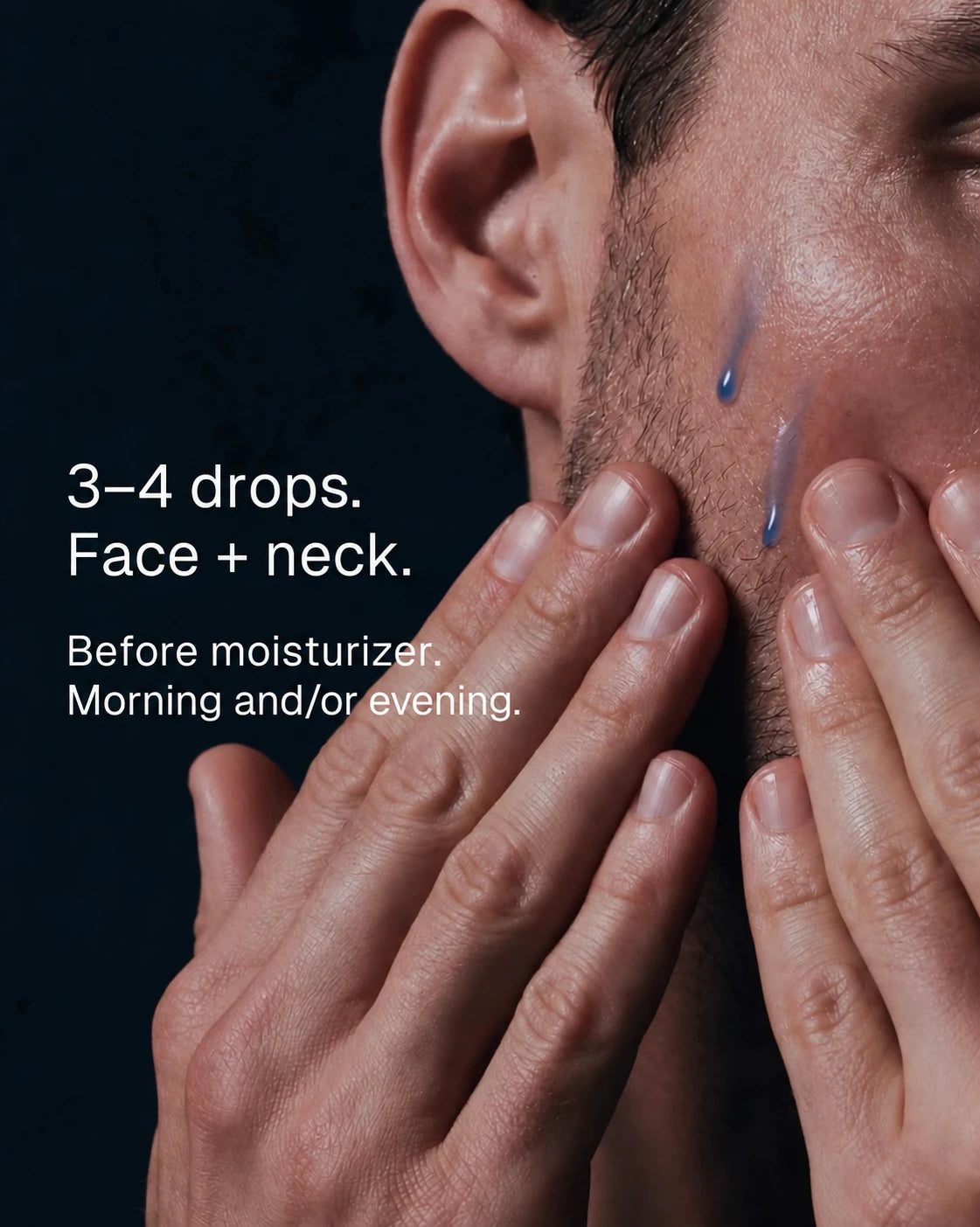
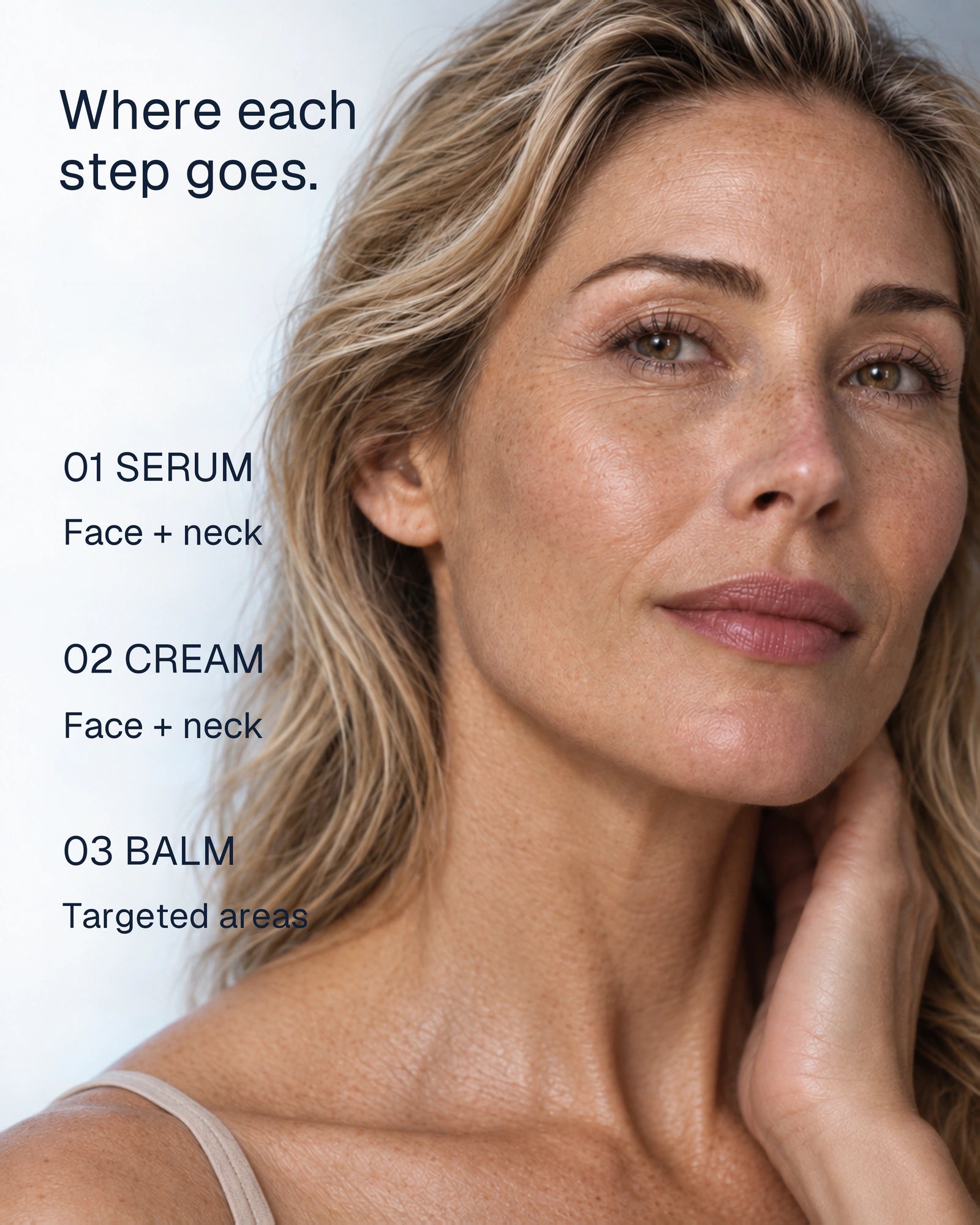
- A GHK-Cu serum on face and neck. The GHK-Cu 2% High Potency Serum holds 2% GHK-Cu with six additional peptides. Three to four drops on clean skin, morning and night. It is water-light and absorbs quickly with a non-greasy finish.
- A moisturiser on top. The GHK-Cu Advanced Capsule Cream adds 0.5% encapsulated GHK-Cu with 5% niacinamide, 4% squalane and 3% jojoba, and supports hydration and smoother, firmer-looking skin without a heavy finish. Any good moisturiser does the basic job.
- Extra attention where skin moves most. Around the eyes, along the jaw, the neck. The GHK-Cu Face + Body Balm Stick carries 0.5% GHK-Cu in a matte, water-free balm for exactly these spots.
The full step-by-step is in our guide to using GHK-Cu morning and night.
What to expect
Elastin and collagen change slowly, and the human studies measured results at around 12 weeks, so steady daily use matters more than any single week.
What you can do is make it measurable. Before you start, take a photo in the same light and try the pinch test on the back of your hand, noting how quickly it flattens. Repeat both when you finish the bottle. It's crude, but it's yours, and it beats guessing.
Where koppā fits in your routine
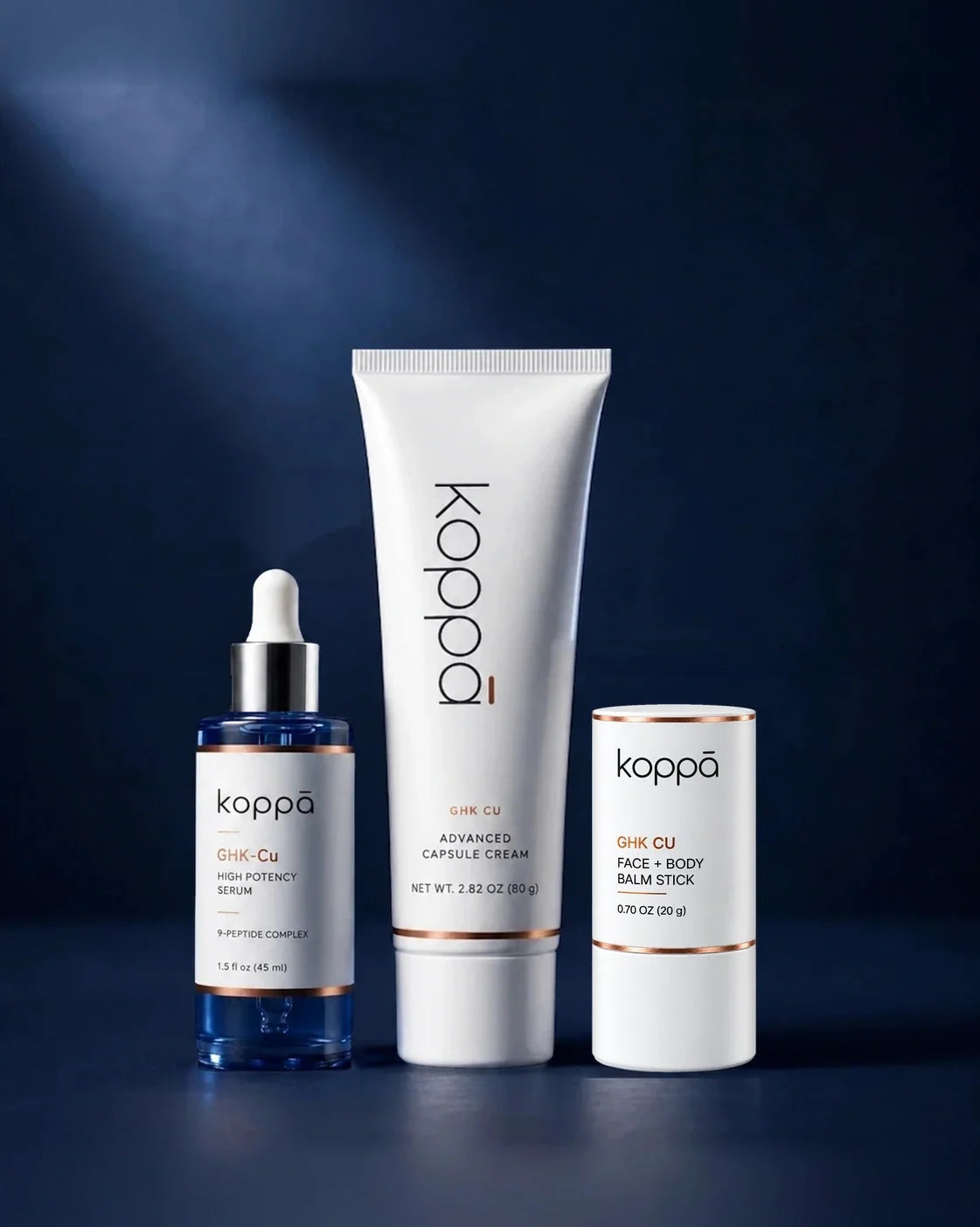
The serum is the core step: 2% GHK-Cu, with the concentration on the label, plus six additional peptides, Hydrolyzed Collagen and Collagen in a fragrance-free, silicone-free base. The 45 ml bottle is 50% more than a 30 ml serum. If you want the whole routine above, The GHK-Cu Protocol puts the full-size serum, capsule cream and balm stick together for $175, against $190 bought separately: serum on clean skin, then the cream, then the balm on targeted areas, with SPF 30+ in the morning. Check the product page for current availability and delivery information.
koppā states the GHK-Cu percentage on every label, so you know exactly what you are putting on. Start with the serum on clean skin, morning and night, add the cream on top, and finish mornings with sunscreen.
Frequently asked questions
Do copper peptides improve skin elasticity?
In the lab, GHK-Cu increases elastin and collagen production, and in human studies, creams with it reduced laxity and left skin denser. Used every day with sunscreen, it is a well-tolerated way to support firmer-looking skin.
What is the fastest way to improve skin elasticity?
Nothing topical is fast. Hyaluronic acid makes skin look plumper within minutes, but that's water, not structure, and it fades. Structural change from retinoids or copper peptides takes months. The single most useful habit is daily sunscreen, which slows further loss.
Can you get lost skin elasticity back?
Some of it. Skin keeps making collagen and some elastin through life, and actives can support that.
Why does the face lose elasticity faster than the body?
Mostly sun. The 2008 study of 96 women found the face changed more than the upper arm or back, and a 2019 review links sun-driven ageing with laxity and deeper wrinkles. That is why sunscreen comes first in any routine for bounce.
How do I use the koppā serum for elasticity?
Three to four drops on clean skin, face and neck, morning and night, before your moisturiser, and sunscreen on top in the morning. The GHK-Cu 2% High Potency Serum is 45 ml and $75.
The short version
Skin elasticity depends on collagen, elastin and water-holding molecules, and all three decline with age and sun, the face most of all. In the lab, copper peptides support all three. On people, studies found less laxity and denser skin. For how GHK-Cu affects collagen specifically, read copper peptides and collagen. Then wear sunscreen first, add 3 to 4 drops of a GHK-Cu serum to face and neck morning and night, and judge it over a bottle.
Sources and further reading
- A 2019 review in the International Journal of Molecular Sciences mdpi.com
- T Badenhorst et al. (2016). Effects of GHK-Cu on MMP and TIMP Expression, Collagen and Elastin Production, and Facial Wrinkle Parameters. Journal of Aging Science. walshmedicalmedia.com
- Loren Pickart et al. (2015). GHK Peptide as a Natural Modulator of Multiple Cellular Pathways in Skin Regeneration. BioMed Research International. DOI: 10.1155/2015/648108 pubmed.ncbi.nlm.nih.gov
- Loren Pickart et al. (2018). Regenerative and Protective Actions of the GHK-Cu Peptide in the Light of the New Gene Data. International Journal of Molecular Sciences. DOI: 10.3390/ijms19071987 mdpi.com
- American Academy of Dermatology aad.org


