Injected vs topical

Copper peptide injections: what's actually known, and the topical alternative

No published human study shows injected GHK-Cu is safe or effective, and the topical route is the one with decades of research.

Prefer the full routine? The Protocol, $175
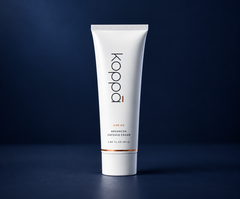
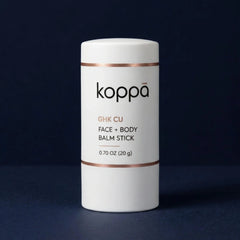
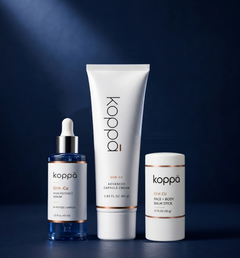
A hand lifting the Koppā GHK-Cu serum from beside the capsule cream and balm stick
  • 2% GHK-Cu serum
  • Fragrance-free, silicone-free
  • Cruelty free
  • Full ingredient list on every product
  • Free shipping over $100
0
Human studies, injected

Per NPR's reporting, September 2026

Decades
Topical research

Serums and creams, studied on skin

Category 1
FDA compounding list

Non-injectable routes only

2%
In koppā's serum

Stated on the bottle and the product page

What it is

What people are injecting, and what NPR found

Copper peptide injections are GHK-Cu bought as a vial, usually online, and injected under the skin. The clearest recent account of the trend is a piece from NPR's health desk1. Its findings, in its words and ours.

GHK-Cu has moved from creams to injections, with people sourcing vials online and injecting under the skin. NPR found no data from published human studies showing the practice is safe or effective, and reported that compounding pharmacies in the US aren't permitted to offer it for injection in humans1. The risks it named include loading the body with too much copper and triggering an immune reaction, along with the plain fact that most vials come from unregulated suppliers with no assurance about quality or dose1.

The regulatory position is specific. The FDA's interim list of bulk drug substances for compounding places GHK-Cu in Category 1, the category compounders may use, but only for non-injectable routes of administration2. That is not a ban on the peptide. It is a line drawn at the needle.

What the science says
What the science saysGHK-Cu / Copper Tripeptide-1

Do copper peptide injections work?

Nobody can say, because nobody has tested it in people. That is the whole answer, and it is worth sitting with.

The research record on GHK-Cu is long, but it points one way. The peptide's activity was first characterised in the laboratory, where its copper complex stimulated collagen synthesis in cultured fibroblasts6. Two later reviews gather the cell, animal and human work since, and the human work is on creams and serums applied to skin34. Skin-penetration studies on human skin samples show the peptide reaching and staying in the skin layers5. None of that is a study of GHK-Cu injected into people, and NPR's health desk found no published human study showing the practice is safe or effective1.

So the honest statement is not that injections don't work. It is that nobody has checked, and the FDA draws its compounding line at the needle for that reason2. A claim that injecting GHK-Cu is proven is a claim about topical research, applied to a route that research never tested.

What's known

Topical GHK-Cu has decades of use and published human research on how skin looks and feels34.

What isn't

Whether injecting it does anything useful, at what dose, or what it does to the body's copper balance. There is no published human study1.

What the regulator says

The FDA's interim compounding list allows GHK-Cu for non-injectable routes only2. Not a ban on the peptide; a line at the needle.

Close-up of a man's jaw and neck
The studied routeTopical 2% GHK-Cu · On the skin, not under it
Side by side

Topical GHK-Cu vs injected GHK-Cu

The same molecule, two very different situations.

Compare On the skin Injected
How it's used

Applied as a serum, cream or balm.

Injected under the skin, usually from a vial.

Human research

Copper peptide serums and creams have been sold for decades and studied in human trials, summarised in two peer-reviewed reviews34.

No published human studies show injecting it is safe or effective1.

Regulatory status

Sold as a cosmetic, for how skin looks and feels.

Not an approved drug. US compounding pharmacies may not prepare it for injection2.

What's in it

koppā publishes every formula's full ingredient list and GHK-Cu concentration: 2% in the serum, 0.5% in the capsule cream and the balm stick.

Often bought from unregulated suppliers, with no assurance about quality or dose1.

Where it acts

Laboratory work on human skin shows the copper tripeptide penetrates and is retained in the skin layers5, where its collagen-related activity was first described in fibroblast cultures6.

Systemic exposure, with the whole body's copper balance in play1.

Who to ask

If your skin reacts, stop and see a dermatologist.

Anything injected is a question for a doctor, not a skincare brand.

How it's used

On the skin

Applied as a serum, cream or balm.

Injected

Injected under the skin, usually from a vial.

Human research

On the skin

Copper peptide serums and creams have been sold for decades and studied in human trials, summarised in two peer-reviewed reviews34.

Injected

No published human studies show injecting it is safe or effective1.

Regulatory status

On the skin

Sold as a cosmetic, for how skin looks and feels.

Injected

Not an approved drug. US compounding pharmacies may not prepare it for injection2.

What's in it

On the skin

koppā publishes every formula's full ingredient list and GHK-Cu concentration: 2% in the serum, 0.5% in the capsule cream and the balm stick.

Injected

Often bought from unregulated suppliers, with no assurance about quality or dose1.

Where it acts

On the skin

Laboratory work on human skin shows the copper tripeptide penetrates and is retained in the skin layers5, where its collagen-related activity was first described in fibroblast cultures6.

Injected

Systemic exposure, with the whole body's copper balance in play1.

Who to ask

On the skin

If your skin reacts, stop and see a dermatologist.

Injected

Anything injected is a question for a doctor, not a skincare brand.

The injected column reflects NPR's reporting of 7 September 2026 and the FDA's published interim list12. koppā is a skincare brand, only makes GHK-Cu for skin, and nothing on this page is medical advice.

Why we keep it topical

Real people, real skin, nothing you can't check.

Compare all four

We're real people too. We feel the pressure to look good and to perform, and we understand why a vial from the internet is tempting when it promises more, faster. But our health is everything, and we want to be sure we're safe.

That's why koppā only makes topical GHK-Cu: on the skin, where the human research was done, in formulas with the concentration and the full ingredient list on the label. Nothing you can't check, and nothing you can't stop.

Start with the 2% serum, the capsule cream or the balm stick, or take all three as the Protocol. The research behind them is on the Science page, and the questions people ask next are answered here: are copper peptides safe, what 2% GHK-Cu means and copper peptides before and after.

Skin only
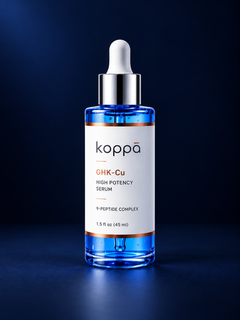
Koppā GHK-Cu High Potency Serum, a 45 ml 2% copper peptide serum in a blue glass dropper bottle

Skin only

Why koppā makes GHK-Cu for skin only.

The human research on GHK-Cu for skin is research on applying it to skin. We would rather stand on that than ahead of it. Topical studies look at how skin looks and feels over weeks, which is exactly what our products are for, and if a serum doesn't suit you, you stop using it.

01

It's where the evidence is

Decades of topical use and published human research.

02

You can see what's in it

A published ingredient list and a stated concentration on every product.

03

It's reversible

Nothing on the skin commits you the way something under it does.

Topical 2% GHK-Cu, with everything on the label.

GHK-Cu 2% High Potency Serum
If you're starting

The studied route, in a bottle.

koppā's serum puts 2% GHK-Cu on the skin, where the human research on this peptide was done, with the full ingredient list and concentration printed on the product page. No needle, no vial from an unknown supplier, and nothing you can't check.

  • Fragrance-free, silicone-free
  • Cruelty free
  • Full ingredient list and GHK-Cu concentration on every product page
  • Free shipping over $100
$75
GHK-Cu 2% High Potency Serum
Shop now, $75
Or take all three as the Protocol, $175

Free shipping over $100. See all four products

The Koppā community

Koppā, in everyday life.

Sarah M- I tried to to use an acid treatment to get rid of an old eyebrow tattoo and ended up with a chemical burn (oops).  Once it had started to heal I began using the stick on it a few times a day.  2 days later it was so much better.
Sarah M- I tried to to use an acid treatment to get rid of an old eyebrow tattoo and ended up with a chemical burn (oops). Once it had started to heal I began using the stick on it a few times a day. 2 days later it was so much better.
Amanda G- this is a LOT of product.  I'd never heard of GHK in a stick but I'm so glad I found this one. It's great after shaving my legs.  Soothing, and not messy which I love.
Amanda G- this is a LOT of product. I'd never heard of GHK in a stick but I'm so glad I found this one. It's great after shaving my legs. Soothing, and not messy which I love.
Jay W- I'm a pilot. The air on the plane is so dry, after a long flight I look 100 years old. This GHK cream changed everything. I never leave for work without this cream in my flight bag anymore. Plus its a big tube, but can still take it through security.
Farrah J- the cream actually has the capsules in it.  I find the cream super moisturizing, not sticky.
Farrah J- the cream actually has the capsules in it. I find the cream super moisturizing, not sticky.
Customer feedback

From koppā customers.

Customer feedback on koppā products.

9 customer reviews
Shop the serum
GHK-Cu 2% High Potency Serum
koppā, in useGHK-Cu 2% High Potency Serum
01 / 09
“Been using it about 6 weeks now. Didn't notice much the first couple weeks, but my skin looks noticeably smoother around my cheeks and my makeup sits better. Will repurchase.”

Sarah M.koppā customer

FAQ

Questions about injecting copper peptides

Is GHK-Cu FDA approved?

No. GHK-Cu is not an approved drug for any use. It is sold in cosmetics for how skin looks and feels, and the FDA's interim compounding list allows compounders to use it only for non-injectable routes2.

Are copper peptide injections safe?

There are no published human studies showing that injecting GHK-Cu is safe or effective, per NPR's 2026 reporting1. The named risks include excess copper in the body and immune reactions. That is a question for a doctor, and not one a skincare brand can answer.

Does topical GHK-Cu do the same thing as injecting it?

Nobody knows what injecting it does in people, because it hasn't been studied that way. Topical GHK-Cu has decades of use and published human research on how skin looks and feels34. They are not two doses of the same thing; they are one studied route and one unstudied one.

Does topical GHK-Cu actually get into the skin?

Laboratory work on human skin samples found the copper tripeptide penetrates and is retained in the skin layers5. That is skin, not bloodstream, which is where a cosmetic is meant to act.

What concentration does koppā use?

2% GHK-Cu in the serum, 0.5% in the capsule cream and the balm stick. Every formula's full ingredient list is on its product page.

The formulas

Four formulas. Find your next step.

Four topical formulas, each with the GHK-Cu concentration and the full ingredient list on its product page.

Prices and stock update live.

Sources

References

Research on GHK-Cu the ingredient, not on koppā's finished formulas. Where a study was run in cells or on skin samples rather than on people, we say so in the text.

  1. 1.NPR. People are injecting copper peptides ahead of the science. 7 September 2026. Read the paper
  2. 2.U.S. Food and Drug Administration. Bulk Drug Substances Used in Compounding Under Section 503A of the FD&C Act, interim list (GHK-Cu listed in Category 1 for non-injectable routes only, September 2023 update). Read the paper
  3. 3.Pickart L, Margolina A. Regenerative and Protective Actions of the GHK-Cu Peptide in the Light of the New Gene Data. International Journal of Molecular Sciences. 2018;19(7):1987. Read the paper
  4. 4.Pickart L, Vasquez-Soltero JM, Margolina A. GHK Peptide as a Natural Modulator of Multiple Cellular Pathways in Skin Regeneration. BioMed Research International. 2015;2015:648108. Read the paper
  5. 5.Hostynek JJ, Dreher F, Maibach HI. Human skin penetration of a copper tripeptide in vitro as a function of skin layer. Inflammation Research. 2011;60(1):79-86. Read the paper
  6. 6.Maquart FX, Pickart L, Laurent M, Gillery P, Monboisse JC, Borel JP. Stimulation of collagen synthesis in fibroblast cultures by the tripeptide-copper complex glycyl-L-histidyl-L-lysine-Cu2+. FEBS Letters. 1988;238(2):343-346.

Still not sure?

Ask us about an ingredient, a concentration or how to fit GHK-Cu into your routine. We're real people on the other end, and we'd rather you asked than guessed. If you're managing a diagnosed skin condition, a dermatologist is the right person to ask first.

Page updated 29 September 2026