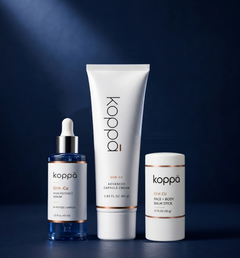
Beyond the face

Copper peptides for the body: neck, hands, chest and crepey skin

Neck, chest and hands age the way the face does, and the balm stick exists because a serum runs off a neck.

Prefer the full routine? The Protocol, $175
The GHK-Cu balm stick gliding over the skin of a thigh
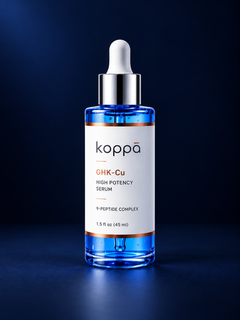
  • 2% GHK-Cu serum
  • Fragrance-free, silicone-free
  • Cruelty free
  • Full ingredient list on every product
  • Free shipping over $100
0.5%
In the balm stick

In a water-free base that stays put

9
Peptides

GHK-Cu with eight others

20 g
Twist-up stick

Lives in a pocket or a bag

4 to 12 weeks
Same as the face

Judge at 12 weeks, in the same light

Below the jaw

Why body skin needs the same attention

Same skin, different handling.

The neck, chest and hands get the same sun as the face, less of the sunscreen, and almost none of the serum. They also have thinner skin with fewer oil glands, which is why crepey texture and fine lines show there early.

What changes below the jaw is practical. A watery serum runs off a neck, and anything on the hands is gone at the next sink. A topical can only work where it stays, so format matters as much as concentration once you leave the face.

What the science says
What the science saysGHK-Cu / Copper Tripeptide-1

Do copper peptides work below the jaw?

The studies are on skin. None of them stops at the jawline, and none of them was run on a neck either.

The laboratory work is on skin cells and skin samples: dermal fibroblasts producing collagen and elastin in response to GHK-Cu3, and the copper tripeptide penetrating and staying in the layers of human skin samples2. GHK is a naturally occurring peptide whose levels in the body decline with age1, and the human studies the reviews gather are facial studies of topical products over weeks1. Neck, chest and hand skin is built from the same layers and the same cells, with less thickness and fewer oil glands, so there is no biological reason to expect the peptide to behave differently there.

What there isn't is a published trial of GHK-Cu on the neck, chest or hands specifically. So the fair statement is: the mechanism is the same, the timeline is the same 4 to 12 weeks, and the evidence is borrowed from the face.

What's established

Collagen and elastin in skin cells3, penetration into skin layers on skin samples2, facial studies over weeks1.

What isn't

A body-specific trial. The evidence is face studies plus the biology of skin, which is the same skin.

What matters more here

Format and sunscreen. A topical only works where it stays, and chest and hands get more sun than any active can offset.

A man's neck and jaw, skin bare
Same skin, different handling0.5% GHK-Cu balm stick · Face, neck, hands, body
Area by area

Where to use copper peptides on the body, and how

Area by area.

Neck and jaw

Balm stick, upwards from collarbone to jaw, morning and night. If you use the serum on your face, carry the last drops down the neck and seal with the balm.

Chest

Balm stick after showering, on dry skin. Sunscreen over it in the morning; chest skin is usually the most sun-damaged skin people never protect.

Hands

Balm stick after each wash where you can, at least at night. The backs of the hands are the one area where a water-free balm clearly beats a serum: it stays through the day.

Arms and crepey skin

Balm stick on the upper arms and elbows after showering. Crepey texture is a 12-week question here too, with sunscreen doing at least as much as any active.

Knees, elbows, dry patches

Wherever skin is rough and dry, the balm's water-free base does the moisturising while the peptide does its work.

Not for broken skin. Cosmetics are for intact skin; wait until anything open has closed.

Why we keep it topical

Real people, real skin, nothing you can't check.

Compare all four

We're real people too. We feel the pressure to look good everywhere the face doesn't end, and we know a serum that runs off a neck is not the answer. But our health is everything, and we want to be sure we're safe wherever we apply it.

That's why koppā only makes topical GHK-Cu: on the skin, where the human research was done, in formulas with the concentration and the full ingredient list on the label. Nothing you can't check, and nothing you can't stop.

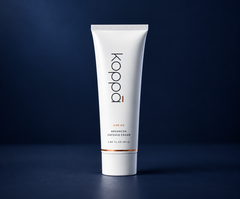
Start with the 2% serum, the capsule cream or the balm stick, or take all three as the Protocol. The research behind them is on the Science page, and the questions people ask next are answered here: copper peptides before and after, are copper peptides safe and what 2% GHK-Cu means.

Which format

Serum, cream or balm for the body?

Which koppā format goes where.

Compare Serum (2% GHK-Cu) Balm stick (0.5% GHK-Cu, water-free)
Neck

Works, if you'll seal it with a cream on top.

Stays put on its own. The simpler choice.

Chest

Fine on dry skin before moisturiser.

Better after showering; doubles as the moisturiser.

Hands

Washed off within the hour.

Lasts through the day.

Arms and elbows

Uses a lot of serum for the area.

Twenty grams goes a long way in a stick.

Concentration

The higher number.

The lower number, in a base that keeps it on the skin longer.

Neck

Serum (2% GHK-Cu)

Works, if you'll seal it with a cream on top.

Balm stick (0.5% GHK-Cu, water-free)

Stays put on its own. The simpler choice.

Chest

Serum (2% GHK-Cu)

Fine on dry skin before moisturiser.

Balm stick (0.5% GHK-Cu, water-free)

Better after showering; doubles as the moisturiser.

Hands

Serum (2% GHK-Cu)

Washed off within the hour.

Balm stick (0.5% GHK-Cu, water-free)

Lasts through the day.

Arms and elbows

Serum (2% GHK-Cu)

Uses a lot of serum for the area.

Balm stick (0.5% GHK-Cu, water-free)

Twenty grams goes a long way in a stick.

Concentration

Serum (2% GHK-Cu)

The higher number.

Balm stick (0.5% GHK-Cu, water-free)

The lower number, in a base that keeps it on the skin longer.

The routine

How to build a body routine

It fits around a shower.

  1. 01

    Patch test

    Patch test on the inside of the arm for seven to ten days, the same as you would on the face4.

  2. 02

    After the shower

    After showering, on dry skin, glide the balm stick over neck, chest and the backs of the hands. Two or three passes per area.

  3. 03

    Sunscreen over the top

    In the morning, sunscreen over the top on anything the sun reaches. This is the step that does the most for crepey skin.

  4. 04

    Hands, last thing

    At night, reapply to hands after the last wash. Keep the stick by the bed or the sink.

  5. 05

    Judge at 12 weeks

    Judge at 12 weeks, in the same light, not at 12 days: weeks is the span the published facial studies ran over1.

For neck, hands and chest
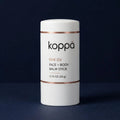
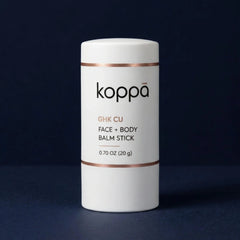
Koppā GHK-Cu Face + Body Balm Stick, a 20 g copper peptide balm in a twist-up stick, on a dark navy background

For neck, hands and chest

The one built for below the jaw.

koppā's balm stick is 0.5% GHK-Cu with eight other peptides in a water-free balm that stays where you put it: neck, jaw, chest, the backs of the hands, and the dry patches a serum never reaches. Twenty grams, fragrance-free, and it lives in a pocket or a bag.

01

Stays where you put it

A water-free balm for neck, chest and hands.

02

Nine peptides

GHK-Cu with eight others, listed in full.

03

Twenty grams

Enough for arms and elbows too, and it travels.

0.5% GHK-Cu, water-free, stays put.

GHK-Cu Face + Body Balm Stick: Copper Peptide Balm
For neck, hands and chest

The one built for below the jaw.

koppā's balm stick is 0.5% GHK-Cu with eight other peptides in a water-free balm that stays where you put it: neck, jaw, chest, the backs of the hands, and the dry patches a serum never reaches. Twenty grams, fragrance-free, and it lives in a pocket or a bag.

  • Fragrance-free, silicone-free
  • Cruelty free
  • Full ingredient list and GHK-Cu concentration on every product page
  • Free shipping over $100
$45
GHK-Cu Face + Body Balm Stick
Shop now, $45
Or take all three as the Protocol, $175

Free shipping over $100. See all four products

The Koppā community

Koppā, in everyday life.

Sarah M- I tried to to use an acid treatment to get rid of an old eyebrow tattoo and ended up with a chemical burn (oops).  Once it had started to heal I began using the stick on it a few times a day.  2 days later it was so much better.
Sarah M- I tried to to use an acid treatment to get rid of an old eyebrow tattoo and ended up with a chemical burn (oops). Once it had started to heal I began using the stick on it a few times a day. 2 days later it was so much better.
Amanda G- this is a LOT of product.  I'd never heard of GHK in a stick but I'm so glad I found this one. It's great after shaving my legs.  Soothing, and not messy which I love.
Amanda G- this is a LOT of product. I'd never heard of GHK in a stick but I'm so glad I found this one. It's great after shaving my legs. Soothing, and not messy which I love.
Jay W- I'm a pilot. The air on the plane is so dry, after a long flight I look 100 years old. This GHK cream changed everything. I never leave for work without this cream in my flight bag anymore. Plus its a big tube, but can still take it through security.
Farrah J- the cream actually has the capsules in it.  I find the cream super moisturizing, not sticky.
Farrah J- the cream actually has the capsules in it. I find the cream super moisturizing, not sticky.
Customer feedback

From koppā customers.

Customer feedback on koppā products.

9 customer reviews
Shop the balm stick
GHK-Cu Face + Body Balm Stick: Copper Peptide Balm
koppā, in useGHK-Cu Face + Body Balm Stick
01 / 09
“Been using it about 6 weeks now. Didn't notice much the first couple weeks, but my skin looks noticeably smoother around my cheeks and my makeup sits better. Will repurchase.”

Sarah M.koppā customer

FAQ

Questions about copper peptides on the body

Can you use copper peptides on your body?

Yes. GHK-Cu acts on skin wherever it's applied, and the research is on skin, not specifically the face12. The question is format: a balm stays on neck, chest and hands where a serum won't.

Do copper peptides help crepey skin on the arms?

The studies describe improvements in the appearance of firmness and smoothness over 4 to 12 weeks of consistent use1. Crepey arm skin is mostly sun and age, so sunscreen alongside the balm does at least as much as the peptide.

Can I use the face serum on my neck?

Yes, and many people carry the last drops down. It runs, so seal it with the capsule cream or the balm. For hands, use the balm; a serum is washed off within the hour.

Why is the balm stick 0.5% and not 2%?

It's a water-free balm that stays on the skin for hours, so it delivers over a longer window than a serum that absorbs in minutes. The lower number in a base that stays put is the right tool for body skin.

Is the balm stick safe for hands that touch food or a baby?

It's a cosmetic for intact skin, fragrance-free, and it absorbs; wash hands before handling food as you normally would. For anything involving a baby's skin, ask your doctor or midwife first.

The formulas

Four formulas. Find your next step.

The balm stick is built for the body; the serum and cream carry the same peptide for the face. Together they are the Protocol.

Prices and stock update live.

Sources

References

Research on GHK-Cu the ingredient, not on koppā's finished formulas. Where a study was run in cells or on skin samples rather than on people, we say so in the text.

  1. 1.Pickart L, Vasquez-Soltero JM, Margolina A. GHK Peptide as a Natural Modulator of Multiple Cellular Pathways in Skin Regeneration. BioMed Research International. 2015;2015:648108. Read the paper
  2. 2.Hostynek JJ, Dreher F, Maibach HI. Human skin penetration of a copper tripeptide in vitro as a function of skin layer. Inflammation Research. 2011;60(1):79-86. Read the paper
  3. 3.Badenhorst T, Svirskis D, Merrilees M, Bolke L, Wu Z. Effects of GHK-Cu on MMP and TIMP Expression, Collagen and Elastin Production, and Facial Wrinkle Parameters. Journal of Aging Science. 2016;4:166. Read the paper
  4. 4.American Academy of Dermatology Association. How to test skin care products. aad.org. Read the paper

Still not sure?

Ask us about an ingredient, a concentration or how to fit GHK-Cu into your routine. We're real people on the other end, and we'd rather you asked than guessed. If you're managing a diagnosed skin condition, a dermatologist is the right person to ask first.

Page updated 29 September 2026