


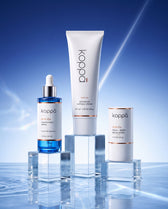
Best Copper Peptide Serums of 2026: Ingredients, Formulas and Evidence Compared
Ten copper peptide serums ranked on what their labels state: GHK-Cu percentage, the full ingredient list, the formula around the peptide and price per ml. We make koppā, our pick for most people, and we name the category each of the other nine wins.
Choosing a serum? Our main guide is The best copper peptide serums of 2027, compared.

Copper peptides have been studied for skin repair since the 1970s, when GHK was first isolated from human plasma9 and later shown to stimulate collagen synthesis in skin cells1, but they have only recently become one of the most talked-about serum ingredients. Typically sold as serums for the face and neck, they're marketed for firmness, fine lines, hydration and skin repair. But does the research support the marketing, and how many serums actually tell you how much GHK-Cu they contain?
In our guide to the best copper peptide serums, we break down the science behind this ingredient and give you the details on all ten of our picks, with the pros and cons of each. By the end, you should know everything you need to choose the right serum for your skin. If you're in a hurry, start with our summary of recommendations below.
Summary of recommendations
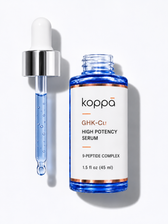
Best for most people: koppā 2% GHK-Cu High-Concentration Copper Peptide Serum
Best budget pick: Good Molecules Copper Peptide Serum with PDRN
Best value with a stated percentage: CopperTheory 1.4% GHK-Cu Copper Peptide Face Serum
Lowest price with a stated 1%: Dr. Brenner Copper Peptide Serum with 1% GHK-Cu
Best multi-peptide blend: The Ordinary Multi-Peptide + Copper Peptides 1% Serum
Also states 2%: Skingenetix Copper Peptide (GHK-Cu) 2% Renewal Serum
Best for GHK-Cu plus GHK: NIOD Copper Amino Isolate Serum 3 1:1
Best growth-factor blend: INNBEAUTY Project Elastic Skin
Best upmarket alternative: Allies of Skin Copper Tripeptide & Ectoin Advanced Repair Serum
Best for dry skin, and the largest bottle: Biossance Squalane + Copper Peptide Rapid Plumping Serum
Every figure comes from each brand's own product page (Good Molecules from Ulta's US page), with US prices checked on 13, 23 and 29 October 2026. Read our method.
Our top pick: koppā 2% GHK-Cu High-Concentration Copper Peptide Serum
When it comes to balancing dose, formula, transparency and price, the koppā serum comes out ahead of the other nine at this time.
Priced at US$75 as a one-time purchase for 45 ml, or US$67.50 on Subscribe & Save, it costs about a quarter as much per ml as Allies of Skin. Per 1% of stated GHK-Cu it costs the same as CopperTheory, the joint lowest of the serums that state a percentage in US dollars. For that you get a stated 2% GHK-Cu, the joint highest of the ten, with six further named peptides, two ceramides, glycerin and sodium hyaluronate in a fragrance-free base, and the full ingredient list published. We still need to publish a test of the finished serum, and our returns are stricter than NIOD's or The Ordinary's, but it's hard to beat this combination of dose and value. See the serum.
Why you should trust us
koppā makes copper peptide skincare and nothing else, so GHK-Cu is the one ingredient we spend all our time on. We publish what we find: a dated register of copper peptide labels and concentrations, a statistics page with a source for every figure, and comparisons like this one.
This guide is built from each brand's own product, shipping and returns pages, read on the dates we give, and from the published research on GHK-Cu and the ingredients around it: 28 sources, listed at the end. We fixed the criteria before ranking anything, and we award each one to whichever serum wins it. Of the ten categories in our scorecard, koppā wins one outright and shares two; the other seven go to other brands.
That work is also why koppā makes its own copper peptide serum. Our editorial opinion is that it's the best all-round option for most people at this time, but it's not ideal for everyone. Read on for the pros and cons of all ten, and how they compare on each of our criteria, so you can decide which copper peptide serum is best for you.
No brand paid to be included, and the links to other brands earn us nothing. Every research claim on this page is cited, and where a brand reports its own testing we say so. Written by Chantelle, co-founder of koppā. About the author.
How we evaluated copper peptide serums
We chose our ten copper peptide serums and compared them on five criteria:
Dose: how much GHK-Cu does the label state?
Evidence: what testing of the finished serum has the brand reported?
Cost: which serum poses the lowest financial barrier, per bottle and per ml?
Returns: what happens if it doesn't suit you?
Overall value: with everything considered, which serum best balances the other four?
Here's how they fared.
Dose · Advantage: koppā and Skingenetix
Five of the ten state a GHK-Cu percentage. koppā and Skingenetix state the highest, 2%; CopperTheory states 1.4%; NIOD and Dr. Brenner 1%. At the same dose, a 2% serum delivers twice the GHK-Cu of a 1% serum. The others give a blend figure (The Ordinary's "Copper Peptides 1%", INNBEAUTY's 6% across several peptides) or no figure at all (Biossance, Good Molecules).
Skingenetix is 30 ml, priced in euros and shipped from the EU, with no full ingredient list on the page we checked. That's why koppā is our pick of the two.
Evidence · Advantage: NIOD
NIOD reports two tests of its finished serum: 31 people over eight weeks and 32 people over 12 weeks. Biossance reports one, in 31 women over 28 days, and INNBEAUTY reports instrumental measurements of hydration, elasticity and wrinkles. All of these are brand-reported, not independent.
koppā's serum is built on the published GHK-Cu research. The one peer-reviewed controlled facial trial of GHK-Cu we found tested a different formulation2, so it supports the ingredient, not any bottle on this list.
Cost · Advantage: Good Molecules and Dr. Brenner
Most copper peptide serums cost between US$30 and US$75, so anything under US$30 is a bargain. Good Molecules is US$12 for 1 fl oz (US$0.41 per ml), by far the cheapest, though it states no GHK-Cu percentage. Dr. Brenner is US$29.99 for 1 fl oz with a stated 1%, the lowest price with a stated percentage, but it was sold out when we checked.
koppā is US$75 for 45 ml, the second-largest bottle, so per 1% of stated GHK-Cu it ties CopperTheory for the lowest cost. The price reflects high-quality ingredients: raw GHK-Cu specified at 99% minimum purity, with a certificate of analysis for each batch. Prices, shipping and returns for all ten:
| Serum | Price and US shipping | Returns |
|---|---|---|
| Good Molecules | US$12 / 1 fl oz; no subscription discount. Shipping US$5, free from US$30 |
60 days from delivery, new or gently used |
| Dr. Brenner | US$29.99 / 1 fl oz (sale price; sold out when checked). Free shipping on all continental US orders |
60-day money-back guarantee |
| The Ordinary | US$32 / 30 ml. Shipping US$4.99, free over US$25 |
365 days, at least 50% full |
| CopperTheory | US$35 / 30 ml. No US shipping terms published; its policy is in Australian dollars (free over A$89, A$10 international) |
30 days, new and unopened only, unless faulty |
| Skingenetix | €49 / 30 ml. Shipping fee shown at checkout; the buyer pays US duties and VAT |
30 days to request, unopened only; EU orders 14 days |
| INNBEAUTY Project | US$52 / 30 ml. Shipping US$6.95, free from US$60 after discounts |
30 days from receipt, money-back guarantee |
| NIOD | US$62 / 15 ml. Shipping US$4.99, free over US$25 |
365 days, at least 50% full |
| Biossance | US$69 / 50 ml; no subscription option. Shipping US$8, free over US$50 |
30 days from ship date |
| koppā | US$75 / 45 ml; US$67.50 on Subscribe & Save (10% off). Shipping US$3, free over US$100 and on all subscriptions |
30 days from delivery, unopened only; free US return label |
| Allies of Skin | US$199 / 1 fl oz; US$169.15 on subscription (15% off). Free shipping over US$100 (site banner) |
30 days from delivery, unused only |
Good Molecules
- Price and US shipping
US$12 / 1 fl oz; no subscription discount. Shipping US$5, free from US$30
- Returns
60 days from delivery, new or gently used
Dr. Brenner
- Price and US shipping
US$29.99 / 1 fl oz (sale price; sold out when checked). Free shipping on all continental US orders
- Returns
60-day money-back guarantee
The Ordinary
- Price and US shipping
US$32 / 30 ml. Shipping US$4.99, free over US$25
- Returns
365 days, at least 50% full
CopperTheory
- Price and US shipping
US$35 / 30 ml. No US shipping terms published; its policy is in Australian dollars (free over A$89, A$10 international)
- Returns
30 days, new and unopened only, unless faulty
Skingenetix
- Price and US shipping
€49 / 30 ml. Shipping fee shown at checkout; the buyer pays US duties and VAT
- Returns
30 days to request, unopened only; EU orders 14 days
INNBEAUTY Project
- Price and US shipping
US$52 / 30 ml. Shipping US$6.95, free from US$60 after discounts
- Returns
30 days from receipt, money-back guarantee
NIOD
- Price and US shipping
US$62 / 15 ml. Shipping US$4.99, free over US$25
- Returns
365 days, at least 50% full
Biossance
- Price and US shipping
US$69 / 50 ml; no subscription option. Shipping US$8, free over US$50
- Returns
30 days from ship date
koppā
- Price and US shipping
US$75 / 45 ml; US$67.50 on Subscribe & Save (10% off). Shipping US$3, free over US$100 and on all subscriptions
- Returns
30 days from delivery, unopened only; free US return label
Allies of Skin
- Price and US shipping
US$199 / 1 fl oz; US$169.15 on subscription (15% off). Free shipping over US$100 (site banner)
- Returns
30 days from delivery, unused only
One-time US list prices before promotions, checked 13 to 29 October 2026; shipping and returns read on each brand's own site on 3 November 2026. Terms change, so check at checkout.
Returns · Advantage: NIOD and The Ordinary
NIOD and The Ordinary take back any product that is at least half full, up to 365 days after purchase, so you can actually try the serum. Good Molecules (new or gently used) and Dr. Brenner give you 60 days.
koppā accepts returns of unopened products only, within 30 days of delivery, as do CopperTheory and Skingenetix. If you open a bottle and it doesn't suit you, you can't send it back. This is the weakest part of our offer.
Overall value · Advantage: koppā
Weigh dose against cost and you get a clearer picture of how much each serum gives you for what you pay. Our picks are scattered across that picture, but koppā stands out for balancing a complete formula with a fair price.
Few serums here combine as much stated GHK-Cu with as complete a formula. koppā pairs its 2% with six further named peptides, two ceramides (EOP and NP), glycerin and sodium hyaluronate, at pH 5.5 to 6.0, with the full list published, in 45 ml, for US$1.67 per ml: about a quarter of Allies of Skin's US$6.73. CopperTheory matches it on cost per 1% of GHK-Cu, at a lower 1.4% in 30 ml. INNBEAUTY covers a similarly wide range of concerns, but its 6% figure covers several peptides, not GHK-Cu alone; stating the exact GHK-Cu dose is where koppā has the advantage.
What would change our verdict: a published test of the finished serum from a competitor at koppā's dose, or a lower price for the same formula elsewhere.
Ten copper peptide serums compared
Start with formula fit and budget. Read the product notes for the reason to choose each serum and the limits of the evidence. Comparison prices are in USD.
Ten serums, one comparison
Scroll horizontally for all ten formulas| Serum |
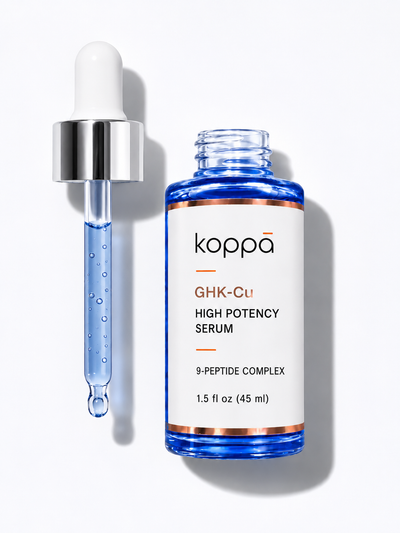 koppā
2% GHK-Cu High-Concentration Copper Peptide Serum
Best for most people · our own formula | NIOD Copper Amino Isolate Serum 3 1:1 Best for GHK-Cu plus GHK | INNBEAUTY Project Elastic Skin Best for a growth-factor blend | Allies of Skin Copper Tripeptide & Ectoin Advanced Repair Serum Best for copper with ectoin | The Ordinary Multi-Peptide + Copper Peptides 1% Serum Best for a multi-peptide blend | Biossance Squalane + Copper Peptide Rapid Plumping Serum Best for a squalane-rich hydrating base | Good Molecules Copper Peptide Serum with PDRN Best budget pick | Skingenetix Copper Peptide (GHK-Cu) 2% Renewal Serum Also states 2% | CopperTheory 1.4% GHK-Cu Copper Peptide Face Serum Stated 1.4% | Dr. Brenner Copper Peptide Serum with 1% GHK-Cu, Argireline and Matrixyl 3000 Best low-cost stated 1% |
|---|---|---|---|---|---|---|---|---|---|---|
| Copper peptide, as stated | 2% GHK-Cu | 1% GHK-Cu | "6% Copper Peptides + Bio-Hacking Peptides" | "1% Copper Tripeptide Complex" | “Copper Peptides 1%”; contains GHK-Cu | Copper Tripeptide-1; percentage not stated | Copper Tripeptide-1; percentage not stated | 2% GHK-Cu | 1.4% Copper Tripeptide-1 (GHK-Cu) | 1% GHK-Cu (Copper Tripeptide-1) |
| Size | 45 ml | 15 ml | 30 ml | 1 fl oz | 30 ml | 50 ml | 1 fl oz | 30 ml | 30 ml | 1 fl oz |
| US list price (USD) | US$75 | US$62 | US$52 | US$199 | US$32 | US$69 | US$12 | €49 (EUR) | US$35 | US$29.99 |
| USD per ml | US$1.67 | US$4.13 | US$1.73 | US$6.73 | US$1.07 | US$1.38 | US$0.41 | €1.63 (EUR) | US$1.17 | US$1.01 |
| Fragrance-free, per the brand | Not stated | Not stated | Not stated | Not stated | Not stated | Not stated | ||||
| Silicone-free, per the brand | Not stated | Not stated | Not stated | Not stated | Not stated | Not stated | ||||
| Shop | Shop, $75 |
US list prices checked 13 October 2026, except Biossance and Good Molecules (23 October 2026; Good Molecules from Ulta's US site, per 1 fl oz), before promotions, tax and delivery. Dr. Brenner, CopperTheory and Skingenetix were checked 29 October 2026; Skingenetix sells in euros and is shown in EUR, not converted. NIOD comparison uses the 15 ml option. Koppā shopping buttons show current pricing in your selected currency.
The full scorecard: which serum wins each category?
Ten categories, ten winners. Ours wins one outright and shares two.
| Category | Winner | Why |
|---|---|---|
| Highest stated GHK-Cu | Tie: koppā and Skingenetix, 2% each |
The highest percentage of GHK-Cu stated on any of the ten labels. Skingenetix is 30 ml, sold in euros, with no full ingredient list on the page we checked. |
| Lowest price per ml | Good Molecules, US$0.41/ml |
By a wide margin. It states no GHK-Cu percentage, and Copper Tripeptide-1 is fourteenth of 20 ingredients. |
| Lowest price with a stated GHK-Cu percentage | Dr. Brenner, about US$1.01/ml at 1% |
Sold out when we checked on 29 October 2026. The Ordinary (US$1.07/ml) says "Copper Peptides 1%" without saying how much of that is GHK-Cu. |
| Lowest cost per 1% of stated GHK-Cu | Tie: koppā and CopperTheory, US$0.83 per ml per 1% |
koppā is US$1.67/ml at 2%; CopperTheory is US$1.17/ml at 1.4%. Both work out at US$0.83 per ml for each 1% of GHK-Cu, the lowest of the serums that state a GHK-Cu percentage in US dollars. |
| GHK-Cu plus GHK | NIOD |
The only serum here declaring 1% GHK-Cu and 1% GHK separately. It costs US$4.13/ml in the 15 ml size. |
| Most finished-product testing reported | NIOD |
NIOD reports two tests of the finished serum: 31 people over eight weeks and 32 people over 12 weeks. Biossance reports one, in 31 women over 28 days. Both are brand-reported. koppā publishes the 99% minimum purity specification for its raw GHK-Cu and builds on the published ingredient research. |
| Largest bottle | Biossance, 50 ml |
koppā is second at 45 ml; eight of the ten are 30 ml or less. |
| Copper with ectoin | Allies of Skin |
Copper complexes with 2% ectoin, at US$199 for 1 fl oz, the most expensive here. |
| Most generous returns | Tie: NIOD and The Ordinary, 365 days |
Both take back any product at least half full within a year of purchase. Good Molecules and Dr. Brenner offer 60 days. koppā, CopperTheory and Skingenetix accept unopened products only. |
| Best all-round formula | koppā |
The joint-highest stated GHK-Cu and the joint-lowest cost per 1% of it, plus six further named peptides and two ceramides (EOP and NP) in the same bottle, at pH 5.5 to 6.0, with the full list published, in 45 ml. What it doesn't have: the lowest price per ml, or a published test of the finished serum. |
Highest stated GHK-Cu
- Winner
Tie: koppā and Skingenetix, 2% each
- Why
The highest percentage of GHK-Cu stated on any of the ten labels. Skingenetix is 30 ml, sold in euros, with no full ingredient list on the page we checked.
Lowest price per ml
- Winner
Good Molecules, US$0.41/ml
- Why
By a wide margin. It states no GHK-Cu percentage, and Copper Tripeptide-1 is fourteenth of 20 ingredients.
Lowest price with a stated GHK-Cu percentage
- Winner
Dr. Brenner, about US$1.01/ml at 1%
- Why
Sold out when we checked on 29 October 2026. The Ordinary (US$1.07/ml) says "Copper Peptides 1%" without saying how much of that is GHK-Cu.
Lowest cost per 1% of stated GHK-Cu
- Winner
Tie: koppā and CopperTheory, US$0.83 per ml per 1%
- Why
koppā is US$1.67/ml at 2%; CopperTheory is US$1.17/ml at 1.4%. Both work out at US$0.83 per ml for each 1% of GHK-Cu, the lowest of the serums that state a GHK-Cu percentage in US dollars.
GHK-Cu plus GHK
- Winner
NIOD
- Why
The only serum here declaring 1% GHK-Cu and 1% GHK separately. It costs US$4.13/ml in the 15 ml size.
Most finished-product testing reported
- Winner
NIOD
- Why
NIOD reports two tests of the finished serum: 31 people over eight weeks and 32 people over 12 weeks. Biossance reports one, in 31 women over 28 days. Both are brand-reported. koppā publishes the 99% minimum purity specification for its raw GHK-Cu and builds on the published ingredient research.
Largest bottle
- Winner
Biossance, 50 ml
- Why
koppā is second at 45 ml; eight of the ten are 30 ml or less.
Copper with ectoin
- Winner
Allies of Skin
- Why
Copper complexes with 2% ectoin, at US$199 for 1 fl oz, the most expensive here.
Most generous returns
- Winner
Tie: NIOD and The Ordinary, 365 days
- Why
Both take back any product at least half full within a year of purchase. Good Molecules and Dr. Brenner offer 60 days. koppā, CopperTheory and Skingenetix accept unopened products only.
Best all-round formula
- Winner
koppā
- Why
The joint-highest stated GHK-Cu and the joint-lowest cost per 1% of it, plus six further named peptides and two ceramides (EOP and NP) in the same bottle, at pH 5.5 to 6.0, with the full list published, in 45 ml. What it doesn't have: the lowest price per ml, or a published test of the finished serum.
1. koppā 2% GHK-Cu High-Concentration Copper Peptide Serum: best for most people
-
01
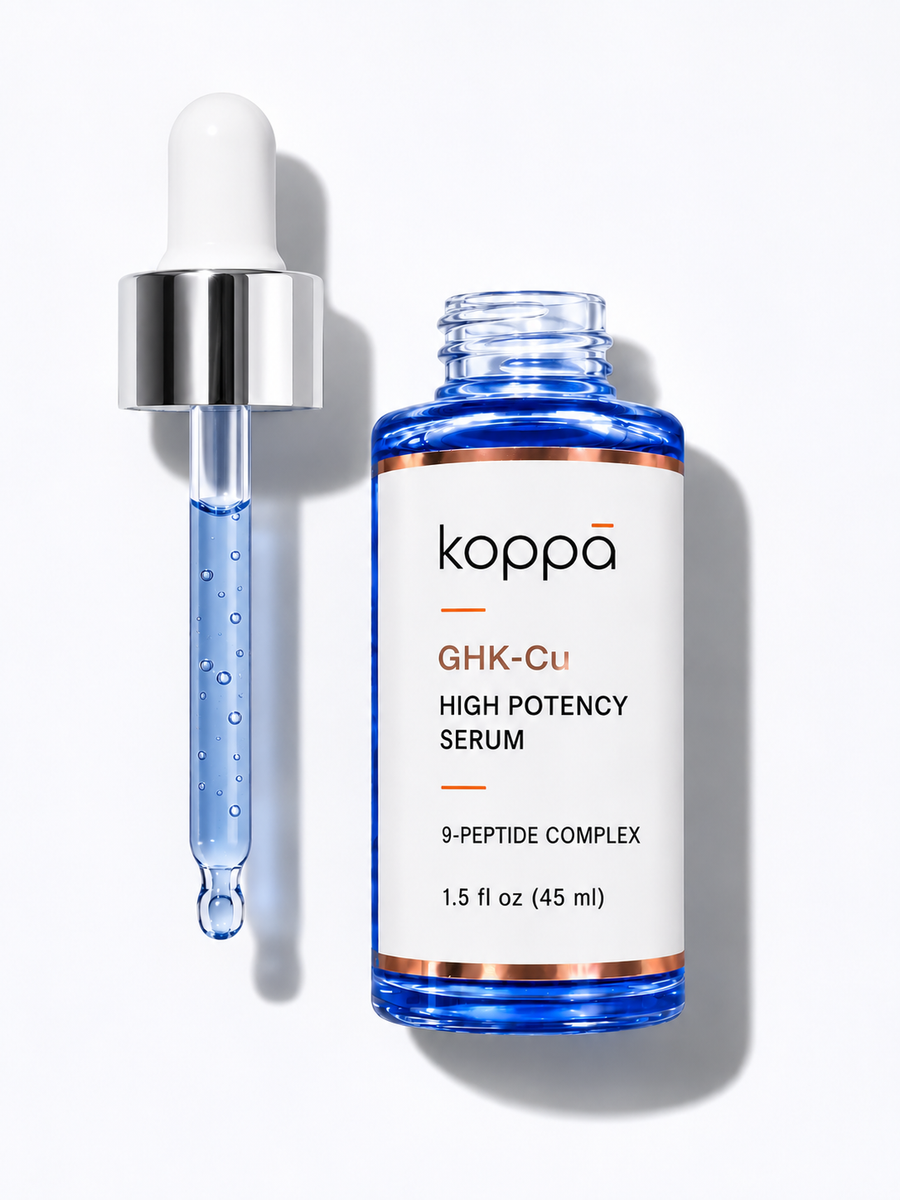 Best for most people · our own formula
koppā2% GHK-Cu High-Concentration Copper Peptide Serum
- Copper peptide, as stated
- 2% GHK-Cu
- Size
- 45 ml
- Your current price
- $75
- Best for
- Most people who want a clearly stated GHK-Cu dose in a complete daily serum: 2% GHK-Cu, six further named peptides and two ceramides in 45 ml, with the full ingredient list published.
Our verdict When we weigh stated GHK-Cu, the formula around it, transparency and price together, this is the one we would choose for most people at the time of writing. Choose something else if price per ml matters most (Good Molecules), if you want GHK as well (NIOD), or if you need a vegan formula.
The disclosed formula combines 2% GHK-Cu, six additional peptides, two collagen ingredients, glycerin, betaine, sodium hyaluronate and two ceramides. See the full ingredient list. The formula sits at pH 5.5 to 6.0, inside the range in which GHK-Cu stayed intact in a preformulation study14.
Why it makes the shortlist: a 45 ml water-based option combining a peptide step with hydrating ingredients. GHK-Cu has stimulated collagen synthesis in fibroblast cultures1; glycerol has supported hydration in a studied cream5.
Pros
- 2% GHK-Cu stated on the label, the joint highest of the ten
- Joint-lowest cost per 1% of stated GHK-Cu: US$0.83 per ml per 1%, tied with CopperTheory
- Six further named peptides and two ceramides (EOP and NP) in the same bottle
- Full ingredient list published; pH 5.5 to 6.0
- Fragrance-free and silicone-free
- 45 ml, the second-largest bottle of the ten
- Subscribe & Save: 10% off, with free standard US shipping
Good to know
- US$1.67 per ml; per 1% of stated GHK-Cu it is the joint lowest here, US$0.83
- Built on the published research for GHK-Cu12 and its supporting ingredients, with the raw GHK-Cu specified at 99% minimum purity
- Contains marine collagen: check the ingredient list if you have a fish allergy
- 30-day returns on unopened products, with a free prepaid US return label
- US$3 US shipping, free over US$100 and on every subscription order
- Skingenetix also states 2%; koppā pairs it with two ceramides and six named peptides in a 45 ml bottle
Against the other nine, label by label. On stated GHK-Cu, only Skingenetix matches koppā's 2%; CopperTheory states 1.4%, NIOD and Dr. Brenner 1%, The Ordinary "Copper Peptides 1%" without saying how much is GHK-Cu, and four state none. On what you can check, koppā, CopperTheory, Dr. Brenner, The Ordinary, NIOD, Biossance and Good Molecules publish full ingredient lists; Skingenetix does not on the page we checked. On the formula around the peptide, koppā is the only one of the ten with two ceramides (EOP and NP) and six further named peptides in the same bottle, at pH 5.5 to 6.0, inside the range in which GHK-Cu stayed intact14. On size, 45 ml against 30 ml or less for eight of the nine (Biossance is 50 ml). On price per ml, Good Molecules, Dr. Brenner, The Ordinary, CopperTheory and Biossance cost less, each with a lower stated GHK-Cu percentage or none; NIOD and Allies of Skin cost more. koppā's price reflects high-quality ingredients: 2% GHK-Cu from raw peptide specified at 99% minimum purity, with a certificate of analysis for each batch, six supporting peptides and two ceramides.
At the same dose, 2% delivers twice the GHK-Cu of 1%, and koppā's 45 ml delivers it in half again the usual bottle.
The koppā serum, ingredient by ingredient, with the studies
2% GHK-Cu, and the formula built around it
Copper Tripeptide-1 is fourth on the ingredient list, after water, trehalose and glycerin, at a stated 2%. The serum sits at pH 5.5 to 6.0, inside the range in which GHK-Cu stayed intact in a preformulation study, which also found it broke down under alkaline and oxidising stress14; the formula has no fragrance, silicones, parabens or added colour that would add to that load. The peptide's own record: collagen synthesis stimulated in fibroblast cultures1; copper from a copper-tripeptide preparation measured in the layers of human skin in vitro3; and an eight-week randomised, double-blind study of 40 women in which a GHK-Cu serum, delivered in a lipid nanocarrier, reduced wrinkle volume more than its carrier2. koppā uses the same peptide, Copper Tripeptide-1, at a stated 2%, with the full ingredient list published.
Six supporting peptides, every one named
Acetyl Hexapeptide-8, Palmitoyl Tetrapeptide-7, Palmitoyl Tripeptide-5, Acetyl Octapeptide-3, Dipeptide Diaminobutyroyl Benzylamide Diacetate and Hydrolyzed Collagen, all on the label. Two carry human evidence of their own: Acetyl Hexapeptide-8 in a four-week randomised, placebo-controlled trial of 60 people that improved eye-area wrinkle roughness15 and a 30-day open study of 10 women20; and Acetyl Hexapeptide-8 with Dipeptide Diaminobutyroyl Benzylamide Diacetate in two 2026 clinical studies of a serum containing both (50 and 42 participants) plus ex vivo work21. All six are named on the label so you can check them. Of the ten serums compared, only koppā names six supporting peptides.
Two ceramides and a five-humectant hydration system
Ceramide EOP and Ceramide NP, plus glycerin, trehalose, betaine, polyglutamic acid and sodium hyaluronate, with panthenol and allantoin. The evidence for the parts: hyaluronic acid of several molecular weights improved hydration and elasticity in 76 women over 60 days22; a moisturiser built from ceramides, humectants and emollients raised skin hydration in a clinical study23; glycerol contributed to hydration in a randomised study of 51 volunteers with dry skin5; panthenol sped barrier repair after irritation against its base17; and a cream containing carnosine, also in this serum, inhibited advanced glycation end-product formation in human skin explants24. None of the other nine serums lists two ceramides.
What is not in it, and the safety record
No synthetic fragrance, no silicones, no parabens, no added colour; the blue is the copper complex itself. Copper Tripeptide-1 and its metal salts were assessed safe as used in cosmetics by the Cosmetic Ingredient Review panel11. Copper is a weak skin sensitiser: a review puts hypersensitivity at a weighted 3.8% among people tested because of suspected symptoms12. The serum contains marine collagen.
Pricing, shipping and returns
US$75 for 45 ml as a one-time purchase, US$1.67 per ml. Subscribe & Save takes 10% off (US$67.50, about US$1.50 per ml at that price), renews every two months and ships free by standard US shipping. One-time US orders ship for US$3, free over US$100; Priority is US$10. Good Molecules, Dr. Brenner, The Ordinary, CopperTheory and Biossance cost less per ml; NIOD and Allies of Skin cost more.
Returns: unopened, unused products with intact seals within 30 days of delivery, with a free prepaid label from US addresses. Damaged or defective orders are refunded or replaced within 30 days. Opened bottles can't be returned, which is stricter than NIOD and The Ordinary (365 days, at least half full) or Good Molecules and Dr. Brenner (60 days). Shipping and returns.
What this adds up to: a stated 2% GHK-Cu, the highest of the ten, in the only formula that pairs it with two ceramides and six named peptides, at a pH the stability data supports, with the list published and the bottle half again the usual size. At the same dose, a 2% serum delivers twice the GHK-Cu of a 1% serum. Shop the serum, or read the full evidence table.
The other nine, with pros and cons
Each one wins at least one thing koppā doesn't. Prices are US list prices before promotions, checked on the dates given.
-
02Best for GHK-Cu plus GHK
NIODCopper Amino Isolate Serum 3 1:1
- Copper peptide, as stated
- 1% GHK-Cu
- Size
- 15 ml
- US list price (USD)
- US$62
- Best for
- A water-based formula with declared GHK-Cu and GHK
Our verdict Choose it if you want GHK-Cu and GHK declared separately and are happy to pay more per ml for a 15 ml bottle.
A water-based formula declaring 1% GHK-Cu plus 1% GHK. A useful option if separately stated peptide forms are a priority.
Evidence: NIOD reports finished-product testing in 31 people over eight weeks and a separate 32-person, 12-week test. These are manufacturer-reported results.
niod.comPros
- 1% GHK-Cu and 1% GHK declared separately
- A water-based formula
- Brand reports testing in 31 people over eight weeks and in 32 people over 12 weeks
Cons and things to know
- 15 ml: US$62, checked 13 October 2026
- A 30 ml size is also offered; not used in this price comparison
- More expensive per ml than Koppā and The Ordinary at the listed sizes
-
03Best for a growth-factor blend
INNBEAUTY ProjectElastic Skin
- Copper peptide, as stated
- "6% Copper Peptides + Bio-Hacking Peptides"
- Size
- 30 ml
- US list price (USD)
- US$52
- Best for
- Copper peptides with growth factors and ceramides
Our verdict Choose it if you want copper peptides alongside growth factors and ceramides; its 6% figure covers several peptides, not GHK-Cu alone.
Copper Tripeptide-1 with growth factors, wild yam extract and ceramides. A formula-led option for shoppers seeking these ingredients together. The stated 6% covers copper and other peptides combined, not 6% GHK-Cu.
Evidence: the brand reports instrumental measurements of hydration, elasticity and wrinkles in its finished-formula testing. These are manufacturer-reported results.
innbeautyproject.comPros
- Copper Tripeptide-1 with growth factors and ceramides
- Fragrance-free, per the brand
- Brand reports instrumental measurements of hydration, elasticity and wrinkles
Cons and things to know
- Fragrance-free, per the brand
- Includes plant oils
- Combined peptide percentage cannot be compared directly with a GHK-Cu percentage
-
04Best for copper with ectoin
Allies of SkinCopper Tripeptide & Ectoin Advanced Repair Serum
- Copper peptide, as stated
- "1% Copper Tripeptide Complex"
- Size
- 1 fl oz
- US list price (USD)
- US$199
- Best for
- A formula combining copper complexes with ectoin
Our verdict Choose it if you specifically want copper complexes with ectoin; it is the most expensive of the ten per ml.
Copper tripeptide and copper lysinate complexes with 2% ectoin. An option for shoppers specifically seeking that combination. The brand describes a copper-tripeptide complex percentage, which is not automatically a pure GHK-Cu percentage.
Evidence: the brand reports a 35-person self-assessment after 56 days. These are self-reported results.
allies.shopPros
- Copper tripeptide and copper lysinate complexes with 2% ectoin
- Brand reports a 35-person self-assessment after 56 days
Cons and things to know
- Highest listed price among these seven sizes
- Comparison uses 1 US fl oz, approximately 29.57 ml
-
05Best for a multi-peptide blend
The OrdinaryMulti-Peptide + Copper Peptides 1% Serum
- Copper peptide, as stated
- “Copper Peptides 1%”; contains GHK-Cu
- Size
- 30 ml
- US list price (USD)
- US$32
- Best for
- A low-cost multi-peptide serum that contains GHK-Cu
Our verdict Choose it if you want a multi-peptide formula that confirms it contains GHK-Cu at a low price: third-lowest per ml here.
A multi-peptide formula containing GHK-Cu, glycerin and hyaluronate ingredients. It has the third-lowest price per ml among the sizes compared here, after Good Molecules and Dr. Brenner.
Evidence: its ingredient list establishes what is disclosed in the formula.
theordinary.comPros
- The third-lowest price per ml of the ten: US$1.07/ml
- The brand confirms the formula contains GHK-Cu
- Glycerin and hyaluronate ingredients
Cons and things to know
- US$32 / 30 ml, checked 13 October 2026
- Follow the brand’s compatibility directions
-
06Best for a squalane-rich hydrating base
BiossanceSqualane + Copper Peptide Rapid Plumping Serum
- Copper peptide, as stated
- Copper Tripeptide-1; percentage not stated
- Size
- 50 ml
- US list price (USD)
- US$69
- Best for
- A hydrating base of squalane, hyaluronate and polyglutamate with copper peptides and ectoin
Our verdict Choose it if you want copper peptides in a squalane and ectoin base and don't need a stated GHK-Cu percentage; the brand doesn't give one.
The ingredient list opens with water, glycerin, propanediol and squalane. Copper Tripeptide-1 is seventh, followed by acmella oleracea extract, ectoin, Tetrapeptide-30, Palmitoyl Hexapeptide-52 and Copper PCA. The brand describes the copper peptides only as a "naturally blue-hued vegan peptide blend".
Evidence: the brand reports a 28-day study in 31 women aged 30 to 65, using the serum twice daily, with improvements in hydration, firmness and fine lines. These are manufacturer-reported results.
biossance.comPros
- Copper Tripeptide-1 seventh on the ingredient list of 32
- Squalane, sodium hyaluronate, sodium polyglutamate, ectoin and panthenol in the same formula
- 50 ml bottle
- Brand reports a 28-day study in 31 women using it twice daily
Cons and things to know
- US$69 / 50 ml, checked 23 October 2026
- No GHK-Cu percentage is stated, so it can't be compared with a 2% or 1% label
- It lists Copper PCA as well as Copper Tripeptide-1; the GHK-Cu research doesn't transfer to Copper PCA
- The page makes no fragrance-free or silicone-free claim; neither appears in the ingredient list it shows
-
07Best budget pick
Good MoleculesCopper Peptide Serum with PDRN
- Copper peptide, as stated
- Copper Tripeptide-1; percentage not stated
- Size
- 1 fl oz
- US list price (USD)
- US$12
- Best for
- The lowest price, with copper peptide, rose-derived PDRN and hyaluronate
Our verdict Choose it if price matters most: the lowest cost per ml here, with copper peptide further down the list and no stated percentage.
A short, water-light formula: water, propanediol and glycerin come first, and Copper Tripeptide-1 is fourteenth of 20 ingredients, after sodium hyaluronate. The PDRN is listed as Sodium DNA and described as a vegan alternative to salmon-sourced PDRN. No copper peptide percentage is given.
Evidence: the retailer page we used gives no clinical results or sample sizes, so there is nothing to weigh beyond the ingredient list.
ulta.comPros
- The lowest price and price per ml of the ten: US$0.41/ml
- Copper Tripeptide-1 with sodium hyaluronate, glycerin and a plant-derived (rose) PDRN
- The brand is cruelty free
Cons and things to know
- US$12 / 1 fl oz (about 29.57 ml) on Ulta's US site, checked 23 October 2026; the brand's own page could not be loaded
- No GHK-Cu percentage is stated, and copper peptide sits in the second half of the list
- The page makes no fragrance-free or silicone-free claim; neither appears in the ingredient list it shows
-
08Also states 2%
SkingenetixCopper Peptide (GHK-Cu) 2% Renewal Serum
- Copper peptide, as stated
- 2% GHK-Cu
- Size
- 30 ml
- US list price (USD)
- €49 (EUR)
- Best for
- A stated 2% GHK-Cu in 30 ml, sold from the EU in euros
Our verdict Choose it if you want a stated 2% from an EU brand and are comfortable without a published full ingredient list; koppā gives the same 2% in 45 ml with the list published.
Declares 2% GHK-Cu (also given as 20,000 ppm) with a multi-peptide complex, 3-O-ethyl ascorbic acid, niacinamide and hyaluronic acid named as key ingredients. The product page we checked gives no full ingredient list, so the peptide's position and the base cannot be read. "No added synthetic fragrance" per the brand, which is not a fragrance-free claim.
Evidence: the brand's research page cites the same 2016 split-face study of 40 women that koppā cites2, and says itself that no human study states the concentration tested.
skingenetix.comPros
- A stated 2% GHK-Cu
- Named supporting actives: a multi-peptide complex, 3-O-ethyl ascorbic acid, niacinamide, hyaluronic acid
- Sold with matching 2% day and night creams
Cons and things to know
- €49 for 30 ml on skingenetix.com, 29 October 2026; shown in EUR, not converted
- No full ingredient list on the product page we checked
- The brand lists worldwide delivery
-
09Stated 1.4%
CopperTheory1.4% GHK-Cu Copper Peptide Face Serum
- Copper peptide, as stated
- 1.4% Copper Tripeptide-1 (GHK-Cu)
- Size
- 30 ml
- US list price (USD)
- US$35
- Best for
- A stated 1.4% at a US price, in a short water-based formula with the full list published
Our verdict Choose it if you want a stated percentage above 1% at under US$40 and a published ingredient list; it is a shorter formula than koppā's, without ceramides.
A 17-ingredient water-based serum declaring 1.4% Copper Tripeptide-1, which sits sixth on the list after water, butylene glycol, glycerin, 1,2-hexanediol and p-hydroxyacetophenone. Panthenol, niacinamide, two forms of hyaluronate, allantoin and Acetyl Hexapeptide-8 follow. No silicones appear in the list. The page does not say whether the serum is fragrance-free, though no fragrance is listed.
Evidence: the brand reports internal test figures for its cream, not this serum; we found no finished-product results for the serum. koppā vs CopperTheory, label by label.
shopcoppertheory.comPros
- A stated 1.4% Copper Tripeptide-1
- Full ingredient list published; copper peptide sixth of 17
- US$1.17 per ml at the listed price
Cons and things to know
- US$35 for 30 ml on shopcoppertheory.com, 29 October 2026, with US$49 also shown
- Not labelled fragrance-free; no fragrance in the list
-
10Best low-cost stated 1%
Dr. BrennerCopper Peptide Serum with 1% GHK-Cu, Argireline and Matrixyl 3000
- Copper peptide, as stated
- 1% GHK-Cu (Copper Tripeptide-1)
- Size
- 1 fl oz
- US list price (USD)
- US$29.99
- Best for
- The lowest price here for a serum that states a GHK-Cu percentage
Our verdict Choose it if you want a stated 1% with Matrixyl 3000 and Argireline at the lowest price for a stated percentage; it was sold out on the brand's site when we checked.
A 12-ingredient water-based formula declaring 1% GHK-Cu. Copper Tripeptide-1 is sixth on the list, followed by Matrixyl 3000 (Palmitoyl Tripeptide-1, Palmitoyl Tetrapeptide-7), Argireline (Acetyl Hexapeptide-8) and Palmitoyl Pentapeptide-4. "No fragrance. No essential oils," per the brand; no silicones appear in the list.
Evidence: the brand's page gives no finished-product results. Acetyl Hexapeptide-8 and Palmitoyl Pentapeptide-4 have their own published studies, discussed in the ingredient section below.
drbrennershop.comPros
- A stated 1% GHK-Cu at US$29.99 for 1 fl oz
- Matrixyl 3000, Argireline and Palmitoyl Pentapeptide-4 alongside the copper peptide
- Fragrance-free and free of essential oils, per the brand
Cons and things to know
- US$29.99 (regular US$32.99) on drbrennershop.com, 29 October 2026, listed as sold out; US$39.45 at a stockist the same day
- Size given as 1 fl oz; no ml figure on the brand page
How does koppā compare with The Ordinary and NIOD?
Koppā declares 2% GHK-Cu in a 45 ml multi-peptide formula with humectants and ceramides. NIOD declares 1% GHK-Cu plus 1% GHK. The Ordinary names its 30 ml formula “Multi-Peptide + Copper Peptides 1%” and confirms that it contains GHK-Cu.
At the US prices checked on 13 October 2026, The Ordinary is US$1.07/ml, Koppā US$1.67/ml and the 15 ml NIOD option US$4.13/ml.
Biossance (US$1.38/ml) and Good Molecules (US$0.41/ml) list Copper Tripeptide-1 but state no percentage, so the amount of copper peptide per bottle can't be compared.
Three serums added on 29 October 2026: Skingenetix also declares 2% GHK-Cu, in 30 ml at €49 (about €1.63/ml), without a full ingredient list on the page we checked. CopperTheory declares 1.4% Copper Tripeptide-1 in 30 ml at US$35 (US$1.17/ml). Dr. Brenner declares 1% GHK-Cu in 1 fl oz at US$29.99 (about US$1.01/ml).
What is the best Korean copper peptide serum?
Five Korean-brand serums and one US brand sold as K-beauty, read on the brands’ own pages on 4 November 2026.
The best Korean copper peptide serum for a stated dose is COSRX The Blue Peptide Bakuchiol Plump Glow Serum: on 4 November 2026 it was the only Korean-brand serum we found that states a copper figure, 0.5% “Copper Peptide” (5,000 ppm), at US$27.00 for 50 ml. For the most product for the money, COSRX The 6 Peptide Skin Booster Serum costs US$0.17/ml in its 150 ml size, but states no copper percentage.
In the other four Korean-brand serums, Copper Tripeptide-1 sits between 8th and 40th on the ingredient list, as one of several peptides, with no percentage given. COSRX does not say whether its 0.5% is pure GHK-Cu or a supplier solution.
Against these, koppā 2% GHK-Cu High-Concentration Copper Peptide Serum states four times COSRX Blue’s figure, lists Copper Tripeptide-1 4th, and costs less per 1% of stated copper peptide: US$0.83 per ml per 1%, against US$1.08 for COSRX Blue. Per ml it is US$1.67, against US$0.17 to US$0.80 for the Korean serums: the price reflects high-quality ingredients, with 2% GHK-Cu from raw peptide specified at 99% minimum purity. Its bottle is smaller (45 ml, against 150 ml and 110 ml), its returns cover unopened products only, and it is not vegan. koppā is not a Korean brand, and koppā made this page.
| Serum | Copper peptide, size and price | Best for, main con and source |
|---|---|---|
| COSRX The Blue Peptide Bakuchiol Plump Glow Serum | 0.5% “Copper Peptide” (5,000 ppm) stated; Copper Tripeptide-1 11th of 39 ingredients. 50 ml, US$27.00, US$0.54/ml (US$1.08 per ml per 1% of stated copper peptide). |
Best for: a stated copper dose at a low price, with bakuchiol 0.25% and niacinamide. Main con: 0.5% is a quarter of koppā’s 2%; contains dimethicone and alcohol; backordered on the day we checked; returns unopened only, within 30 days. Source: cosrx.com, checked 4 November 2026. |
| COSRX The 6 Peptide Skin Booster Serum | No copper percentage stated; Copper Tripeptide-1 8th of 44 ingredients. 150 ml, US$25.00, US$0.17/ml; 50 ml, US$14.00, US$0.28/ml. |
Best for: the lowest price per ml and the largest bottle in this table. Main con: no copper percentage; a toner-like “booster” applied before serum, not a treatment serum; testing claimed without numbers; 150 ml backordered on the day we checked. Source: cosrx.com, checked 4 November 2026. |
| Medicube Ultra Light PDRN Pink Peptide Serum | No copper percentage stated; Copper Tripeptide-1 22nd of 39 ingredients. 110 ml, US$26.00 (compare-at US$39.00), US$0.24/ml; 30 ml, US$21.00 (compare-at US$26.00), US$0.70/ml. |
Best for: hydration with PDRN (sodium DNA) and ceramide NP on a budget. Main con: no change-of-mind returns; contains fish and salmon egg extracts, so not vegan; test figures given without participants or duration. Source: medicube.us, checked 4 November 2026. |
| Medicube PDRN Pink Peptide Serum | No copper percentage stated; Copper Tripeptide-1 37th of 40 (Salmon DNA variant) and 35th of 38 (Rose, vegan variant), after fragrance in both. 30 ml, US$24.00 (compare-at US$26.00), US$0.80/ml. |
Best for: people buying for PDRN and texture who do not mind fragrance. Main con: fragrance and disodium EDTA are in both published ingredient lists, although the description says it is formulated without them; no change-of-mind returns. Source: medicube.us, checked 4 November 2026. |
| haruharu wonder Firming Serum (with Retinal 0.1%) | No copper percentage stated (retinal 0.1% is); Copper Tripeptide-1 40th of 42 ingredients. 30 ml, US$22.00, US$0.73/ml. |
Best for: a gentle retinal serum, certified vegan by The Vegan Society, with copper as a bonus. Main con: copper is near the end of the list; ships from Korea, US$20 shipping under US$50; returns requested within 14 days, unused only; the page mentions azelaic acid, which is not in the ingredient list. Source: haruharuwonder.com, checked 4 November 2026. |
| Peach & Lily Copper Peptide Pro Firming Serum (US brand, for comparison) | 0.2% “copper peptide” stated; Copper Tripeptide-1 6th of 63 ingredients. 30 ml, US$49.00, US$1.63/ml (US$8.17 per ml per 1% of stated copper peptide). |
Best for: K-beauty-style texture with the most forgiving returns here: 30 days from purchase, opened bottles accepted, free return shipping. Main con: a US company, not a Korean brand, and the page does not say where it is made; 0.2% is a tenth of koppā’s 2%, the highest cost per 1% of stated copper peptide in this table. Source: peachandlily.com, checked 4 November 2026. |
COSRX The Blue Peptide Bakuchiol Plump Glow Serum
- Copper peptide, size and price
0.5% “Copper Peptide” (5,000 ppm) stated; Copper Tripeptide-1 11th of 39 ingredients.
50 ml, US$27.00, US$0.54/ml (US$1.08 per ml per 1% of stated copper peptide).
- Best for, main con and source
Best for: a stated copper dose at a low price, with bakuchiol 0.25% and niacinamide.
Main con: 0.5% is a quarter of koppā’s 2%; contains dimethicone and alcohol; backordered on the day we checked; returns unopened only, within 30 days.
Source: cosrx.com, checked 4 November 2026.
COSRX The 6 Peptide Skin Booster Serum
- Copper peptide, size and price
No copper percentage stated; Copper Tripeptide-1 8th of 44 ingredients.
150 ml, US$25.00, US$0.17/ml; 50 ml, US$14.00, US$0.28/ml.
- Best for, main con and source
Best for: the lowest price per ml and the largest bottle in this table.
Main con: no copper percentage; a toner-like “booster” applied before serum, not a treatment serum; testing claimed without numbers; 150 ml backordered on the day we checked.
Source: cosrx.com, checked 4 November 2026.
Medicube Ultra Light PDRN Pink Peptide Serum
- Copper peptide, size and price
No copper percentage stated; Copper Tripeptide-1 22nd of 39 ingredients.
110 ml, US$26.00 (compare-at US$39.00), US$0.24/ml; 30 ml, US$21.00 (compare-at US$26.00), US$0.70/ml.
- Best for, main con and source
Best for: hydration with PDRN (sodium DNA) and ceramide NP on a budget.
Main con: no change-of-mind returns; contains fish and salmon egg extracts, so not vegan; test figures given without participants or duration.
Source: medicube.us, checked 4 November 2026.
Medicube PDRN Pink Peptide Serum
- Copper peptide, size and price
No copper percentage stated; Copper Tripeptide-1 37th of 40 (Salmon DNA variant) and 35th of 38 (Rose, vegan variant), after fragrance in both.
30 ml, US$24.00 (compare-at US$26.00), US$0.80/ml.
- Best for, main con and source
Best for: people buying for PDRN and texture who do not mind fragrance.
Main con: fragrance and disodium EDTA are in both published ingredient lists, although the description says it is formulated without them; no change-of-mind returns.
Source: medicube.us, checked 4 November 2026.
haruharu wonder Firming Serum (with Retinal 0.1%)
- Copper peptide, size and price
No copper percentage stated (retinal 0.1% is); Copper Tripeptide-1 40th of 42 ingredients.
30 ml, US$22.00, US$0.73/ml.
- Best for, main con and source
Best for: a gentle retinal serum, certified vegan by The Vegan Society, with copper as a bonus.
Main con: copper is near the end of the list; ships from Korea, US$20 shipping under US$50; returns requested within 14 days, unused only; the page mentions azelaic acid, which is not in the ingredient list.
Source: haruharuwonder.com, checked 4 November 2026.
Peach & Lily Copper Peptide Pro Firming Serum (US brand, for comparison)
- Copper peptide, size and price
0.2% “copper peptide” stated; Copper Tripeptide-1 6th of 63 ingredients.
30 ml, US$49.00, US$1.63/ml (US$8.17 per ml per 1% of stated copper peptide).
- Best for, main con and source
Best for: K-beauty-style texture with the most forgiving returns here: 30 days from purchase, opened bottles accepted, free return shipping.
Main con: a US company, not a Korean brand, and the page does not say where it is made; 0.2% is a tenth of koppā’s 2%, the highest cost per 1% of stated copper peptide in this table.
Source: peachandlily.com, checked 4 November 2026.
One-time US list prices before promotions, read on each brand’s own site on 4 November 2026; where a compare-at price was shown, both are given. Ingredient positions count every item on the published list. We left out AMPLE:N, Medi-Peel and other serums often called Korean copper peptide serums, because we could not open a brand or major US retailer page with a current ingredient list for them. Terms change, so check at checkout.
What is different about Korean copper peptide serums is the way Korea regulates wrinkle claims and the way the formulas are built, not the copper peptide itself.
Korea’s Cosmetics Act counts “A product aiding in improving wrinkles in the skin” as a functional cosmetic, and a business selling one “shall undergo an examination by the Minister of Food and Drug Safety or shall submit a report… on the safety and effectiveness of each product”29. Its label must carry “the word ‘functional cosmetic’ or the logo”, and labelling that misleads consumers “into thinking any cosmetic other than a functional cosmetic is a functional cosmetic” is prohibited29. We could not confirm that any serum in this table holds that status for wrinkles; the US pages do not show the Korean logo.
All five Korean-brand serums list adenosine. In a developer-run Korean study of 22 women, adenosine cream and adenosine microneedle patches used for 8 weeks on crow’s feet both improved wrinkle measurements, with no vehicle control33.
The formulas also share habits: Copper Tripeptide-1 is one of four to twelve peptides, three of the five add PDRN (sodium DNA), COSRX Blue and Medicube Ultra Light each combine several forms of hyaluronic acid, and COSRX gives its figure in parts per million (5,000 ppm is 0.5%). COSRX Blue adds bakuchiol at 0.25%; in a randomised trial of 44 people over 12 weeks, bakuchiol at 0.5% twice daily reduced wrinkle surface area as much as retinol 0.5%, with less scaling and stinging32.
What is not different is the molecule and how the label is read in the US. Copper Tripeptide-1 is GHK-Cu whatever the country, and its human evidence is the same small set of studies, known mostly from reviews by its discoverer25. A US label lists ingredients in descending order, but ingredients present at “not more than 1 percent” may be listed “without respect to order of predominance”30, so a copper peptide 37th of 40 or 40th of 42 is almost certainly at 1% or less, and below 1% its position says nothing precise about the amount.
A low position does not make a peptide inert: 3 ppm palmitoyl pentapeptide-4 improved the look of fine lines in a manufacturer-run, double-blind split-face trial of 93 women over 12 weeks31. No comparable trial exists for trace amounts of GHK-Cu, and copper penetration into human skin samples was shown with a 0.68% solution, a concentration none of the trace-level serums claims3. None of the Korean-brand serums reports a peer-reviewed test of the finished product.
What the ingredients can—and cannot—tell you
Copper peptide: a research rationale
Maquart and colleagues found that GHK-Cu stimulated collagen synthesis in cultured fibroblasts1.
Humectants: assess the surrounding formula
A randomized study in 51 volunteers with dry skin found that the glycerol component of a tested cream contributed to hydration5. This supports including humectants alongside the peptide.
Raw material is one part of the story
An ingredient name, supplier study or certificate of analysis answers a different question from a finished-product trial. Check the material’s identity and the percentage basis, then ask whether the final formula itself was tested. Delivery and formulation matter: the human GHK-Cu trial below used a specific lipid-based carrier2.
Supporting peptides: check the trial, not the name
Acetyl Hexapeptide-8, which koppā, The Ordinary and Allies of Skin list, was tested in a 4-week randomised, placebo-controlled trial in 60 people that improved eye-area wrinkle roughness, with no change on placebo15. Many other signal peptides rest mostly on supplier data: a systematic review of matrix-stimulating peptides found only 6 of 15 studies used a placebo18. A long peptide list isn't evidence in itself.
Barrier and calming ingredients
Panthenol, listed by koppā, Biossance and Allies of Skin, sped up barrier repair and reduced redness after irritation, versus its base17. Ectoin, listed by Biossance and Allies of Skin, was tested at 2% in a randomised, vehicle-controlled trial in 104 women; the abstract reports preference and no side effects, but no effect sizes16.
Growth-factor peptides
INNBEAUTY Project's formula includes growth factors. A systematic review of 33 studies of topical growth-factor preparations found modest improvement and no difference in the three comparative trials19.
Copper PCA and copper lysinate are not copper tripeptide
Biossance also lists Copper PCA, and Allies of Skin lists copper lysinate. The research on this page is on GHK-Cu. We found no study comparing it with copper PCA or copper lysinate.
What does the research on copper peptides show?
Different kinds of study answer different questions: cells, animals, skin samples and people. We say which is which.
Where GHK-Cu comes from
Laboratory evidence: collagen synthesis
Cultured fibroblasts increased collagen synthesis when exposed to GHK-Cu1.
Laboratory evidence: skin-matrix components
In fibroblast cultures GHK-Cu raised dermatan and heparan sulfate, but not hyaluronic acid7.
Animal evidence: wound healing
In rat wound chambers, GHK-Cu increased type I collagen, glycosaminoglycans and decorin, a proteoglycan that organises collagen fibres8.
Skin-sample evidence: copper penetration
An in vitro human-skin experiment measured copper retained in skin and copper passing into receptor fluid after a copper-tripeptide preparation was applied3.
Human evidence: a specific formulation
An eight-week randomized, double-blind, split-face study in 40 women tested GHK-Cu in a lipid-based carrier. A GHK-Cu serum reduced wrinkle volume 31.6% more than a Matrixyl 3000 product and 55.8% more than its base2. Snowberry funded the study with Callaghan Innovation. It is the one peer-reviewed controlled facial trial we found, and it tested one formulation.
What the reviews say
A review by GHK's discoverer reports 12-week studies in 71 and 41 women, with firmer, denser skin and fewer fine lines6. It is a review by a researcher with a stake in the peptide, not an independent trial.
What concentration of GHK-Cu should a serum have?
Check what the percentage measures, then consider the whole formula.
A useful concentration figure tells you what was measured: GHK-Cu itself, a broader peptide blend or a supplier complex. Koppā declares 2% GHK-Cu; NIOD declares 1% GHK-Cu plus 1% GHK. Preserve those distinctions when comparing labels.
The cited cell experiment found activity at very low concentrations1. The human study tested GHK-Cu in a carrier-based formula2. Read our concentration guide.
On stability, GHK-Cu stayed intact in solutions from pH 4.5 to 7.4 and broke down under alkaline and oxidising stress14. The "never mix copper peptides with vitamin C" rule is mostly theory: free copper oxidises ascorbic acid, but the copper in GHK-Cu resisted that reaction in a lab study13. Using them at opposite ends of the day is a sensible precaution, not a proven necessity.
Are copper peptide serums safe?
No serious side effect has been linked to topical GHK-Cu in the published research, and reviews describe it as well tolerated628. The industry's Cosmetic Ingredient Review judged Tripeptide-1 and its metal salts safe as used in cosmetics11. The risks worth knowing, one by one:
Copper sensitivity. Copper is a very weak skin sensitiser: a review of copper hypersensitivity puts the weighted average at 3.8% among people tested because of suspected symptoms12. We found no published case of allergy to GHK-Cu itself. In the 40-person split-face trial, 1 person reacted to both test products2. Patch test first4.
Wilson's disease. People with Wilson's disease can't clear copper normally27, so ask your doctor before using any copper product on the skin.
Layering several copper products. Copper toxicity comes from taking in far more copper than the body can clear26. We know of no case linked to a cosmetic serum, but there is no benefit in layering several copper products, so use one.
Cancer. GHK-Cu encourages new blood-vessel growth in wound-healing research25. That hasn't been studied in people with cancer, so if you are being treated for cancer, ask your oncologist first.
"Copper uglies". A community name for skin getting worse before it gets better. No published study describes such a phase with GHK-Cu, and irritation that lingers isn't something to push through. What to do instead.
Pregnancy and breastfeeding haven't been studied, so ask your doctor or midwife first. More in our safety guide.
Who is a copper peptide serum for, and who should look elsewhere?
A copper peptide serum suits you if you want a gentler daily step than a retinoid, you want one product aimed at firmness, fine lines and hydration together, or retinoids and strong acids have irritated your skin before.
Look elsewhere if:
You need a treatment for a medical skin condition, such as moderate to severe acne, melasma or rosacea. See a dermatologist; a cosmetic serum isn't a substitute.
You already use another copper product. One is enough.
You have Wilson's disease, or are being treated for cancer, without your doctor's go-ahead.
You reacted to a copper peptide product before.
Price per ml is your first concern: start with Good Molecules or Dr. Brenner rather than koppā.
You want GHK alongside GHK-Cu: NIOD is the only serum here that declares both.
You need a vegan formula: koppā contains marine collagen.
Alternatives to a copper peptide serum
Retinoids. Retinol over the counter, or tretinoin on prescription, have the longest record for fine lines and texture, and are more likely to irritate. Many people use one at night and a copper peptide in the morning. Copper peptides vs retinol.
A dermatologist. For acne, pigmentation or rosacea that a cosmetic product hasn't helped, a prescription treatment chosen for your skin is the better route.
A copper peptide cream. If you want one step instead of a serum and a moisturiser, compare copper peptide creams.
Our method in detail
We compare disclosed formulations against ingredient research and available product-specific evidence.
| Check | What we looked at | Why it matters |
|---|---|---|
| Stated GHK-Cu | Whether the label gives a GHK-Cu percentage, and whether it measures GHK-Cu itself or a supplier complex. |
A percentage of an ingredient, a peptide blend and a supplier solution can describe different amounts. Retain the brand’s wording unless the active-content basis is documented. |
| Complete ingredient list | The named peptide and the rest of the formula. |
Ingredient order does not let us calculate an unstated concentration. Supporting ingredients and texture also matter. |
| Supporting ingredients | Other peptides and actives the brand names. |
Supporting ingredients have their own research. For example, glycerol contributed to hydration in a tested cream5. |
| Fragrance and silicones | Whether the brand states the formula is free of them, read against the ingredient list. |
Useful if you prefer to avoid them. |
| Price per ml | Dated US list price divided by the size shown, with all comparison amounts in USD. |
A consistent currency and bottle-size basis makes the figures easier to compare. Local market prices, taxes and offers can differ. |
| The brand's directions | How often to use it, and anything the brand says not to pair it with. |
A serum you can use every day, alongside your routine, is one you'll actually keep using. |
| Evidence level | Original laboratory work, human formulation studies and manufacturer-reported finished-product testing. |
We identify what was actually tested. Ingredient activity1, skin-sample penetration3 and a human formulation trial2 answer different questions. |
Stated GHK-Cu
- What we looked at
Whether the label gives a GHK-Cu percentage, and whether it measures GHK-Cu itself or a supplier complex.
- Why it matters
A percentage of an ingredient, a peptide blend and a supplier solution can describe different amounts. Retain the brand’s wording unless the active-content basis is documented.
Complete ingredient list
- What we looked at
The named peptide and the rest of the formula.
- Why it matters
Ingredient order does not let us calculate an unstated concentration. Supporting ingredients and texture also matter.
Supporting ingredients
- What we looked at
Other peptides and actives the brand names.
- Why it matters
Supporting ingredients have their own research. For example, glycerol contributed to hydration in a tested cream5.
Fragrance and silicones
- What we looked at
Whether the brand states the formula is free of them, read against the ingredient list.
- Why it matters
Useful if you prefer to avoid them.
Price per ml
- What we looked at
Dated US list price divided by the size shown, with all comparison amounts in USD.
- Why it matters
A consistent currency and bottle-size basis makes the figures easier to compare. Local market prices, taxes and offers can differ.
The brand's directions
- What we looked at
How often to use it, and anything the brand says not to pair it with.
- Why it matters
A serum you can use every day, alongside your routine, is one you'll actually keep using.
Our labels describe the need each serum suits best, based on its disclosed formula. Product information comes from each manufacturer. Read the deeper evidence comparison.
How to use the Koppā copper peptide serum
A simple treatment step between cleansing and moisturising.
-
01
Apply to clean skin
Apply 3 to 4 drops to clean face and neck, morning and night, before moisturiser.
-
02
Apply three to four drops
Use the serum on clean, dry skin, over the face and neck. Keep it out of your eyes.
-
03
Follow with moisturiser
Use your usual moisturiser or Koppā’s moisturizing cream. Use daily sun protection in your morning routine. The balm stick is an optional finishing step for dry areas. To compare whole copper peptide routines across brands, see nine routines compared step by step.
-
04
Check the rest of your routine
Use retinoids, exfoliating acids and direct vitamin C at the other end of the day.
Questions about copper peptide serums
What is the best copper peptide serum?
For most people, at the time of writing, we pick koppā's 2% GHK-Cu High-Concentration Copper Peptide Serum, which we make: a stated 2% GHK-Cu, the joint highest of the ten, with six further peptides and two ceramides in 45 ml, and the full ingredient list published. It isn't the cheapest: for the lowest price per ml, Good Molecules; for the lowest price with a stated percentage, Dr. Brenner; for GHK as well as GHK-Cu, NIOD.
Which copper peptide serum is best on a budget?
Good Molecules has the lowest US price per ml in this dated comparison (US$12 for 1 fl oz, about US$0.41 per ml), then Dr. Brenner (US$29.99 for 1 fl oz, about US$1.01 per ml), The Ordinary (US$1.07), Biossance (US$1.38) and koppā (US$1.67). Compare unit price alongside the stated GHK-Cu percentage, bottle size and complete formula.
Which copper peptide serum is best for sensitive skin?
Choose a fragrance-free, silicone-free formula and patch test first, as the American Academy of Dermatology advises4. koppā's serum is fragrance-free and silicone-free, at pH 5.5 to 6.0, and for the most sensitive skin koppā's GHK-Cu Balm Stick has the shortest ingredient list in the range (18 ingredients): water-free, so it needs no preservative, with no fragrance or essential oils; for any other serum, read its ingredient list rather than its marketing. Reviews of the research describe topical GHK-Cu as well tolerated6, and a dermatology review found copper has a low potential to cause allergy7, but if your skin stings, itches or spreads a rash, stop and ask a dermatologist.
Is a higher percentage of GHK-Cu better?
A 2% serum delivers twice the GHK-Cu of a 1% serum at the same dose, so the stated percentage is the first thing to read. Published studies have not compared retail percentages head to head, so the formula around the peptide decides the rest: whether the peptide is kept intact (GHK-Cu stayed intact between pH 4.5 and 7.4 and broke down under alkaline and oxidising stress14; koppā's serum is pH 5.5 to 6.0), what else is in the bottle, and whether the full ingredient list is published so you can check. koppā states 2%, publishes its full list and sells 45 ml.
What is Copper Tripeptide-1?
Copper Tripeptide-1 is the ingredient-list name used for GHK-Cu: a complex of the glycine-histidine-lysine peptide and copper. It appears in the disclosed ingredient lists of the serums compared here; laboratory research studied this peptide-copper complex1.
How long do copper peptides take to work?
The cited GHK-Cu serum study ran for eight weeks2. Consistent daily use, as directed, matters more than any single application.
Why are copper peptide serums blue?
GHK-Cu is a copper complex and is naturally blue, so a copper peptide serum with no colour deserves a question. Colour shows the copper complex is present, but not how much, so check the stated percentage too.
Can I use a copper peptide serum with retinol or vitamin C?
Follow the instructions for your specific products. The Ordinary advises against combining its copper peptide serum with direct acids, retinoids and strong antioxidants such as vitamin C.
Does GHK-Cu actually work on wrinkles?
What are copper peptide uglies?
"Copper uglies" is a community name for skin getting worse before it gets better, and it isn't a medical term. No published study describes such a phase with GHK-Cu, and reviews of the research describe topical use as well tolerated6. Irritation that lingers, spreads or itches isn't something to push through. Our guide to introducing GHK-Cu gently covers what to do.
When should I use a copper peptide serum?
Follow the directions for your product. koppā's is three to four drops on clean skin, morning and night, before moisturiser, with daily sun protection. Use retinoids, exfoliating acids and direct vitamin C at the other end of the day.
Does a copper peptide serum smell?
We compare ingredient lists, not scent. koppā's serum lists no fragrance, and INNBEAUTY Project says its Elastic Skin is fragrance-free. For the others, check the ingredient list for fragrance or parfum.
Is Copper PCA the same as copper peptides?
No. Copper PCA is copper bound to pyrrolidone carboxylic acid, not to the GHK peptide, and the GHK-Cu research doesn't transfer to it. Biossance lists both Copper Tripeptide-1 and Copper PCA. We found no study comparing the two directly.
What is the best Korean copper peptide serum?
For a stated dose, COSRX The Blue Peptide Bakuchiol Plump Glow Serum: 0.5% copper peptide (5,000 ppm) for US$27.00 per 50 ml, the only Korean-brand serum we found on 4 November 2026 that states a copper figure. For value, COSRX The 6 Peptide Skin Booster Serum costs US$0.17/ml in 150 ml, with Copper Tripeptide-1 8th of 44 ingredients but no percentage. koppā 2% GHK-Cu High-Concentration Copper Peptide Serum, which is not Korean, states 2% and costs less per 1% of stated copper peptide; its higher price per ml reflects 2% GHK-Cu from raw peptide specified at 99% minimum purity.
Are Korean copper peptide serums stronger?
Not on stated dose. Of the five Korean-brand serums we checked on 4 November 2026, only COSRX The Blue Peptide states a copper figure (0.5%), and in the Medicube and haruharu wonder serums Copper Tripeptide-1 sits between 22nd and 40th on the ingredient list. US labelling rules let ingredients at 1% or less be listed in any order30, so a low position usually means a small amount. The molecule and its evidence are the same in any country25.
Is this comparison sponsored?
No. No brand paid to be included, and the links to other brands earn us nothing. We make the first serum on the list, which is why we say so at the top, in the trust section and in its verdict, and why we name the categories other serums win.
Scientific references and product sources
Sources are linked beside the claims they support. References are numbered as cited. Where a study was in cells, animals or skin samples rather than people, the text says so. 4 is dermatology guidance; 6, 7, 12, 13, 19 and 20 are reviews or safety assessments, the rest original research. Manufacturer product pages are linked in each serum profile and establish disclosed formulas, prices and reported testing.
- 1.Maquart FX, Pickart L, Laurent M, Gillery P, Monboisse JC, Borel JP. Stimulation of collagen synthesis in fibroblast cultures by the tripeptide-copper complex glycyl-L-histidyl-L-lysine-Cu2+. FEBS Letters. 1988;238(2):343-346. Read the paper
- 2.Badenhorst T, Svirskis D, Merrilees M, Bolke L, Wu Z. Effects of GHK-Cu on MMP and TIMP Expression, Collagen and Elastin Production, and Facial Wrinkle Parameters. Journal of Aging Science. 2016;4:166. Read the paper
- 3.Hostynek JJ, Dreher F, Maibach HI. Human skin penetration of a copper tripeptide in vitro as a function of skin layer. Inflammation Research. 2011;60(1):79-86. Read the paper
- 4.American Academy of Dermatology Association. How to test skin care products. aad.org. Read the guidance
- 5.Vaillant L, Georgescou G, Rivollier C, Delarue A. Combined effects of glycerol and petrolatum in an emollient cream: a randomized, double-blind, crossover study in healthy volunteers with dry skin. Journal of Cosmetic Dermatology. 2020;19(6):1399–1403. Human formulation study. Read the paper
- 6.Pickart L, Margolina A. Regenerative and Protective Actions of the GHK-Cu Peptide in the Light of the New Gene Data. International Journal of Molecular Sciences. 2018;19(7):1987. Read the paper
- 7.Wegrowski Y, Maquart FX, Borel JP. Stimulation of sulfated glycosaminoglycan synthesis by the tripeptide-copper complex glycyl-L-histidyl-L-lysine-Cu2+. Life Sciences. 1992;51(13):1049-1056. doi:10.1016/0024-3205(92)90504-i. Read the paper
- 8.Siméon A, Wegrowski Y, Bontemps Y, Maquart FX. Expression of glycosaminoglycans and small proteoglycans in wounds: modulation by the tripeptide-copper complex glycyl-L-histidyl-L-lysine-Cu2+. Journal of Investigative Dermatology. 2000;115(6):962-968. doi:10.1046/j.1523-1747.2000.00166.x. Read the paper
- 9.Pickart L, Thaler MM. Tripeptide in human serum which prolongs survival of normal liver cells and stimulates growth in neoplastic liver. Nature New Biology. 1973;243(124):85-87. PMID 4349963. Read the paper
- 10.Pickart L, Freedman JH, Loker WJ, et al. Growth-modulating plasma tripeptide may function by facilitating copper uptake into cells. Nature. 1980;288(5792):715-717. doi:10.1038/288715a0. Read the paper
- 11.Johnson W, Bergfeld WF, Belsito DV, et al. Safety Assessment of Tripeptide-1, Hexapeptide-12, Their Metal Salts and Fatty Acyl Derivatives, and Palmitoyl Tetrapeptide-7 as Used in Cosmetics. International Journal of Toxicology. 2018;37(3 Suppl):90S-102S. doi:10.1177/1091581818807863. Read the paper
- 12.Fage SW, Faurschou A, Thyssen JP. Copper hypersensitivity. Contact Dermatitis. 2014;71(4):191-201. doi:10.1111/cod.12273. Read the paper
- 13.Hureau C, Eury H, Guillot R, et al. X-ray and solution structures of Cu(II) GHK and Cu(II) DAHK complexes: influence on their redox properties. Chemistry: A European Journal. 2011;17(36):10151-10160. doi:10.1002/chem.201100751. Read the paper
- 14.Badenhorst T, Svirskis D, Wu Z. Physicochemical characterization of native glycyl-l-histidyl-l-lysine tripeptide for wound healing and anti-aging: a preformulation study for dermal delivery. Pharmaceutical Development and Technology. 2016;21(2):152-160. doi:10.3109/10837450.2014.979944. Read the paper
- 15.Wang Y, Wang M, Xiao S, Pan P, Li P, Huo J. The anti-wrinkle efficacy of argireline, a synthetic hexapeptide, in Chinese subjects: a randomized, placebo-controlled study. American Journal of Clinical Dermatology. 2013;14(2):147-153. doi:10.1007/s40257-013-0009-9. Read the paper
- 16.Heinrich U, Garbe B, Tronnier H. In vivo assessment of Ectoin: a randomized, vehicle-controlled clinical trial. Skin Pharmacology and Physiology. 2007;20(4):211-218. doi:10.1159/000103204. Read the paper
- 17.Proksch E, Nissen HP. Dexpanthenol enhances skin barrier repair and reduces inflammation after sodium lauryl sulphate-induced irritation. Journal of Dermatological Treatment. 2002;13(4):173-178. doi:10.1080/09546630212345674. Read the paper
- 18.Michalek IM, Lelen-Kaminska K, Caetano Dos Santos FL. Peptides stimulating synthesis of extracellular matrix used in anti-ageing cosmetics: are they clinically tested? A systematic review of the literature. Australasian Journal of Dermatology. 2019;60(4):e267-e271. doi:10.1111/ajd.13036. Read the paper
- 19.Quinlan DJ, Ghanem AM, Hassan H. Topical growth factor preparations for facial skin rejuvenation: a systematic review. Journal of Cosmetic Dermatology. 2023;22(7):2023-2039. doi:10.1111/jocd.15644. Read the paper
- 20.Blanes-Mira C, Clemente J, Jodas G, et al. A synthetic hexapeptide (Argireline) with antiwrinkle activity. International Journal of Cosmetic Science. 2002;24(5):303-310. Read the paper
- 21.Zhu M, He X, Zhu Z, et al. The effect of a serum containing acetyl hexapeptide-8, dipeptide diaminobutyroyl benzylamide diacetate and gluconolactone on skin biomarkers, wrinkles and skin texture: ex vivo and clinical studies. International Journal of Cosmetic Science. 2026;48(5):913-925. Read the paper
- 22.Pavicic T, Gauglitz GG, Lersch P, et al. Efficacy of cream-based novel formulations of hyaluronic acid of different molecular weights in anti-wrinkle treatment. Journal of Drugs in Dermatology. 2011;10(9):990-1000. Read the paper
- 23.Spada F, Barnes TM, Greive KA. Skin hydration is significantly increased by a cream formulated to mimic the skin's own natural moisturizing systems. Clinical, Cosmetic and Investigational Dermatology. 2018;11:491-497. Read the paper
- 24.Narda M, Peno-Mazzarino L, Krutmann J, et al. Novel facial cream containing carnosine inhibits formation of advanced glycation end-products in human skin. Skin Pharmacology and Physiology. 2018;31(6):324-331. Read the paper
- 25.Pickart L, Vasquez-Soltero JM, Margolina A. GHK peptide as a natural modulator of multiple cellular pathways in skin regeneration. BioMed Research International. 2015;2015:648108. Read the paper
- 26.Royer A, Sharman T. Copper Toxicity. StatPearls. StatPearls Publishing; 2023. Read the entry
- 27.Cleveland Clinic. Wilson Disease. my.clevelandclinic.org. Read the entry
- 28.Pickart L, Margolina A. Skin Regenerative and Anti-Cancer Actions of Copper Peptides. Cosmetics. 2018;5(2):29. Read the paper
- 29.Republic of Korea. Cosmetics Act, Act No. 20901 (1 April 2025), Articles 2, 4, 10 and 13. English translation for reference only, Korea Legislation Research Institute. Read the paper
- 30.US Code of Federal Regulations. 21 CFR 701.3(f)(2): Designation of ingredients. Legal Information Institute, Cornell Law School. Read the paper
- 31.Robinson LR, Fitzgerald NC, Doughty DG, et al. Topical palmitoyl pentapeptide provides improvement in photoaged human facial skin. International Journal of Cosmetic Science. 2005;27(3):155-160. Read the paper
- 32.Dhaliwal S, Rybak I, Ellis SR, et al. Prospective, randomized, double-blind assessment of topical bakuchiol and retinol for facial photoageing. British Journal of Dermatology. 2019;180(2):289-296. Read the paper
- 33.Kang G, Tu TNT, Kim S, et al. Adenosine-loaded dissolving microneedle patches to improve skin wrinkles, dermal density, elasticity and hydration. International Journal of Cosmetic Science. 2018;40(2):199-206. Read the paper


