



Science, not trends
GHK-Cu Copper Peptide Skincare — Your Questions Answered.
Clear answers about topical GHK-Cu, copper peptide benefits, routine compatibility, orders and subscriptions. With links to the research.
Science, not trends
Fragrance-free
Worldwide delivery
What is GHK-Cu (Copper Tripeptide-1), and what does it do for skin?
GHK-Cu is a copper peptide used in skincare to support smoother, firmer-looking skin. It combines copper with GHK, a peptide made from three amino acids: glycine, histidine and lysine. On an ingredient list, it is called Copper Tripeptide-1.
Why it is studied: GHK-Cu has been investigated for its effects on fibroblasts, the cells that help produce the skin’s supporting matrix. In a laboratory study, Maquart and colleagues reported a “stimulating effect of GHK-Cu on collagen synthesis by fibroblasts.”
What that means: Cell research explains the interest in this ingredient; it does not establish how much a finished skincare product will change someone’s skin. Formulation, delivery and consistent use all matter.
Read Maquart et al., FEBS Letters (1988), or explore our GHK-Cu science guide.
Does GHK-Cu actually work when applied topically to skin?
Topical GHK-Cu has promising evidence, but human studies are still limited and results depend on the formula. Laboratory activity and skin penetration are useful findings, but the most relevant test is what a finished product does on people’s skin.
Human evidence: A 2026 study followed 32 adults using a cream containing 0.2% GHK-Cu and a ferment extract for 56 days. The researchers reported improvements in some wrinkle and skin-barrier measurements. Everyone used the same cream, with no vehicle-only control group, so the study cannot isolate the contribution of GHK-Cu or establish the same benefit for other formulas.
Results are not uniform: A separate randomized study after CO₂ laser resurfacing did not find a significant improvement in objective wrinkle or skin-quality assessments with GHK-Cu skincare.
We see GHK-Cu as a considered ingredient for ongoing skin care, with realistic expectations. These studies did not test Koppā products.
Wang et al., Skin Research and Technology (2026) · Miller et al., Archives of Facial Plastic Surgery (2006)
Can GHK-Cu copper peptides penetrate the skin?
Research shows that copper applied as GHK-Cu can enter and pass through human skin samples in laboratory conditions. That is evidence of delivery potential, rather than proof that every copper peptide serum reaches the same depth or produces the same results.
Hostýnek and colleagues studied isolated human skin layers over 48 hours. They measured copper both within the skin and in fluid beneath it, reporting that “copper permeated the skin and was also retained in skin tissue”.
The important limitation: The experiment measured copper under controlled laboratory conditions. It did not directly measure how much intact GHK-Cu from a typical face serum reaches living skin cells during normal use. The product base, ingredient stability and condition of the skin barrier influence delivery.
How do you pronounce Koppā, the copper peptide skincare brand?
Koppā is pronounced “KOP-ah”, with the emphasis on the first syllable. The ā has an “ah” sound. You may also see the name written as Koppa or Koppa Beauty.
Koppā focuses on GHK-Cu copper peptide skincare. Learn more about our story and our approach to skin longevity.
What scientific evidence informs Koppā’s GHK-Cu skincare?
Our formulas are informed by published research on GHK-Cu and the roles of their supporting ingredients. We look at the type of study, what was tested and whether the result is relevant to topical skincare.
Evidence in context: A cell-culture experiment helps explain a mechanism. A study of human skin samples explores delivery or tissue effects. A clinical trial examines a particular formulation on people. These are different kinds of evidence and should not be treated as interchangeable.
Product transparency: Ingredient research is not the same as a clinical trial of a finished Koppā product. We publish ingredient information on our product pages and link to the research behind our approach on the science page.
Is topical GHK-Cu safe, and can copper peptides cause side effects?
GHK-Cu is used in cosmetic skincare, but any finished formula can cause irritation or an allergic reaction. A peptide occurring naturally in the body does not make every topical product suitable for every person.
Introduce it gradually: Test a new product on a small area before applying it widely. Stop using it if you develop persistent redness, itching, swelling or discomfort. If you have a skin condition or a known ingredient allergy, check the full ingredient list and ask your dermatologist.
Patch-test guidance: The American Academy of Dermatology recommends testing a skincare product on a small area twice daily for seven to ten days before broader use. Read the AAD’s guidance.
What is the difference between GHK-Cu and collagen peptides?
GHK-Cu and collagen peptides are different ingredients, with different structures and uses. GHK-Cu is a copper-binding tripeptide studied for effects on cellular activity, including collagen production in laboratory fibroblast cultures.
Collagen peptides are fragments of collagen protein. An oral collagen supplement and a topical collagen-containing moisturizer have different delivery routes and evidence. Applying collagen to the surface of skin is not the same as replacing collagen in the dermis.
Choose a product for its formulation and the evidence relevant to that use. Neither ingredient guarantees firmer skin simply because “peptides” appears on the label. See the original GHK-Cu fibroblast study.
GHK-Cu vs bakuchiol: what is the difference for skincare?
GHK-Cu is a copper peptide; bakuchiol is a plant-derived compound studied for signs of photoaging. They are not the same ingredient, and evidence for one does not establish the benefits of the other.
What has been compared: A 12-week randomized study of 44 people compared 0.5% bakuchiol used twice daily with 0.5% retinol used daily. Both groups improved in wrinkle surface area and pigmentation; retinol users reported more scaling and stinging. That trial did not include GHK-Cu, so it cannot show which of these ingredients is better than copper peptides.
Choose according to your skin’s needs and tolerance, and introduce one new active at a time. Read Dhaliwal et al., British Journal of Dermatology (2019).
Can I use GHK-Cu copper peptides with retinol or tretinoin?
We do not recommend layering GHK-Cu and retinol or other retinoids on top of each other in the same routine. If you want to keep using both, our recommended approach is to alternate nights.
A simple schedule: Use your GHK-Cu routine on one evening, then your retinoid routine the next, adjusting the frequency to your skin’s tolerance. Start slowly and include rest nights if your skin needs them. Use a broad-spectrum SPF 30 or higher during the day.
Why separate them? This is a practical approach to managing tolerance when using multiple actives; it is not a claim that every copper-peptide and retinoid combination is chemically incompatible. DECIEM also recommends alternate days or nights for its copper peptide and retinoid products. Read its retinoid guidance.
If you use prescription tretinoin, follow your prescriber’s advice. GHK-Cu skincare is not a substitute for a prescribed treatment.
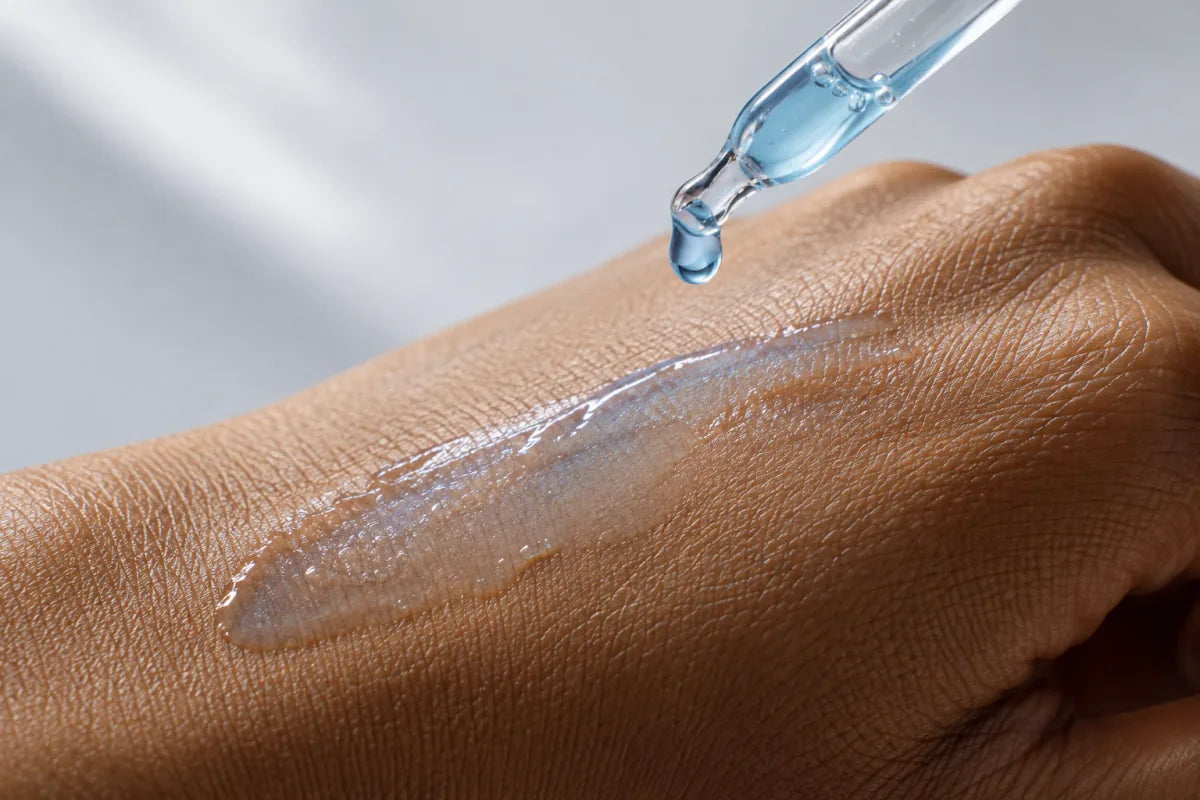
Explore the research behind GHK-Cu and the thinking behind our formulas.
Explore the science →
Which Koppā GHK-Cu product should I start with?
We recommend starting with the GHK-Cu Protocol, our three-product trio. It includes the serum, capsule cream and balm stick for a simple, complete Koppā routine.
Want to try just one product first? The GHK-Cu Face + Body Balm Stick is a convenient, easy-to-use introduction. The solid format makes targeted application simple at home or on the go.
Explore the GHK-Cu Protocol or the Balm Stick. Check the product page for current availability and pre-order timing.
What order should I apply GHK-Cu serum, cream and balm?
Apply your Koppā routine in this order: serum, cream, then balm. Start with clean skin and follow each product’s directions.
- GHK-Cu Serum: Press three to four drops onto the face and neck.
- Advanced Capsule Cream: Massage over the skin until the visible capsules disperse.
- Face + Body Balm Stick: Apply to areas that need targeted care, avoiding direct contact with the eyes.
In the morning: Finish with broad-spectrum SPF 30 or higher. If you use a retinoid, alternate evenings with your GHK-Cu routine instead of layering the two.
Why is GHK-Cu serum blue, and does the colour show its strength?
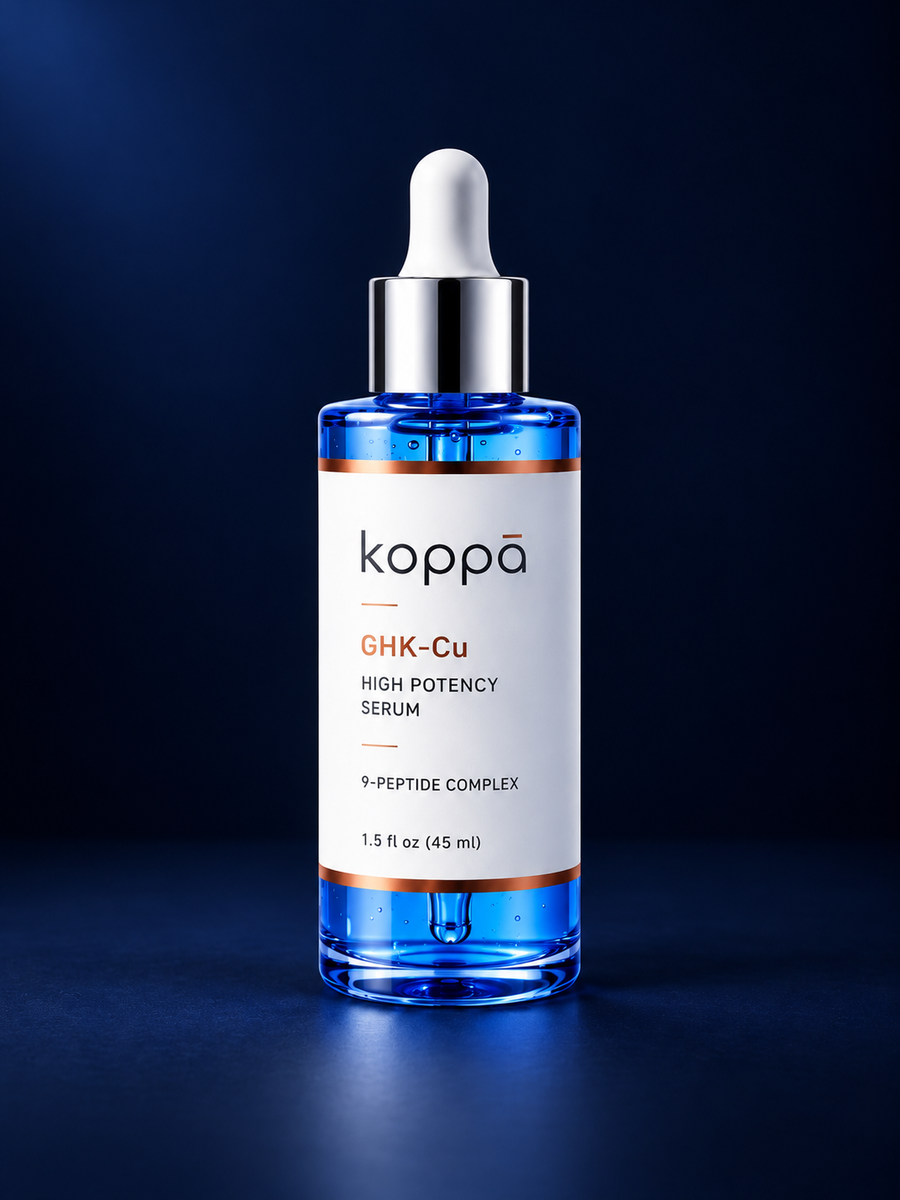
The copper-peptide complex gives GHK-Cu its characteristic blue colour. Koppā’s serum contains 2% GHK-Cu, and its blue appearance comes from that complex rather than an added colourant.
Colour is not a potency test. A deeper blue does not, by itself, prove a higher concentration, greater purity or better results. Look at the disclosed formulation and full ingredient list.
See the GHK-Cu 2% Serum product page for the formula and directions.
Can men and women use Koppā copper peptide skincare?
Yes. Koppā GHK-Cu skincare can be used by men and women. Choose your products according to your skin’s needs, the texture you prefer and how the routine fits your day.
We do not promise faster results based on gender. Individual skin condition, tolerance, sun exposure and consistent use can all affect what you notice.
Explore our men’s skincare guide or the full GHK-Cu range.
Can I use GHK-Cu with hyaluronic acid, niacinamide or moisturizer?
Hydrating ingredients such as hyaluronic acid, niacinamide and a moisturizer can fit into a GHK-Cu skincare routine. Compatibility depends on the complete formulas and your skin’s tolerance, rather than one ingredient name alone.
- Hyaluronic acid: Helps hydrate the skin; you do not need to add a separate product if your routine already provides enough moisture.
- Niacinamide: Is included in Koppā’s Advanced Capsule Cream alongside GHK-Cu.
- Moisturizer: Apply after a water-based serum to help keep skin comfortable.
Keep the routine manageable and introduce new products one at a time. Check each product’s ingredient list before combining formulas.
What should I avoid layering with GHK-Cu copper peptides?
Our recommendation is to keep retinoids, strong exfoliating acids and direct vitamin C in a separate routine from GHK-Cu. This helps simplify layering and manage skin tolerance.
- Retinol, retinal and prescription retinoids: Use on alternating nights with GHK-Cu, rather than applying them on top of each other.
- Strong AHA or BHA exfoliants: Use on a different evening. A short waiting period does not reliably establish compatibility.
- Pure vitamin C (L-ascorbic acid): Keep it in a separate routine, such as vitamin C in the morning and GHK-Cu at night, and follow the product manufacturer’s directions.
Sunscreen: Apply broad-spectrum SPF 30 or higher as the final skincare step in the morning. You do not need to add more actives to make a consistent routine worthwhile.
Can I use GHK-Cu after microneedling, PRP or laser treatment?
Only restart GHK-Cu skincare when your treating clinician says it is appropriate. Aftercare depends on the procedure, its intensity and the condition of your skin barrier. Do not apply ordinary cosmetic products to freshly needled, bleeding or broken skin.
What the evidence says: A small randomized study of GHK-Cu skincare after CO₂ laser resurfacing found no significant objective improvement in redness, wrinkles or skin quality, although users reported higher satisfaction. That does not establish faster recovery after microneedling or PRP.
Follow your clinician’s aftercare plan and use only the products they recommend during recovery. Read Miller et al. (2006) and the AAD’s post-treatment skincare guidance.
Is GHK-Cu suitable for sensitive skin, rosacea or eczema?
Sensitive skin may tolerate a GHK-Cu formula, but tolerance is individual. Koppā products are fragrance-free and dye-free; that does not make them allergy-proof or treatments for rosacea or eczema.
Start gradually: Patch-test, introduce one product at a time and monitor your skin before adding another. Stop if irritation develops rather than trying to push through it.
If you have an active flare, a damaged skin barrier or prescribed treatment, ask your dermatologist before adding new actives. See how to test a new skincare product.
Can I use GHK-Cu skincare while pregnant or breastfeeding?
Ask your healthcare professional before starting GHK-Cu skincare during pregnancy or breastfeeding. There is not enough dedicated clinical evidence to confidently establish its safety for these situations.
Share the full ingredient list for the particular product, as advice needs to consider the whole formula and your circumstances. Naturally occurring ingredients are not automatically proven safe during pregnancy.
You can find the ingredient information on each Koppā product page.
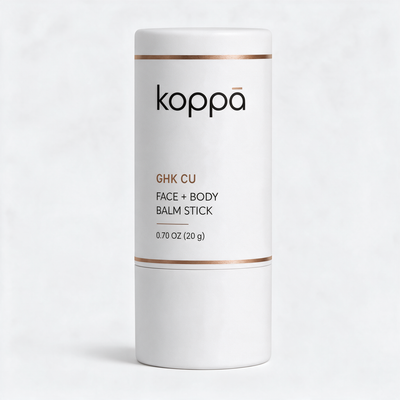
GHK-Cu Balm Stick
Targeted Peptide Balm
Shop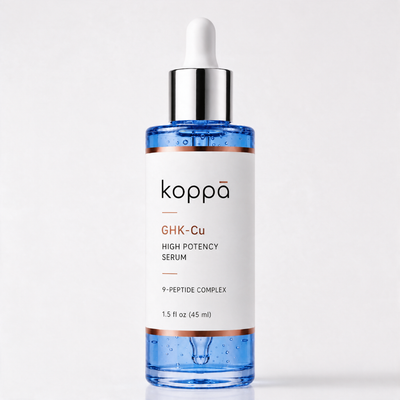
GHK-Cu 2% Serum
2% GHK-Cu Serum
Shop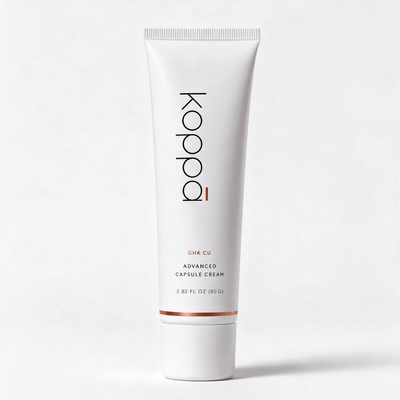
GHK-Cu Capsule Cream
Microbead Cream
Shop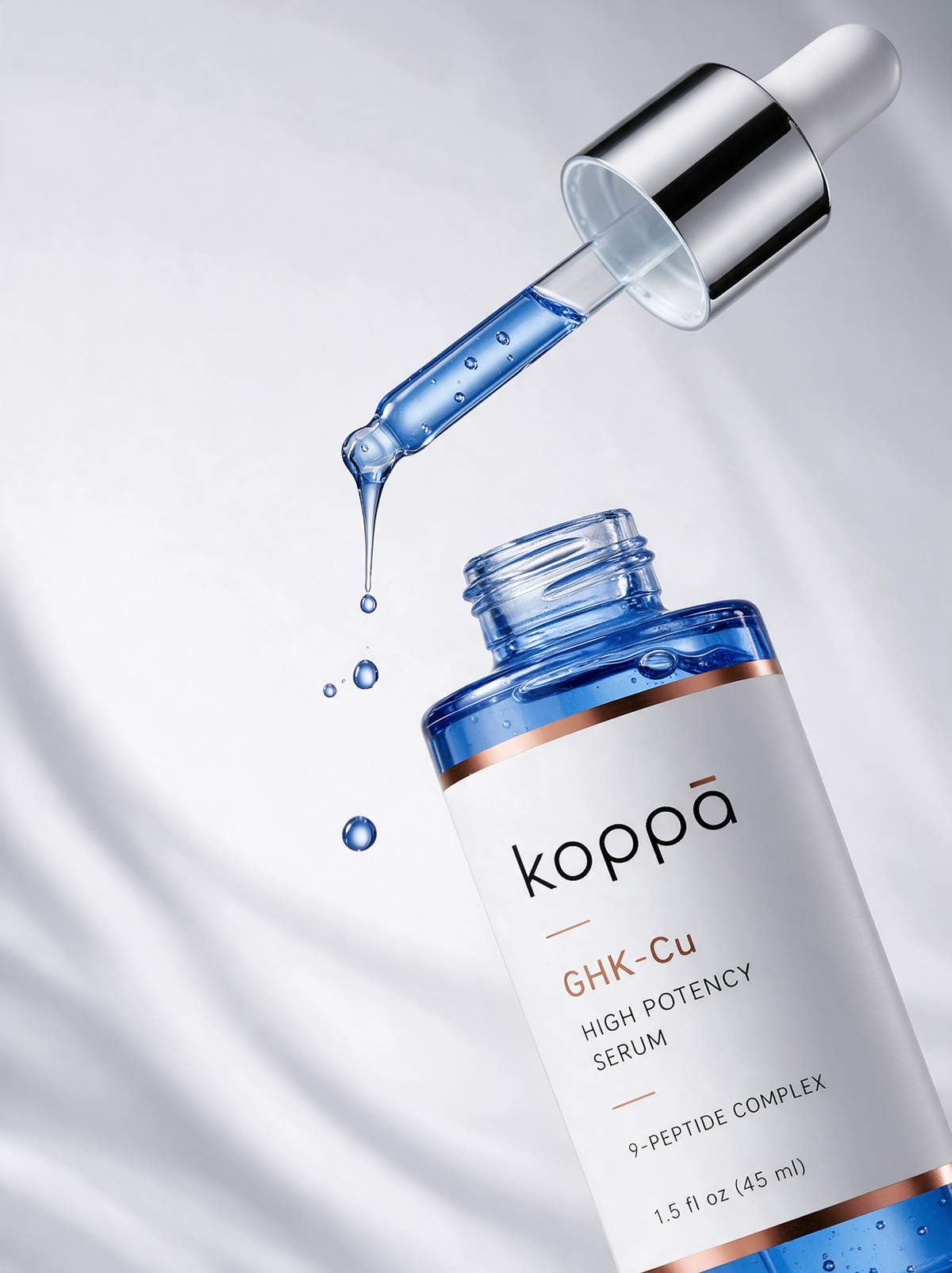
Save 11% when you buy the full three-step system.
Shop the Trio →
How long does topical GHK-Cu take to show visible skin results?
Think in weeks of consistent use, not an overnight transformation. There is no proven timeline that applies to every GHK-Cu product or person. Hydration and the appearance of fine lines can change at different rates.
Research context: The 2026 combination-cream study assessed participants over 56 days, while the post-laser study assessed outcomes over 12 weeks. Different formulas and study designs produced different findings. Neither trial establishes a promised results date for Koppā.
Follow the directions, keep the rest of your routine consistent and compare photographs taken in similar lighting. Read the 56-day study or the post-laser trial.
Why am I not seeing results from my GHK-Cu skincare?
Results vary, and not every formula will produce a visible change for every person. Review how long and how consistently you have used it, whether you follow the directions and whether you are evaluating a concern the product is designed to address.
- Keep it consistent: Avoid changing several products at once.
- Use the recommended amount: More product or a higher concentration does not guarantee faster results.
- Compare fairly: Use similar lighting and remember that hydration, texture and deeper lines are different concerns.
If a product irritates your skin, stop using it. For help simplifying your routine, contact Koppā; for persistent skin concerns, speak with a dermatologist.
How does Koppā Subscribe & Save compare with a one-time purchase?
A one-time purchase is a single order with no automatic renewal. You pay the price shown when ordering, with delivery charges confirmed at checkout.
Subscribe & Save: Receive the same product on a recurring delivery schedule, currently every two months. Save 10% on every subscription order, including renewals, compared with the standard one-time price. Standard shipping is free on subscription deliveries, including renewals.
Manage your subscription: Skip a delivery, change the next order date or cancel through your account. There is no minimum commitment or cancellation fee. Make changes before the next renewal is processed.
A renewal that has already shipped is subject to the usual return conditions.
How long do Koppā serum, cream and balm products last?
How long a product lasts depends on how much you apply, how often you use it and the areas you cover. Our approximate daily-use estimates are:
- GHK-Cu Serum, 45 ml: Four to six weeks with full-face use.
- Advanced Capsule Cream, 80 g: Six to eight weeks.
- Face + Body Balm Stick, 20 g: Six to eight weeks with targeted use; larger body areas may use it faster.
These are usage estimates, not expiry dates. Follow the shelf-life and storage guidance on your packaging. If you subscribe, adjust your next delivery in your account to suit your actual use.
Does Koppā ship internationally, and how long does delivery take?
Yes. Koppā offers international shipping, with available services confirmed at checkout. Estimated transit times after dispatch vary by destination:
- UAE and GCC: One to three business days.
- Middle East and North Africa: Four to seven business days.
- United Kingdom and Europe: Five to nine business days.
- North America: Seven to ten business days.
- Asia-Pacific: Seven to twelve business days.
- Rest of world: Ten to fifteen business days.
These estimates exclude customs clearance. Duties and import taxes may be payable by the recipient. Pre-orders follow the dispatch estimate on their product page before shipping transit begins.
See Shipping & Returns for rates, processing times and full details.
How do I request a return, refund or replacement from Koppā?
If an order arrives damaged or defective, contact Koppā within 30 days of purchase. Include your order number and clear photographs so we can review the issue.
Refunds and replacements are subject to eligibility and conditions, including where the item was purchased and its condition. Please read the full returns policy, including the separate information for UK and EU customers.
Need help with an order? Use our Contact Us page or email [email protected]. Approved refunds are processed to the original payment method.
Still have a question? Contact us — we respond within one business day.
In stock
GHK-Cu 2% High Potency Serum
$75.00 USD
View full details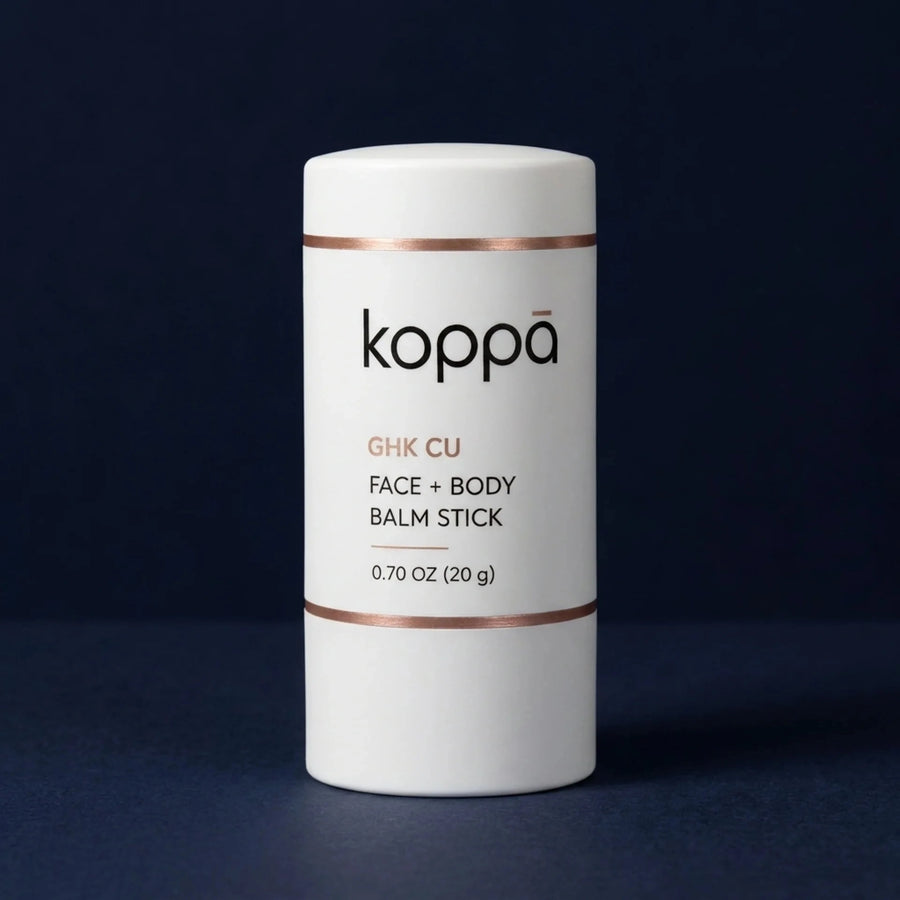
In stock
GHK-Cu Face + Body Balm Stick: Copper Peptide Balm
$45.00 USD
View full details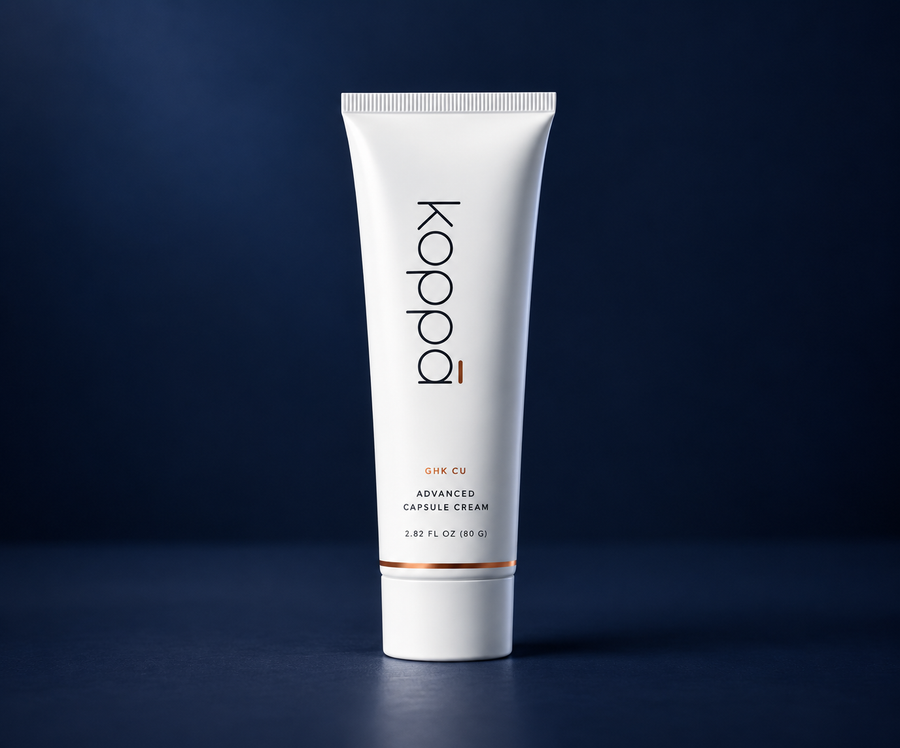
PRE-ORDER
GHK-Cu Advanced Capsule Cream: Copper Peptide Moisturizer
$70.00 USD
PRE-ORDER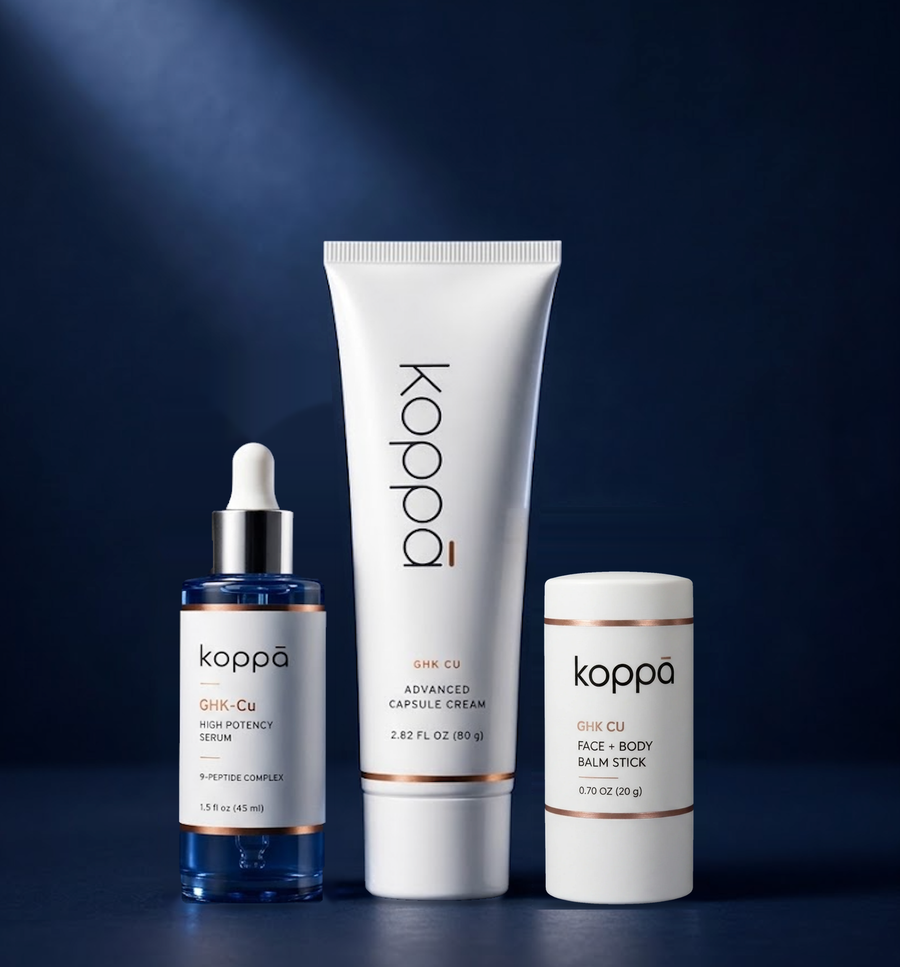
PRE-ORDER
The GHK-Cu Protocol: Copper Peptide Serum, Cream + Balm Set
$175.00 USD
PRE-ORDERThe complete GHK-Cu protocol for visible results.


