Understanding GHK-Cu skincare.
A naturally occurring peptide. Decades of research. Clear answers for your daily skincare.
What is GHK-Cu?+
GHK-Cu is a copper peptide made from glycine, histidine and lysine, three amino acids bound to a copper ion. GHK occurs naturally in the body. In skincare, GHK-Cu is also listed as Copper Tripeptide-1 and is used in formulas designed to support smoother-looking, resilient skin.
Is GHK-Cu actually effective for skin?+
Research supports GHK-Cu’s potential for skin care. Laboratory studies show increased collagen production, and small human studies of copper-peptide formulas have reported changes in procollagen and visible wrinkles. Results depend on the finished formula and consistent use; these studies explain the ingredient’s promise rather than guaranteeing the same result from every product.
Which studies support GHK-Cu for skin?+
Maquart and colleagues reported increased collagen production in fibroblast cultures in 1988. A 1998 study by Abdulghani and colleagues found increased procollagen in seven of ten people using a copper-peptide cream. In 2016, Badenhorst and colleagues reported improved wrinkle measurements with a GHK-Cu nanocarrier serum. The research cards above link to the original studies.
What makes Koppā’s GHK-Cu skincare formulas effective?+
Our formulas combine GHK-Cu with ingredients that support hydration, softness and the skin barrier. The serum uses a lightweight hydrating base, the cream protects GHK-Cu in capsules that disperse during massage, and the stick uses a waterless balm carrier chosen to support stability. That complete formula is central to our approach to healthy-looking skin.
Why are GHK-Cu skincare products blue?+
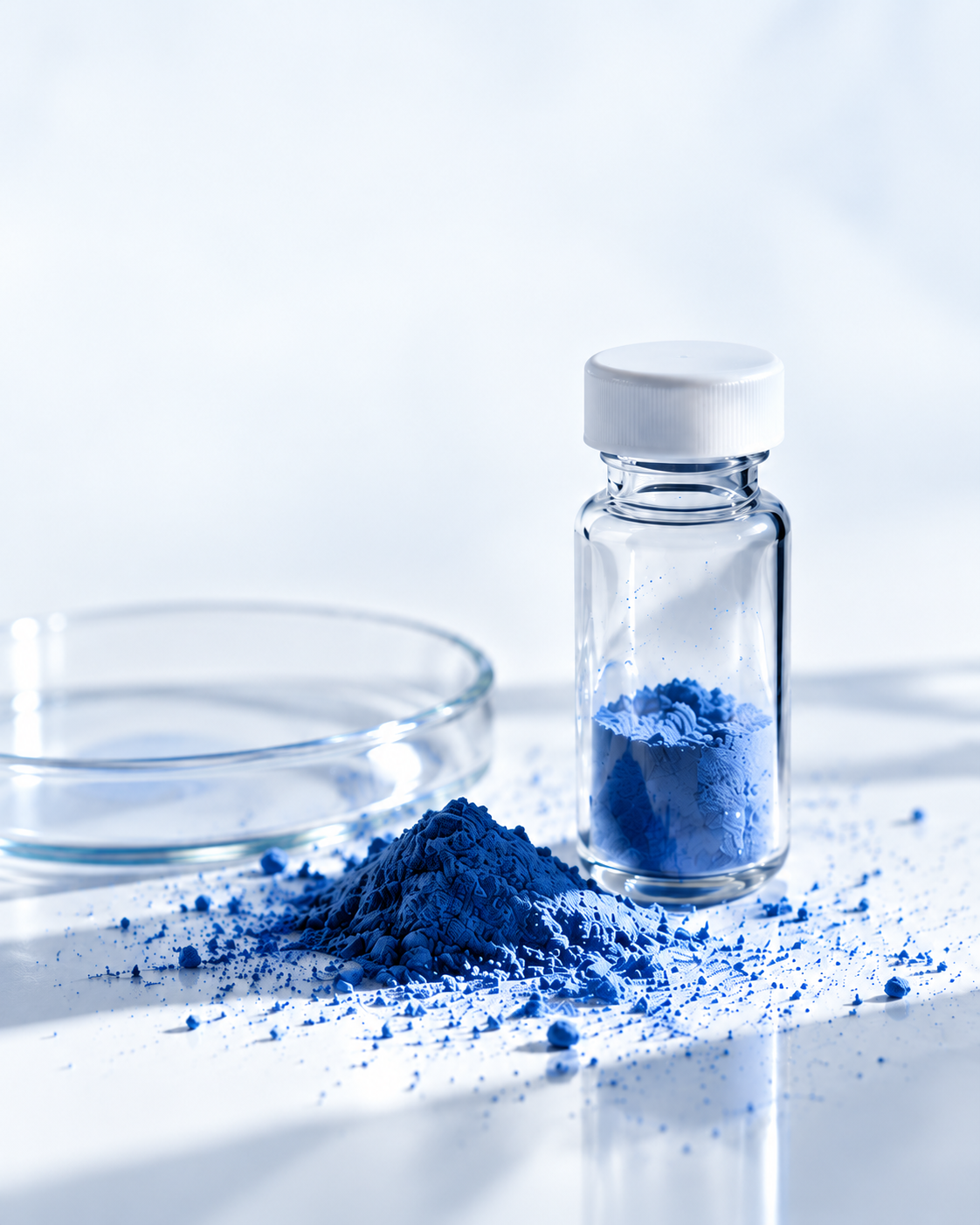
GHK-Cu has a natural blue colour because copper is bound to the peptide. That is where the colour in Koppā’s serum, cream capsules and balm comes from, with no added artificial blue dye. The shade can vary with the concentration and base; colour alone does not measure a product’s potency.
How does GHK-Cu work on the skin?+
GHK-Cu interacts with cells involved in maintaining skin’s supporting framework. In laboratory studies, fibroblasts exposed to it produced more collagen and selected glycosaminoglycans, molecules that help organise tissue and hold water. These findings are why copper peptides are used in skincare focused on firmness, texture and skin resilience.
Is GHK-Cu a new skincare ingredient?+
GHK-Cu may be new to your routine, but the science goes back decades. Collagen research was published in the 1980s, and copper-peptide creams were studied in people in the 1990s. Researchers continue to explore its activity and how different formulas deliver it to skin.
What concentration of GHK-Cu is in Koppā products?+
Koppā’s serum contains 2% GHK-Cu. The capsule cream contains 0.5% encapsulated GHK-Cu, and the balm stick contains 0.5% GHK-Cu. A higher percentage does not tell the whole story: the base, supporting ingredients and how the product fits your skin also matter.
Why does Koppā encapsulate GHK-Cu in its cream?+
The visible blue capsules are designed to help protect the copper peptide within the cream before application. As you massage the cream into skin, the capsules disperse, releasing GHK-Cu into the moisturising base. Hydrating ingredients and skin-softening oils work alongside the peptide.
Why is Koppā’s GHK-Cu balm stick waterless?+
The water-free carrier is chosen to support GHK-Cu stability while creating a portable, targeted format. Jojoba oil, squalane and meadowfoam oil condition dry skin, and the balm leaves a protective-feeling layer where you apply it. It is designed for easy peptide care on the face and body.
Which Koppā GHK-Cu product should I choose?+
Choose the serum for lightweight peptide care and hydration, the capsule cream for replenishing moisture and barrier comfort, or the balm stick for targeted dry areas and on-the-go use. You can use them individually or layer serum, cream and then balm where needed. Keep the routine simple enough to use consistently.





 Treat · 45 mL


