




Our story
Built between two generations.

Chantelle and Madelaine, 2002
The founders
Chantelle, 54 · Madelaine, 28
We came to skincare at very different ages, with very different experiences. What we agreed on was simpler: skin deserves consistent, well-researched care at every stage of life.
Co-founders of koppā
Chantelle · Co-founder
I came to skincare late.

I’ve been interested in beauty for as long as I can remember. I was ten the first time I remember trying makeup, a frosty lime-green eyeshadow, and years that followed with failed attempts at bleaching my hair blonde, aggressively over-plucked eyebrows, a DIY chemical peel that left me with second degree burns, and more than a few other questionable beauty experiments.
Skincare came later. When I moved to Vietnam in 2011, and then Tokyo 3 years later, I began to see it differently. What stayed with me wasn’t a particular product or trend, but the emphasis on consistency, ritual and caring for skin over time. It was the first time I started thinking about skincare as something you invest in, rather than something you reach for when there’s a problem.
Continue reading
It was around this time that the natural aging process of my skin started to matter. Scattered sun spots made their first appearance on my face and hands, reminding me of my 3 years of heavy UV exposure in South East Asia. Gravity kicked in, relocating my eyelids slowly south, and years of laughing until the point of tears leaving its mark with fine lines and wrinkles across my face.
I won’t pretend my approach to beauty has ever been entirely natural. I have reached for injections, the occasional scalpel, and a laser routine that I will never break up with. But what has changed is my thinking about my skin.
I don’t want to look twenty forever. I want my skin to be healthy. I want to look fresh. And I want to have the best skin I can have for my age.
I also don’t believe any topical skincare product can turn back the hands of time. But I admit that hasn’t stopped me from falling for the promise that one might. I’ve bought into the launches, the miracle ingredients and the quick fixes, only to end up with a bathroom full of products that never quite delivered what the marketing promised.
Eventually, I stopped asking how I could make my skin look younger and started asking a different question: How do I support the health of my skin for as long as possible?
That shift led me toward skin longevity, the idea of supporting the processes that help skin maintain its strength, resilience and ability to renew itself over time. And that is what eventually led me to GHK-Cu.
What interested me wasn’t a promise of overnight transformation. It was the depth of research behind a naturally occurring copper peptide and its role in processes connected to collagen production, repair and skin renewal. It aligned with the way I had come to think about skincare: not as a way to erase age, but as a way to support the skin you have as it changes.
That became the foundation for koppā
I’m proudly 54 years old, with 54-year-old skin that has never looked healthier.
Welcome to koppā.
ChantelleCo-founder, koppā
I stopped looking for something that promised to make me look ten years younger. I wanted to understand what could help my skin feel good, function well and stay resilient for the years ahead.
Chantelle
Madelaine · Co-founder
I came to it from the other direction.

Some of my earliest memories are of my mom getting ready to go out. Our house was always full of her friends. Beautiful clothes, makeup scattered everywhere, hair being done, lots of laughter. I remember watching them getting ready for nights out and thinking it was all impossibly glamorous. Naturally, I wanted to join in. I played with red lipstick, put bows and ribbons in my hair, and sometimes even went along with my mum to get my nails done. I loved all of it. But skincare? That wasn't really part of the conversation.
Continue reading
When we moved to Southeast Asia, that changed a little. I have very pale skin, and suddenly sunscreen became a necessity. Not because I was particularly concerned about long-term sun damage or premature aging. I just really, really didn't want to burn. Although I wasn't always very good at avoiding it. I distinctly remember falling asleep beside a pool having diligently applied sunscreen everywhere except my eyelids. They burned so badly that my eyes swelled shut. An unforgettable lesson in sunscreen application.
My real interest in skincare came later, in my teens, around the time social media was becoming a much bigger part of my life. Instagram, and eventually TikTok, introduced me to an entirely different beauty world. Viral products, celebrity endorsements, elaborate routines, and endless videos of people telling me what I absolutely needed to put on my face. And of course, I wanted to try everything. Not because my 16-year-old skin particularly needed a complicated routine, but because an algorithm was very good at convincing me that it did. I accumulated products. Lots of them. Serums, creams, masks, exfoliants, whatever was trending that month. My bathroom cupboards became a collection of half-empty bottles, and honestly, sometimes they still are.
I'm 28. I still love beauty products. I still get excited about new launches, and I still occasionally buy something simply because I've seen it everywhere and want to know what the fuss is about. I don't think there's anything wrong with that. Beauty should be fun, too. But somewhere along the way, I started questioning how much of what I was buying my skin actually needed. When you constantly introduce something new, how do you know what's working? When your routine changes every few weeks, what are you actually achieving? And perhaps more importantly, what is it you're trying to fix in the first place?
At 28, I'm beginning to notice the tiniest changes in my skin, but I'm not particularly interested in fighting the aging process just yet. I'm young. I know that. And I don't want to spend the next few decades worrying about wrinkles I don't even have. What I do care about is the health of my skin. I want skin that feels hydrated, looks fresh, has good texture, and is well cared for. Not perfect skin. Just healthy skin.
When Mom and I first started exploring the idea of koppā, that was the part that really resonated with me. We weren't talking about miracle products or reversing time. We were talking about skin health, consistency, and taking care of the skin we have, at whatever age we happen to be. It was a completely different conversation from the one I was having with my phone every day. And I liked it.
I still remember when our very first round of samples arrived. Mom and I were buzzing. Almost manic, actually. After months of talking about what we wanted to create, suddenly we had real products in our hands. We spent the next few days trying everything, comparing notes, and getting probably far too excited about the smallest details. Then came the bigger conversations. What did we love? What didn't feel quite right? What needed to change in the formulas to make each product the very best it could be? And we didn't always agree, which I think was part of what made the process so interesting. We were looking at the same products through two very different sets of eyes, with different skin, different experiences, and different expectations. Building something together like that, from an idea to something we genuinely believe in, has been an incredible experience. And getting to do it with my mom has made it even more special.
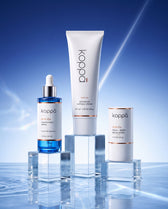
For me, creating koppā wasn't about finding a solution to problems I haven't experienced yet. It was about establishing a good foundation now, one I can carry with me as my skin changes over the years. I didn't need another ten products in my bathroom. I needed to understand what I was using, why I was using it, and how it fitted into my everyday life. That's what I love about the koppā Protocol. Three steps. Serum, cream, balm stick. Sunscreen in the morning, of course. And then I get on with my day. It's simple enough that I actually stick to it, which, given my history of collecting skincare, is quite an achievement.
Does that mean I've stopped trying new things? Absolutely not. I'm still 28. I'm still curious. And if something interesting starts trending tomorrow, there's a reasonable chance I'll want to try it. But now I see those products as something fun to experiment with, rather than something I need to rely on. My everyday routine is different. It has a purpose, and I believe in what we've created.
Mom and I came to koppā from two very different places in life. She's thinking about maintaining the health of skin that has already lived through decades of change. I'm thinking about building a foundation for the decades ahead. But ultimately, we want the same thing. Healthy skin, for as long as possible. And I’d quite like to enjoy being 28 while I’m at it.
With love,
MadelaineCo-founder, koppā
Different ages. Same idea.
54
I want to support the skin I have, not spend my life trying to recover the skin I had.
28
I want to care for my skin without being taught to fear what happens to it next.
That became koppā.

What matters to koppā
We believe skincare should help you feel good about the skin you have now, while supporting its health for the years ahead.
Our formulas are built around skin health and longevity, grounded in years of verified research and designed for easy, consistent daily care. The goal is simple: to help skin stay resilient, hydrated, supported and visibly well over time.
We think that is where skincare is heading: away from forcing skin to change, toward supporting it. One well-studied copper peptide, used at a dose we print on the label, is how we chose to get there.
Mother. Daughter. Co‑founders. And very often, two completely different opinions.
Those differences are part of the point. We do not experience our skin in the same way, and we do not always approach a decision from the same direction. The conversation between those perspectives continues to shape what we make, how we talk about skin and what we refuse to promise.

Our principles
Research over hype
We choose ingredients and concentrations because there is substantial research behind them, not because they are having a moment.
Consistency over complexity
Skincare has to fit into real life if you are going to keep using it. We focus on formulas that work together in a routine that feels easy to maintain.
Longevity over youth
The goal is not younger skin. It is supporting skin health and helping you feel good about the skin you live in, now and for the years ahead.
GHK-Cu skincare: benefits, routines & results.
What does koppā specialise in?
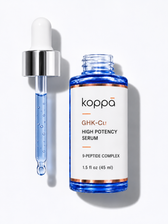
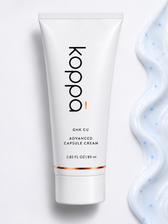
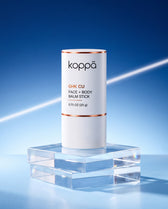
koppā is a GHK-Cu copper peptide skincare brand, founded in 2025 in the UAE by Chantelle and Madelaine. It makes a 2% GHK-Cu serum, a 0.5% GHK-Cu moisturizing cream with 5% niacinamide and a 0.5% GHK-Cu balm stick, each with its percentage and full ingredient list on the label. Copper peptides are the foundation of the whole range. We pair GHK-Cu with supporting ingredients for hydration, moisture-barrier support and smoother-looking skin.
What are GHK-Cu copper peptides?
GHK-Cu is a copper-binding peptide listed as Copper Tripeptide-1 in skincare ingredient lists. koppā uses a stated 2% GHK-Cu in the Serum and 0.5% in the Moisturizing Cream and Balm Stick. Explore our GHK-Cu guide and published ingredient evidence. Ingredient research is distinct from clinical testing of finished koppā products.
Why choose the complete Protocol?
Three complementary formulas, one straightforward routine. Start with the serum for lightweight peptide care, follow with the cream for cushioning moisture, then use the balm on areas that need extra attention. The GHK-Cu Protocol brings all three full-size formulas together at a lower price than buying them separately. It is the simplest way to explore the full koppā range, with a clear place for each product in your day.
Which formula fits my skin and routine?
Choose the benefit and texture you are looking for: The Serum: lightweight daily care for smoother, firmer-looking skin. The Moisturizing Cream: daily moisture to soften dry skin and leave it feeling cushioned. The Balm Stick: targeted moisture for dry areas on the face, neck and body. Start with one or take our routine quiz to find your starting point.
What changes should I look for in my skin?
Look for how your skin feels as well as how it looks: softness, moisture and everyday comfort are useful starting points. Changes in the appearance of texture, firmness and fine lines take consistent use and vary with your skin and wider routine. Consistency matters more than adding more steps. Choose formulas you enjoy using and assess your skin over time. We do not promise overnight results or a fixed timeline.
Can I start with just one product?
Absolutely. Build around what your skin needs today. Add the serum if you want a lightweight peptide step, choose the cream for daily moisture, or keep the balm close for targeted dry-area care. You do not need the entire set to start. When you want a complete routine, the Protocol brings those same three steps together.
How does koppā support the skin’s moisture barrier?
Each formula has a role: Serum pairs copper peptides with two ceramides and hydrating ingredients; Cream adds 5% niacinamide and emollients; Balm provides richer care for dry areas. Together, these ingredients support moisturised, comfortable-feeling skin. Read our skin-barrier guide for the research and a simple routine.
How does koppā compare with other copper peptide brands?
We publish label-by-label comparisons. Of the five brands on our copper peptide brand comparison, koppā is the only one with a serum, a cream and a balm there, and each states its GHK-Cu percentage (labels checked October 2026). All three koppā products are fragrance-free and silicone-free, and the serum and balm stick contain no EDTA. For product-level data, see copper peptide serums compared and copper peptide creams compared.

Support the skin you live in.
For us, skin longevity is not about holding on to one version of yourself. It is about caring for your skin with consistency, perspective and respect for the life you are living in it.


