
Every ingredient in koppā, and what it does
Three products, 63 ingredient names, one line each. Ingredients are listed in the order they appear on each label, which is descending order of concentration down to 1%. GHK-Cu (Copper Tripeptide-1) is the active in all three: 2% in the serum, 0.5% in the cream, 0.5% in the balm stick. Nothing here is fragrance, a silicone, a drying alcohol or an exfoliating acid.

- GHK-Cu % stated on every label
- No synthetic fragrance
- No silicones
- Marine collagen in serum and cream
- Plant-based balm, no tallow
Three labels, read in order
Each ingredient appears once, under the first product it shows up in, with the products it is in named at the end of the line. The INCI name is the one on the label; the plain-English line says what it is and why it is there. These entries explain each ingredient’s cosmetic function. Research references identify the study type and tested formulation; product-specific testing is described separately.
GHK-Cu Serum: 26 ingredients
2% Copper Tripeptide-1 is fourth on the label, after water, trehalose and glycerin.
Aqua
Water. The base of the serum and the cream. In the serum and cream.
Trehalose
A sugar that binds water and helps keep the formula and the skin surface hydrated. In the serum and cream.
Glycerin
A humectant: draws water into the outer layer of skin and helps it feel softer. In the serum and cream.
Copper Tripeptide-1
GHK-Cu, the active in every koppā product: 2% in the serum, 0.5% in the cream and the balm. A three-amino-acid peptide bound to copper, studied for its role in collagen synthesis in cell culture and in human trials. In the serum, cream and balm stick.
1,2-Hexanediol
A humectant that also helps keep the water-based formulas stable and free of microbes. In the serum and cream.
Betaine
An amino-acid derivative from sugar beet; a gentle humectant. In the serum.
Hydrolyzed Collagen
Collagen broken into small fragments so it can sit on the skin as a film-forming humectant. Marine source; it does not become skin collagen. In the serum and cream.
Panthenol
Provitamin B5. A humectant and skin conditioner with human data for barrier recovery after irritation. In the serum.
Polyglutamic Acid
A large water-binding molecule from fermented soybean; forms a hydrating film on the surface. In the serum.
Ceramide EOP
One of the lipid types found in the skin barrier; added to support the feel of a comfortable, intact surface. In the serum.
Pullulan
A polysaccharide from fermentation; gives a light tightening film and improves texture. In the serum.
Sodium Hyaluronate
The salt of hyaluronic acid; a humectant that holds water in the outer skin. In the serum and cream.
Acetyl Hexapeptide-8
Argireline, a signal peptide studied in placebo-controlled human trials for the look of expression lines. In the serum, cream and balm stick.
Allantoin
A soothing skin conditioner. In the serum.
Palmitoyl Tetrapeptide-7
A signal peptide, one half of the Matrixyl 3000 pair, studied in cosmetic trials for the look of photoaged skin. In the serum and balm stick.
Dipeptide Diaminobutyroyl Benzylamide Diacetate
SYN-AKE, a synthetic peptide marketed for the look of expression lines. In the serum and balm stick.
Arginine
An amino acid used to adjust pH and condition skin. In the serum and cream.
Carbomer
A thickener that gives the serum and cream their texture. In the serum and cream.
Hydrolyzed Sclerotium Gum
A fermentation-derived gum that thickens and leaves a silky feel. In the serum.
Ceramide NP
The most abundant ceramide type in the skin barrier; the second ceramide in the serum. In the serum.
Dipotassium Glycyrrhizate
A liquorice-root derivative used as a soothing agent. In the serum.
Carnosine
A dipeptide of two amino acids; an antioxidant. In the serum and balm stick.
Collagen
Marine collagen in its larger form; a film-forming moisturiser on the surface of the skin. In the serum and cream.
Palmitoyl Tripeptide-5
A signal peptide marketed for the look of firmness. In the serum and balm stick.
Acetyl Octapeptide-3
SNAP-8, a longer relative of Argireline. In the serum.
Ethylhexylglycerin
A skin-conditioning agent that also supports the preservative system. In the serum.
GHK-Cu Moisturizing Cream: 38 ingredients
0.5% Copper Tripeptide-1 sits sixteenth, inside the capsules; 5% niacinamide is third. Ingredients already described above are listed by name only.
Niacinamide
Vitamin B3, 5% in the cream. Twelve-week human data for the appearance of texture and tone (Bissett et al., 2005). In the cream.
Squalane
A stable, saturated emollient: 4% in the cream, and a main base oil in the balm. Softens and slows water loss. In the cream and balm stick.
Butylene Glycol
A humectant and solvent that helps other ingredients dissolve. In the cream.
Simmondsia Chinensis (Jojoba) Seed Oil
Jojoba, a liquid wax ester close to the skin's own sebum: 3% in the cream, a base oil in the balm. In the cream and balm stick.
Euglena Gracilis Polysaccharide
A polysaccharide from a freshwater micro-organism; a conditioning humectant. In the cream.
Pentylene Glycol
A humectant that also helps keep the formula stable. In the cream.
Isononyl Isononanoate
A light, dry-feeling emollient ester; not a silicone. In the cream.
Caprylic/Capric Triglyceride
A coconut-derived emollient with a light feel. In the cream.
Cetearyl Olivate
An olive-derived emulsifier that holds the oil and water phases of the cream together. In the cream.
C14-22 Alcohols
Fatty alcohols that thicken and stabilise the cream; not drying alcohols. In the cream.
Sorbitan Olivate
The second half of the olive-derived emulsifier pair. In the cream.
Tocopheryl Acetate
A stable form of vitamin E; an antioxidant that protects the oils in the formula. In the cream.
Tremella Fuciformis Polysaccharide
Snow-mushroom polysaccharide; a water-binding humectant. In the cream.
Portulaca Oleracea Extract
Purslane extract, used as a soothing agent. In the cream.
Leontopodium Alpinum Callus Culture Extract
Edelweiss stem-cell culture extract; an antioxidant plant extract. In the cream.
Crithmum Maritimum Callus Culture Filtrate
Sea-fennel cell culture filtrate; a conditioning plant extract. In the cream.
C12-20 Alkyl Glucoside
A sugar-derived co-emulsifier. In the cream.
Hydrolyzed Sodium Hyaluronate
Low-molecular-weight hyaluronic acid; a humectant with smaller fragments than sodium hyaluronate. In the cream.
Adenosine
A nucleoside that occurs naturally in the body; a skin-conditioning agent used in cosmetics for the look of smoothness. In the cream.
Disodium EDTA
A chelator that binds stray metal ions and keeps the formula stable. In the cream.
Algin
Alginate from brown seaweed; part of the capsule wall and a texturiser. In the cream.
Mannitol
A sugar alcohol used as a humectant and texturiser. In the cream.
Tripeptide-1
GHK without the copper; the same three amino acids as a signal peptide. In the cream.
Pentapeptide-3
A synthetic signal peptide. In the cream.
Agar
A seaweed polysaccharide; a gelling agent used in the capsule structure. In the cream.
Hydroxyethylcellulose
A plant-cellulose thickener. In the cream.
Gellan Gum
A fermentation-derived gelling agent. In the cream.
Also in the cream, described above: Aqua, Glycerin, Trehalose, 1,2-Hexanediol, Copper Tripeptide-1, Arginine, Hydrolyzed Collagen, Carbomer, Sodium Hyaluronate, Acetyl Hexapeptide-8, Collagen.
GHK-Cu Balm Stick: 18 ingredients
No water, so no preservative system. 0.5% Copper Tripeptide-1 is ninth, after the oils, wax and starch that make the stick.
Olea Europaea (Olive) Fruit Oil
Olive oil, the first ingredient of the balm; an emollient rich in oleic acid. In the balm stick.
Cocos Nucifera (Coconut) Oil
Coconut oil; a solid-at-room-temperature emollient that gives the stick body. In the balm stick.
Candelilla Cera
Candelilla wax, a plant wax from a Mexican shrub; it sets the balm into a stick. No beeswax. In the balm stick.
Tapioca Starch
A plant starch that absorbs excess oil and gives the balm its matte finish. In the balm stick.
Limnanthes Alba (Meadowfoam) Seed Oil
Meadowfoam seed oil; a very stable emollient that resists going rancid. In the balm stick.
Myrothamnus Flabellifolia Leaf/Stem Extract
Resurrection-plant extract; a plant extract used for its water-binding properties. In the balm stick.
Tocopherol
Vitamin E; an antioxidant that protects the balm's oils. In the balm stick.
Tridecapeptide-1
A thirteen-amino-acid synthetic peptide; a skin-conditioning peptide in the balm. In the balm stick.
Palmitoyl Pentapeptide-4
Matrixyl, a signal peptide with a 93-woman placebo-controlled study for the look of photoaged skin (Robinson et al., 2005). In the balm stick.
Arginine/Lysine Polypeptide
A polypeptide of the amino acids arginine and lysine; a conditioning peptide. In the balm stick.
Also in the balm stick, described above: Simmondsia Chinensis (Jojoba) Seed Oil, Squalane, Copper Tripeptide-1, Acetyl Hexapeptide-8, Palmitoyl Tetrapeptide-7, Dipeptide Diaminobutyroyl Benzylamide Diacetate, Carnosine, Palmitoyl Tripeptide-5.
Ingredient lists are as printed on the current cartons. A reformulation would change the label first and this page second; if they ever disagree, the carton is right and we would like to hear about it.

One peptide, three formats, the percentage on every label.
Copper Tripeptide-1 at 2% in the serum, 0.5% in the cream and 0.5% in the balm. Everything around it is listed above, with its job.
- 2% GHK-Cu, stated
- Fragrance-free, silicone-free
- Cruelty free
- Free US shipping over US$100
Free US shipping over US$100. See all four products
Questions about what is in koppā
Is koppā vegan?
The balm stick contains no animal-derived ingredients: its oils and wax are plant-based, with no tallow, beeswax or honey. The serum and the cream contain marine collagen (Collagen and Hydrolyzed Collagen), so they are not vegan.
Does koppā contain fragrance or essential oils?
No synthetic fragrance and no essential oils in any of the three products. The ingredient lists above are complete.
Does koppā contain silicones?
No. The light emollient in the cream, Isononyl Isononanoate, is an ester, not a silicone. There is no dimethicone or any other silicone in the three formulas.
What is Tridecapeptide-1?
A synthetic peptide of thirteen amino acids used as a skin-conditioning ingredient in the balm stick. It complements GHK-Cu and the moisturizing base as part of the balm’s skin-conditioning blend.
Why is the serum blue?
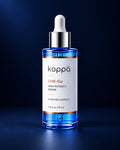
The colour is the copper complex itself. GHK-Cu is blue in solution, and no colourant is added. A serum labelled GHK-Cu that is clear or pale deserves a question.
Is candelilla wax comedogenic?
Candelilla wax is a plant wax used to set the balm into a stick, and it is generally considered low on the comedogenic scale. The balm is a targeted product for the neck, hands, body and small areas of the face rather than a full-face layer; if you are acne-prone, keep it off areas where you break out.
References
- 1.Pickart L, Vasquez-Soltero JM, Margolina A. GHK Peptide as a Natural Modulator of Multiple Cellular Pathways in Skin Regeneration. BioMed Research International. 2015;2015:648108. Read the paper
- 2.Maquart FX, Pickart L, Laurent M, Gillery P, Monboisse JC, Borel JP. Stimulation of collagen synthesis in fibroblast cultures by the tripeptide-copper complex glycyl-L-histidyl-L-lysine-Cu2+. FEBS Letters. 1988;238(2):343-346. Read the paper
- 3.Hostynek JJ, Dreher F, Maibach HI. Human skin retention and penetration of a copper tripeptide in vitro as function of skin layer towards anti-inflammatory therapy. Inflammation Research. 2010;59(11):983-988. Read the paper
- 4.Johnson W, Bergfeld WF, Belsito DV, et al. Safety Assessment of Tripeptide-1, Hexapeptide-12, Their Metal Salts and Fatty Acyl Derivatives, and Palmitoyl Tetrapeptide-7 as Used in Cosmetics. International Journal of Toxicology. 2018;37(3 suppl):90S-102S. Read the paper
- 5.Bissett DL, Oblong JE, Berge CA. Niacinamide: a B vitamin that improves aging facial skin appearance. Dermatologic Surgery. 2005;31(7 Pt 2):860-865. Read the paper
- 6.Proksch E, Nissen HP. Dexpanthenol enhances skin barrier repair and reduces inflammation after sodium lauryl sulphate-induced irritation. Journal of Dermatological Treatment. 2002;13(4):173-178. Read the paper
- 7.Blanes-Mira C, Clemente J, Jodas G, et al. A synthetic hexapeptide (Argireline) with antiwrinkle activity. International Journal of Cosmetic Science. 2002;24(5):303-310. Read the paper
- 8.Robinson LR, Fitzgerald NC, Doughty DG, Dawes NC, Berge CA, Bissett DL. Topical palmitoyl pentapeptide provides improvement in photoaged human facial skin. International Journal of Cosmetic Science. 2005;27(3):155-160. Read the paper
Every ingredient listed. Every percentage stated.
Three formats, one active, nothing you have to guess at.
 Step 1, treat · For this question
koppā 2% GHK-Cu High-Concentration Copper Peptide SerumConcentrated peptides for firmer, smoother-looking skin.$75Shop
 Step 2, nourish
koppā GHK-Cu Moisturizing CreamCapsule-released peptides for deep, lasting hydration.$70Shop
 Step 3, seal
koppā GHK-Cu Balm StickCollagen support and hydration, from face to body.$45Shop
 All three, for less
koppā GHK-Cu Protocol TrioYour complete peptide routine, for less.$175
Keep reading
A question about an ingredient?
Ask us. If we don't know, we'll ask the manufacturer and tell you what they said.
Page updated 7 October 2026