


benefits
Copper Peptide Serum Benefits: What GHK-Cu Does for Skin

A copper peptide serum is used for skin that looks smoother and firmer, with softer-looking fine lines. The best human evidence, described in a 2018 review in the International Journal of Molecular Sciences[1], is a 12-week study in which 71 women used a GHK-Cu face cream: their skin measured denser and thicker, looked less lax, and showed shallower fine lines. That study tested a cream rather than a serum, and GHK-Cu works alongside daily sunscreen and consistent use, not instead of them.
Below: what a copper peptide serum is, what the research behind each benefit measured, and how to use one well.
What is copper peptide serum?
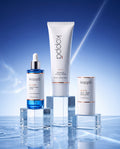
A copper peptide serum is a light, water-based formula built around GHK-Cu. GHK is a peptide three amino acids long (glycine, histidine, lysine), and in skincare it carries a copper ion, which is why these serums are blue. Your body already makes it, and makes less of it with age. The same 2018 review, by Pickart and Margolina, puts the level in blood at about 200 ng/mL at age 20 and about 80 ng/mL by 60.
It behaves less like an exfoliant and more like a signal. It doesn't strip or peel the surface. In research settings it nudges the cells that maintain skin to keep doing that work. For a deeper explanation of the mechanisms behind GHK-Cu's effects on collagen and repair, see our guide to what GHK-Cu is.
What does copper peptide serum do for skin?
Here is each benefit people talk about, next to what the research actually looked at.
1. Support for collagen and the skin's structure
This is the benefit most people are after. A 2015 review in BioMed Research International[2] reports that GHK stimulates collagen, dermatan sulfate, chondroitin sulfate and the small proteoglycan decorin. It also adjusts both the enzymes that break collagen down (metalloproteinases) and the ones that hold them back. So old collagen gets cleared as new collagen is laid down. That is cell and lab work, and it explains why the ingredient is in skincare. It is also the slowest benefit to show, because collagen turns over slowly. Our article on copper peptides and collagen goes deeper.
2. Softer-looking fine lines and firmer-looking skin
This is where the human evidence sits. The 2018 review reports a 12-week study in which a GHK-Cu facial cream was used by 71 women with mild to advanced signs of sun ageing. Their skin measured denser and thicker, looked less lax and clearer, and showed fewer fine lines and shallower wrinkles. A second 12-week study, of an eye cream used by 41 women around the eyes, did better than both a placebo and a vitamin K cream on lines, wrinkles and skin density.
Both ran for 12 weeks on faces. When you buy a serum, look for the stated percentage and the full ingredient list.
3. Antioxidant activity, in the lab
The 2018 review describes GHK fully blocking copper-driven oxidation of LDL (a blood fat) in a lab test, where the antioxidant enzyme superoxide dismutase gave about 20% protection. That is test-tube chemistry, and one of the reasons researchers are interested in the peptide.
4. Wound research, which is a different question
A lot of GHK-Cu's research history is about wounds. The 2015 review lists wound studies in rats, mice, pigs and dogs. That work is real, and it answers a separate question from an everyday cosmetic serum, which is about how skin looks and feels.
Getting the most from a copper peptide serum
- Pair it with sunscreen. The American Academy of Dermatology notes that sun protection helps reduce signs of premature ageing[3]. A serum works on the skin you have; SPF protects it.
- Use it consistently. The human studies ran for 12 weeks of regular use, so daily use is what counts.
- Read the label, not the colour. The blue shows copper is there; the stated percentage tells you how much.
Is a copper peptide serum right for your skin?
Copper peptides don't work by exfoliating or peeling the skin, which is why people with easily irritated skin often reach for them.
You may see the phrase "copper uglies" online. It's an internet nickname, not a diagnosis, used for anything from a faint blue tint where product hasn't sunk in to dryness, redness or bumps. A colour cast is cosmetic, and a thin layer that sinks in avoids it. If you have a skin condition, or are pregnant or breastfeeding, check with your doctor before starting anything new.
How to use a copper peptide serum
- Start on clean skin. Cleanse gently and pat dry.
- Use a few drops.
- Moisturise on top. Any moisturiser works.
- Finish mornings with SPF 30 or higher.
- Keep vitamin C and strong acids to a different step. A strongly acidic layer can loosen copper's grip on the peptide, so most people use vitamin C in the morning and GHK-Cu at night. Our guide to copper peptides and vitamin C sets out the options.
Frequently asked questions
Is copper peptide serum good for sensitive skin?
It often suits sensitive skin, because it doesn't exfoliate, but it can still irritate some people, like any product. Patch test it first, and see our guide to copper peptides for sensitive skin.
Can I use copper peptide serum every day?
Yes. GHK-Cu doesn't exfoliate, and the facial studies in the 2018 review ran for 12 weeks of regular use; one of them applied a GHK-Cu cream twice a day.
Does copper peptide serum help with wrinkles?
It can soften how fine lines look. The human studies, run for 12 weeks on face and eye creams, found shallower fine lines and wrinkles. Deep expression lines come from muscle movement, so for those it works alongside retinoids and in-clinic options.
How long does copper peptide serum take to work?
The facial studies measured results at 12 weeks of daily use. Take a photo in the same light before you start, and judge it over months.
The short version
A copper peptide serum is used for smoother, firmer-looking skin and softer-looking fine lines. The lab research shows GHK-Cu supporting collagen upkeep, and the best human studies found denser skin and shallower lines after 12 weeks. It works best with consistent use and daily SPF.
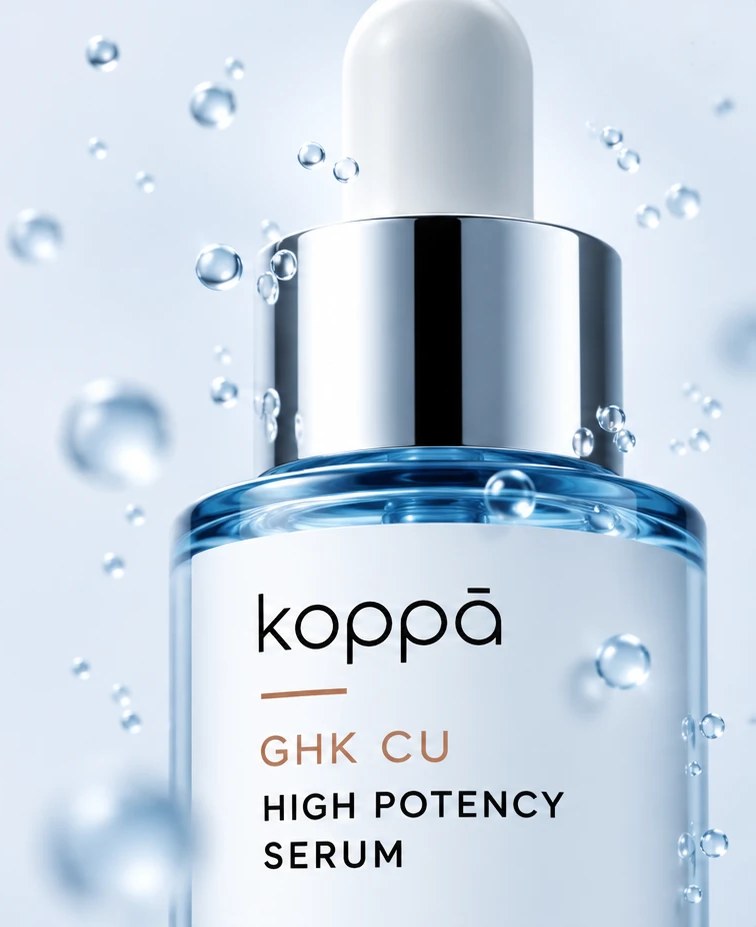
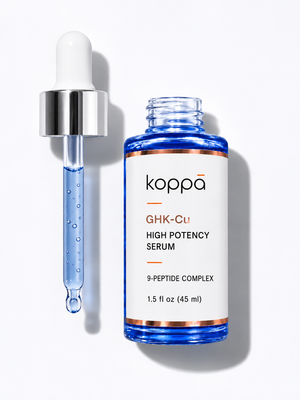
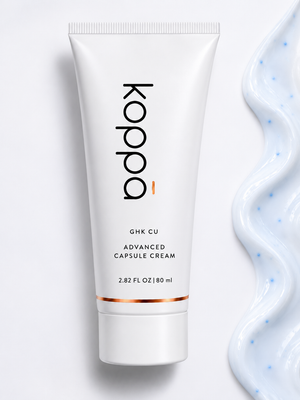
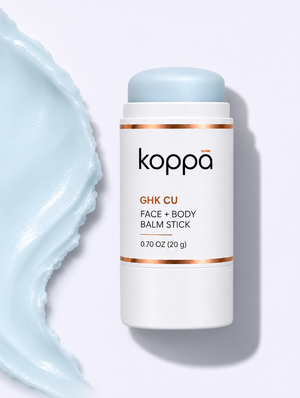
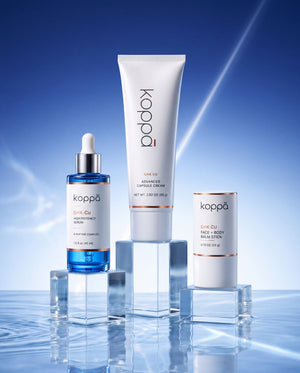
koppā, who publish this journal, make the GHK-Cu 2% High Potency Serum, a fragrance-free serum with 2% GHK-Cu on the label.
Sources and further reading
- Loren Pickart et al. (2018). Regenerative and Protective Actions of the GHK-Cu Peptide in the Light of the New Gene Data. International Journal of Molecular Sciences. DOI: 10.3390/ijms19071987 mdpi.com
- Loren Pickart et al. (2015). GHK Peptide as a Natural Modulator of Multiple Cellular Pathways in Skin Regeneration. BioMed Research International. DOI: 10.1155/2015/648108 pubmed.ncbi.nlm.nih.gov
- sun protection helps reduce signs of premature ageing aad.org