


copper peptides
How to Build a Skincare Routine After 30 That Actually Works

A good skincare routine after 30 is shorter than most people expect: a gentle cleanser, one well-chosen active, a moisturiser, and sunscreen every morning. What changes from your 20s isn't the number of steps. It's that the choices start to matter more, and skipping sunscreen starts to show. Sunscreen does the most work; the active comes second.
Below: what's changing in your skin, the four jobs a routine has to do, how to pick an active that suits you, a morning and night template, and the mistakes worth avoiding. Our own copper peptide version comes near the end.
What changes in your skin in your 30s?
Nothing dramatic happens on your 30th birthday. What you notice is the slow build-up of two things.
- Collagen is thinning. Skin collagen falls gradually through adulthood. It shows first as fine lines around the eyes and skin that takes longer to bounce back from a pillow crease.
- Sun damage is catching up. In a 2013 study of 298 women aged 30 to 78, published in Clinical, Cosmetic and Investigational Dermatology, UV exposure seemed responsible for about 80% of visible facial ageing signs. The damage from your 20s tends to surface in your 30s.
The encouraging part: the second one is largely in your control, and it's the bigger of the two. For the full picture of what's happening under the surface, read skin ageing and collagen.
The four jobs of a skincare routine after 30
Every product you own should be doing one of these. If it isn't, you probably don't need it.
1. Protect
Sunscreen is the most effective thing you can do for your skin in your 30s, full stop. The American Academy of Dermatology's advice on reducing premature skin ageing[1] puts daily sun protection first, with SPF 30 or higher, and notes that every tan ages skin prematurely. Use it every morning, including cloudy ones, and take it down to your neck.
2. Cleanse gently
The same AAD guidance warns that scrubbing irritates skin, and irritation speeds up ageing. A mild cleanser at night is enough for most people. In the morning, water or a quick gentle cleanse will do.
3. Support, with one active
This is where you do something beyond protection: an ingredient that supports collagen or smoother-looking skin over time. One is plenty to start. The next section helps you choose.
4. Moisturise
The AAD notes that moisturiser traps water in skin. It also keeps your skin barrier comfortable, which matters more once you're using an active. A comfortable barrier tolerates actives better. If yours is already tight or reactive, sort that first with our guide to repairing a damaged skin barrier.
How do you choose an active after 30?
There's no single right answer. It depends on what your skin tolerates and what you want to work on.
| Active | What it's for | The trade-off | When to use it |
|---|---|---|---|
| Retinoid (retinol, or prescription tretinoin) | Fine lines, texture, collagen | Dryness and irritation, especially early on | Night only |
| Copper peptide (GHK-Cu) | Firmer-looking skin, fine lines | Builds over months | Morning or night |
| Vitamin C | Brightness, uneven-looking tone | Can sting; unstable formulas degrade | Usually morning |
| Exfoliating acids (AHAs, BHAs) | Smoother texture | Overuse irritates | A few nights a week |
If your skin tolerates it: a retinoid
Retinoids have the longest track record. The AAD's guide to retinoids and retinol[2] says they boost collagen and reduce fine lines and wrinkles. It also advises starting with the least intense formula, every other night, and building up slowly.
If retinoids don't suit you: a copper peptide
Copper peptides such as GHK-Cu (copper tripeptide-1) are the gentler option. They work without irritation, so most people can use them morning and night from the start, for firmer-looking skin and softer-looking fine lines. Our overview of copper peptides for skin covers what they do, and copper peptides vs retinol compares the two properly. Plenty of people use both, on different nights.
A simple morning and night template
| Step | Morning | Night |
|---|---|---|
| 1 | Rinse or gentle cleanse | Gentle cleanse (twice if you wore sunscreen or makeup) |
| 2 | Vitamin C or a copper peptide serum, if using | Your main active: retinoid or copper peptide |
| 3 | Light moisturiser | Moisturiser |
| 4 | Sunscreen, SPF 30 or higher | Nothing more |
Two pairing rules save a lot of wasted product. Don't put vitamin C and a copper peptide in the same step, because the low pH of vitamin C pulls the copper off the peptide. Morning and night solves it, as our guide to copper peptides and vitamin C explains. And keep exfoliating acids off retinoid nights until you know how your skin reacts.
Common mistakes in your 30s
- Treating sunscreen as a summer product. UV ages skin all year.
- Stacking too many actives. A retinoid, an acid and vitamin C all at once is how barriers get damaged.
- Scrubbing. Gritty scrubs and rough cloths irritate, and irritation speeds up ageing.
- Judging too soon. Collagen changes slowly. Give an active a full bottle before deciding.
- Forgetting the neck. It sees the same sun as your face and gets half the attention.
Our version: the routine with copper peptides
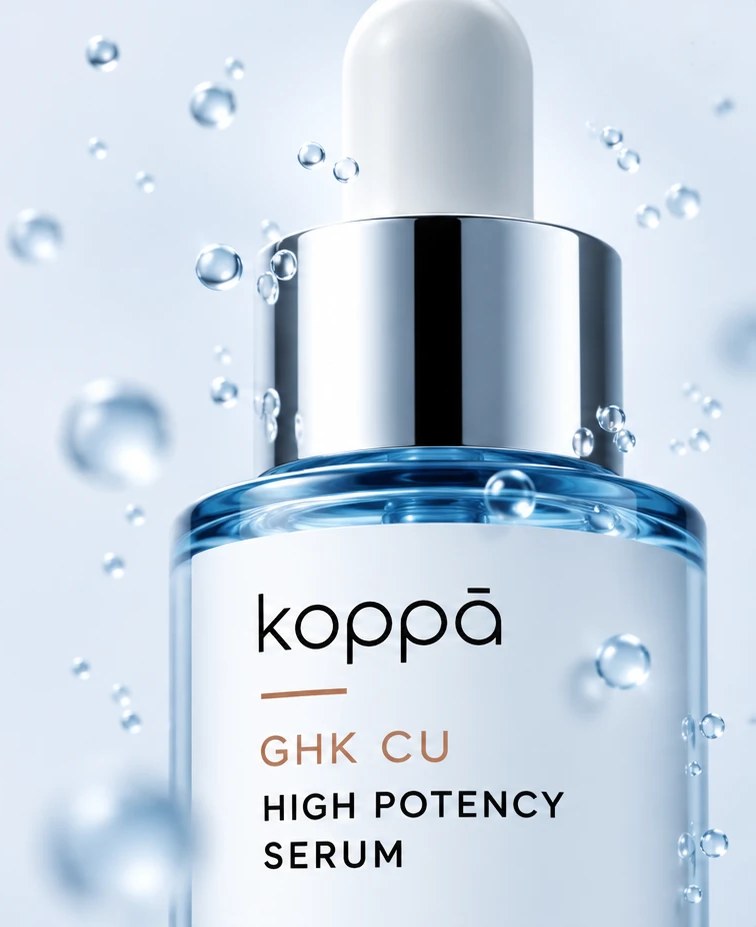
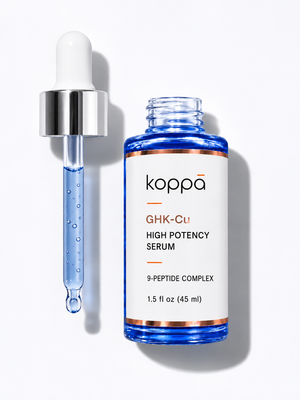
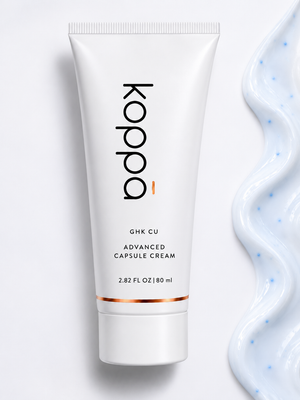
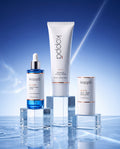
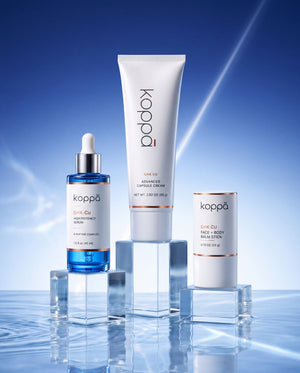
If you go the copper peptide route, a GHK-Cu serum, a moisturiser and a balm fill the template like this.
- Treat. 3 to 4 drops of a GHK-Cu serum on clean skin, face and neck, morning and night.
- Nourish. A moisturiser over the serum, morning and night. One with niacinamide or squalane adds barrier support.
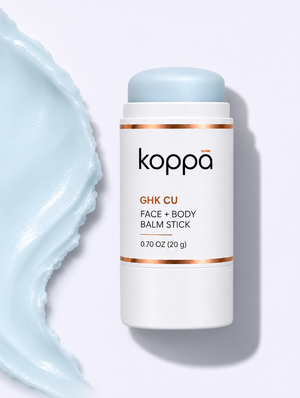
- Seal. A balm on targeted areas only: crow's-feet, forehead lines, the neck.
- Protect. Finish mornings with SPF 30 or higher.
On retinoid nights, keep the serum for the morning instead.
For amounts, order and the common mistakes in more detail, see how to use GHK-Cu morning and night.
When to see a dermatologist
A spot or mole that is changing, pigment that is spreading, or skin that reacts to almost everything is a reason to see a dermatologist.
Frequently asked questions
What skincare should I use in my 30s?
A gentle cleanser, one active, a moisturiser and daily sunscreen. For the active, choose a retinoid if your skin tolerates it, or a copper peptide if it doesn't. Add vitamin C in the morning if you want it. Keep the routine short enough that you'll actually do it every day.
Is 35 too late to start a skincare routine?
No. Sunscreen protects from the day you start, and actives like retinoids and copper peptides are used on skin at any adult age. One of the main copper peptide studies was in women aged 40 to 65. Starting now beats starting perfectly later. If you're already in your mid-30s, skin after 35 covers what shifts in the second half of the decade and how to adjust.
Do I need a separate eye cream in my 30s?
Not necessarily. Many face products can be used around the eyes, avoiding the lash line. An eye cream is worth it if your face products sting there or you want something richer. Check the label, because the skin there is thinner.
Can I use retinol and copper peptides in the same routine?
Yes, on different nights or at different times of day. Many people keep the retinoid for some nights and use a copper peptide in the morning and on the other nights. Start the retinoid slowly, as the AAD advises, and keep the two out of the same layer.
What's in The GHK-Cu Protocol, and what does it cost?
Check the product page for current availability and delivery information. Use the serum first, then the cream, then the stick on targeted areas, and SPF 30 or higher in the morning.
The short version
A skincare routine after 30 comes down to four jobs: protect, cleanse gently, support with one active, and moisturise. Sunscreen does the most.
koppā, who publish this journal, make the GHK-Cu Trio, the serum, capsule cream and balm stick together.