

copper peptides
The Men's Copper Peptide Skincare Routine: 1, 2 or 3 Steps. Done

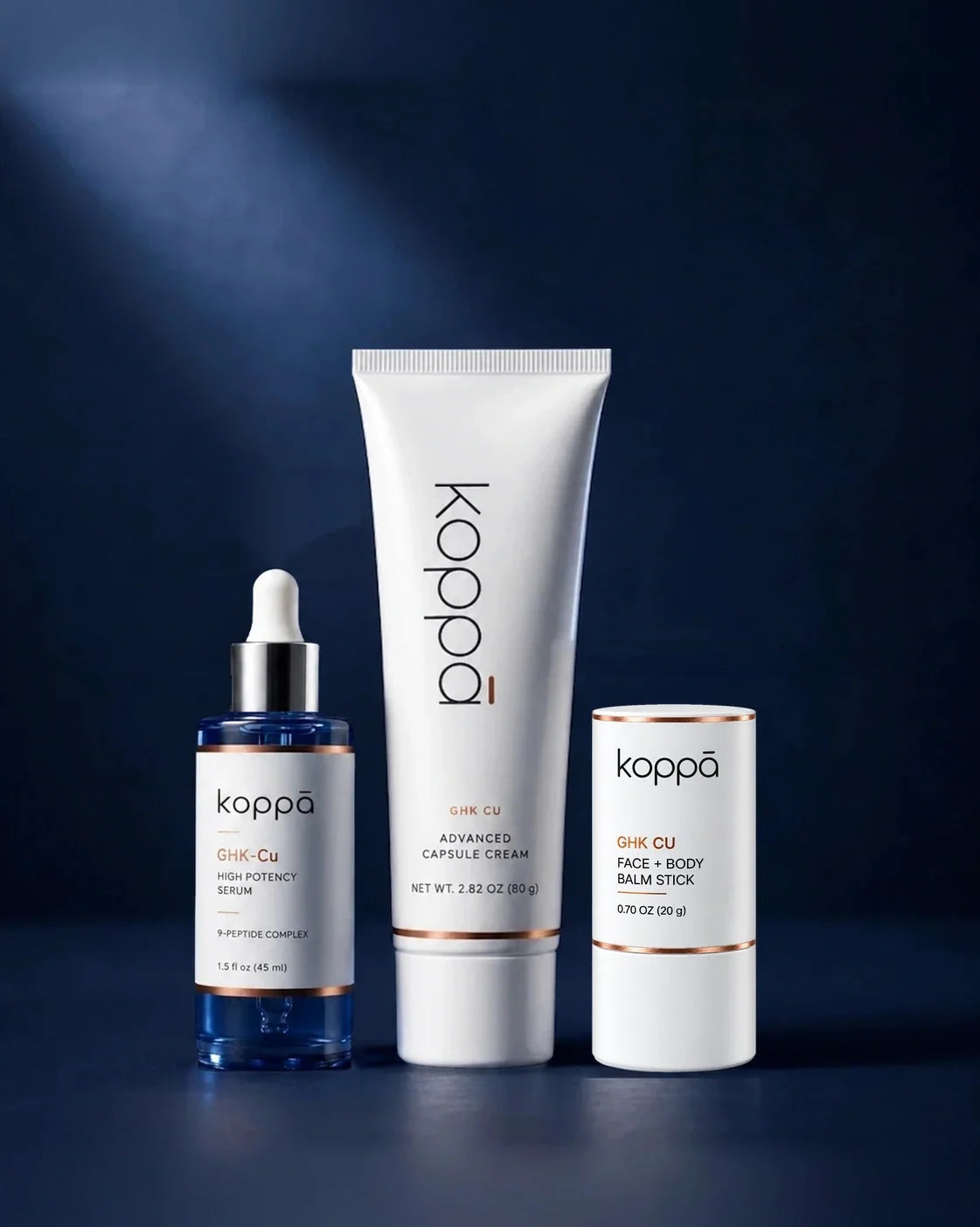
A men's copper peptide routine can be one, two or three steps: a GHK-Cu serum on clean skin, a light cream for hydration, and a balm stick for targeted spots like the jaw and neck after shaving. Use all three, or just one on busy days. Add SPF 30 or higher in the morning if you're going outside. The best routine is the one you keep doing. koppā's GHK-Cu Protocol puts those three steps in one box, in full sizes for $175: a water-light serum that absorbs fast, a cushiony cream, and a portable stick that goes from bathroom to gym bag.
It doesn't need ten steps. Below: what each step does, how to use it around shaving, what to do if your skin is oily or you already use retinol or vitamin C, and what the research on GHK-Cu shows.
What does a simple men's copper peptide routine look like?
Three steps, each with one job. At koppā we call them the Protocol: treat, nourish, seal.
- Treat: the GHK-Cu 2% High Potency Serum, on clean skin.
- Nourish: the GHK-Cu Advanced Capsule Cream, for hydration.
- Seal: the GHK-Cu Face + Body Balm Stick, on the areas that need more attention.
Use all three, use two, or keep it to one on the days when that is realistically all you are going to do. The point is not to build the longest routine possible. The point is to build one you will keep doing.
If you are going outside during the day, finish with a broad-spectrum sunscreen of SPF 30 or higher. The American Academy of Dermatology's skincare tips for men[1] recommend sunscreen on exposed skin, including the ears and neck.
Step 1: the GHK-Cu serum
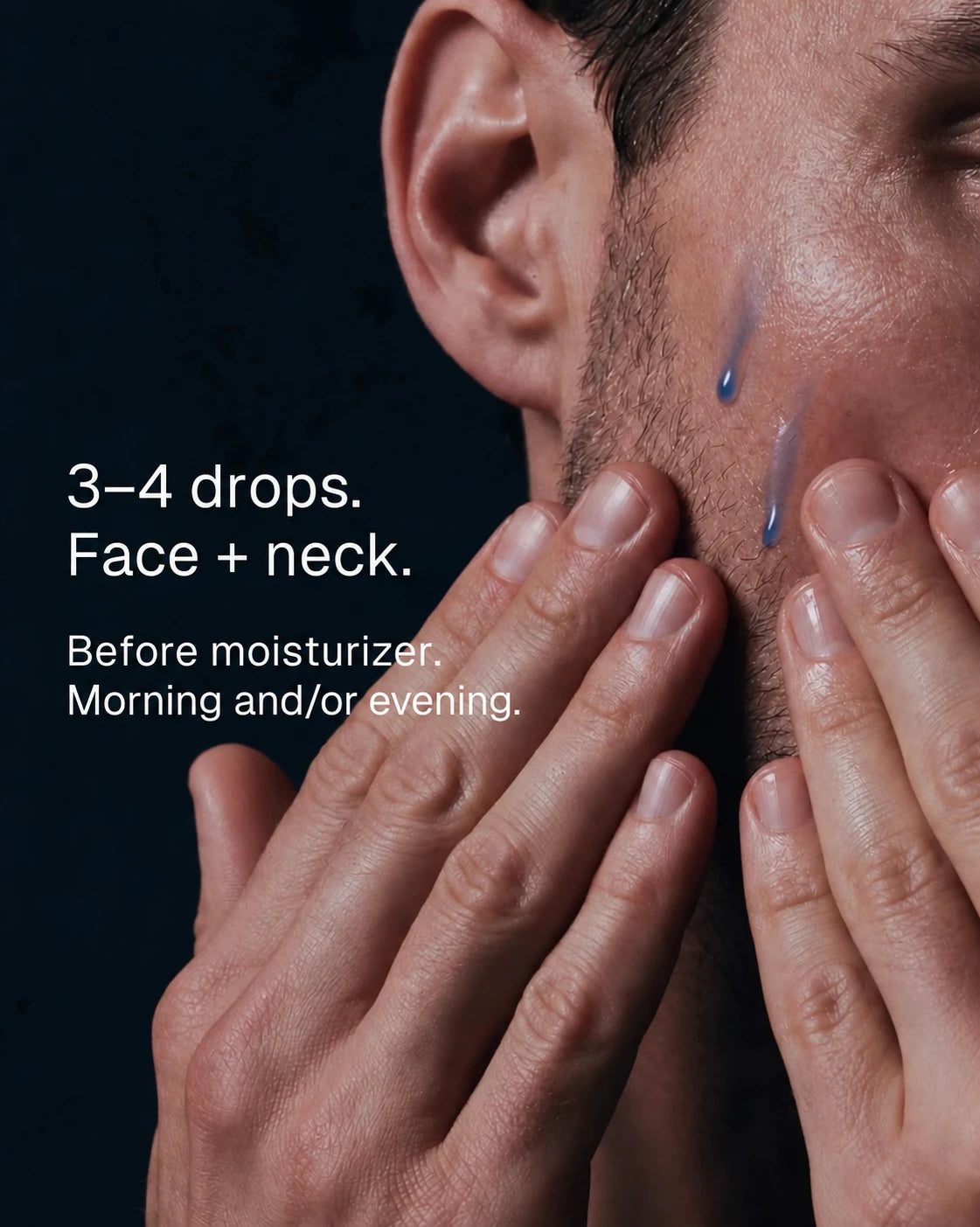
Start with clean skin. Apply 3 to 4 drops of the serum over the face and neck and press it in. No need to overwork it.
The serum holds 2% GHK-Cu (copper tripeptide-1) in a water-light formula that absorbs quickly with a non-greasy finish. If you avoid skincare because you don't like feeling product sitting on your face, this is usually the easiest place to start. Once it's in, you can move on. Give it around a minute, then apply the cream.
Step 2: a light cream
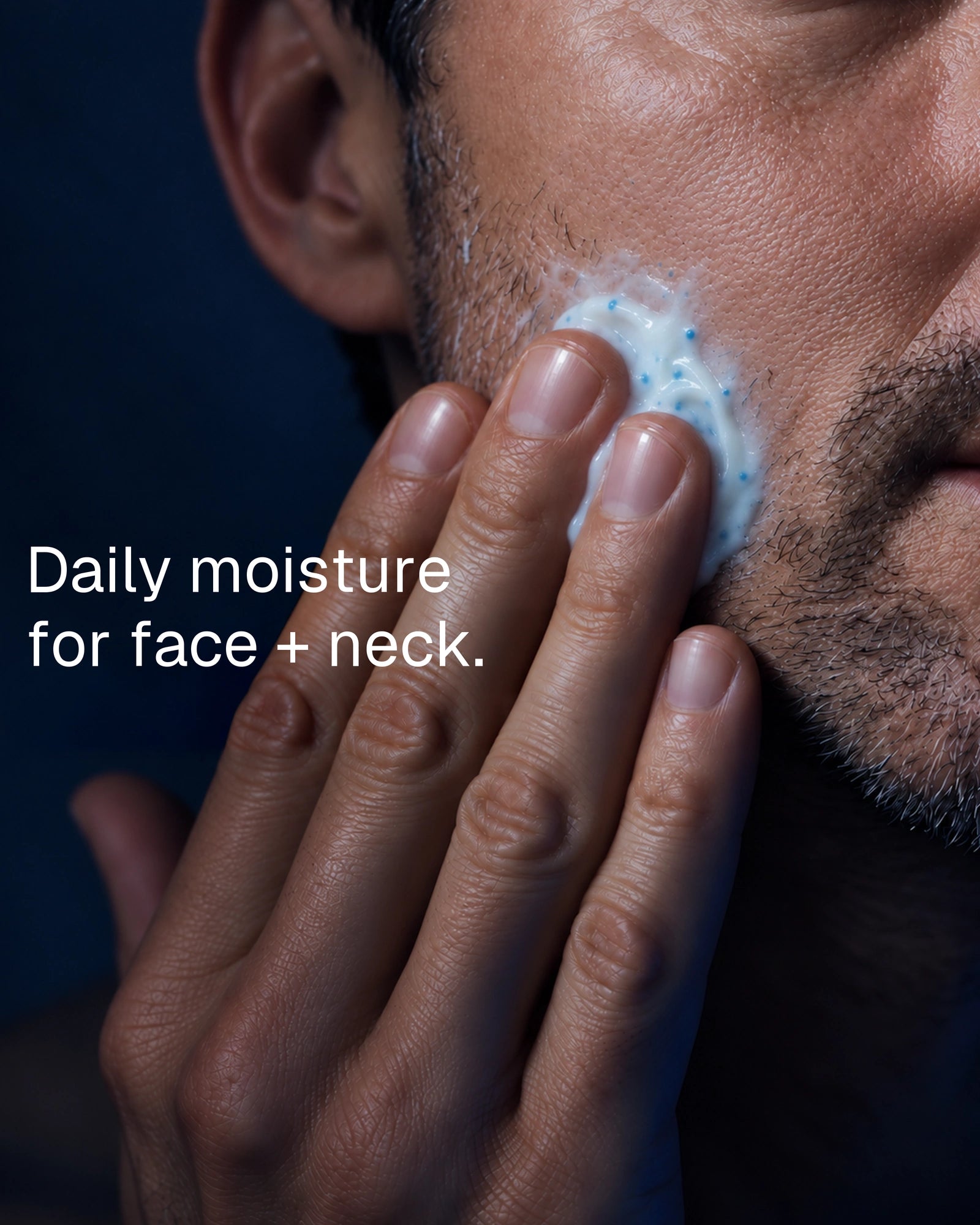
The capsule cream is the hydration step. It holds 0.5% encapsulated GHK-Cu in visible blue capsules that release as you massage it in, along with 5% niacinamide, 4% squalane and 3% jojoba, in a cushiony base without a heavy finish.
For a lot of men, how it feels is what decides whether it gets used. A moisturiser only helps if you want to put it on every day. Use a small amount over the face and neck. If your skin feels dry, use a little more. If it runs oily, use less.
Step 3: the balm stick, and why it suits shaving
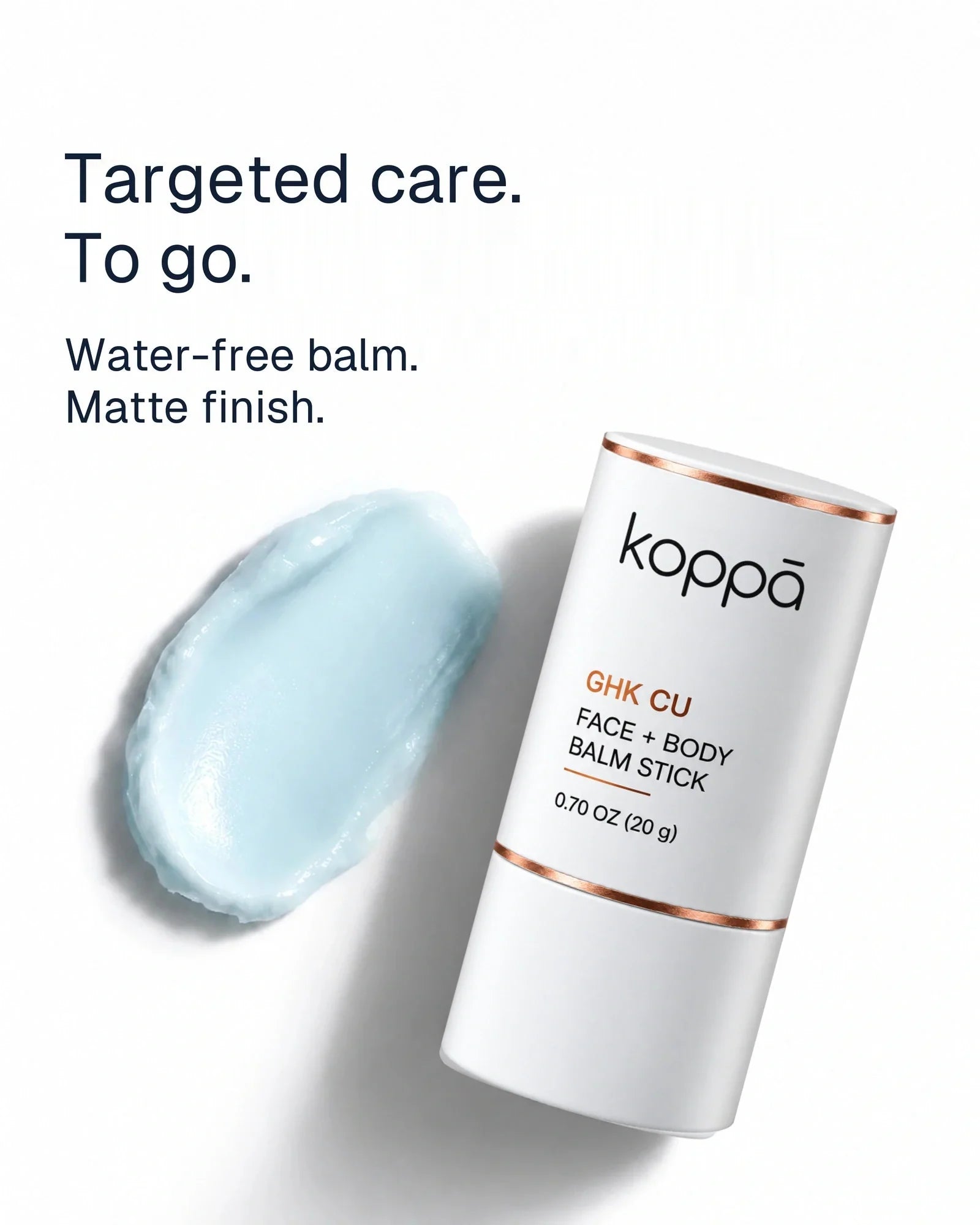
The balm stick isn't another cream to spread over the whole face. It is targeted care: 0.5% GHK-Cu with eight additional peptides, including Argireline and Matrixyl, in a solid, water-free balm with a matte finish. Because it's a stick, you don't put product on your fingers first. Cap off. Swipe. Cap back on.
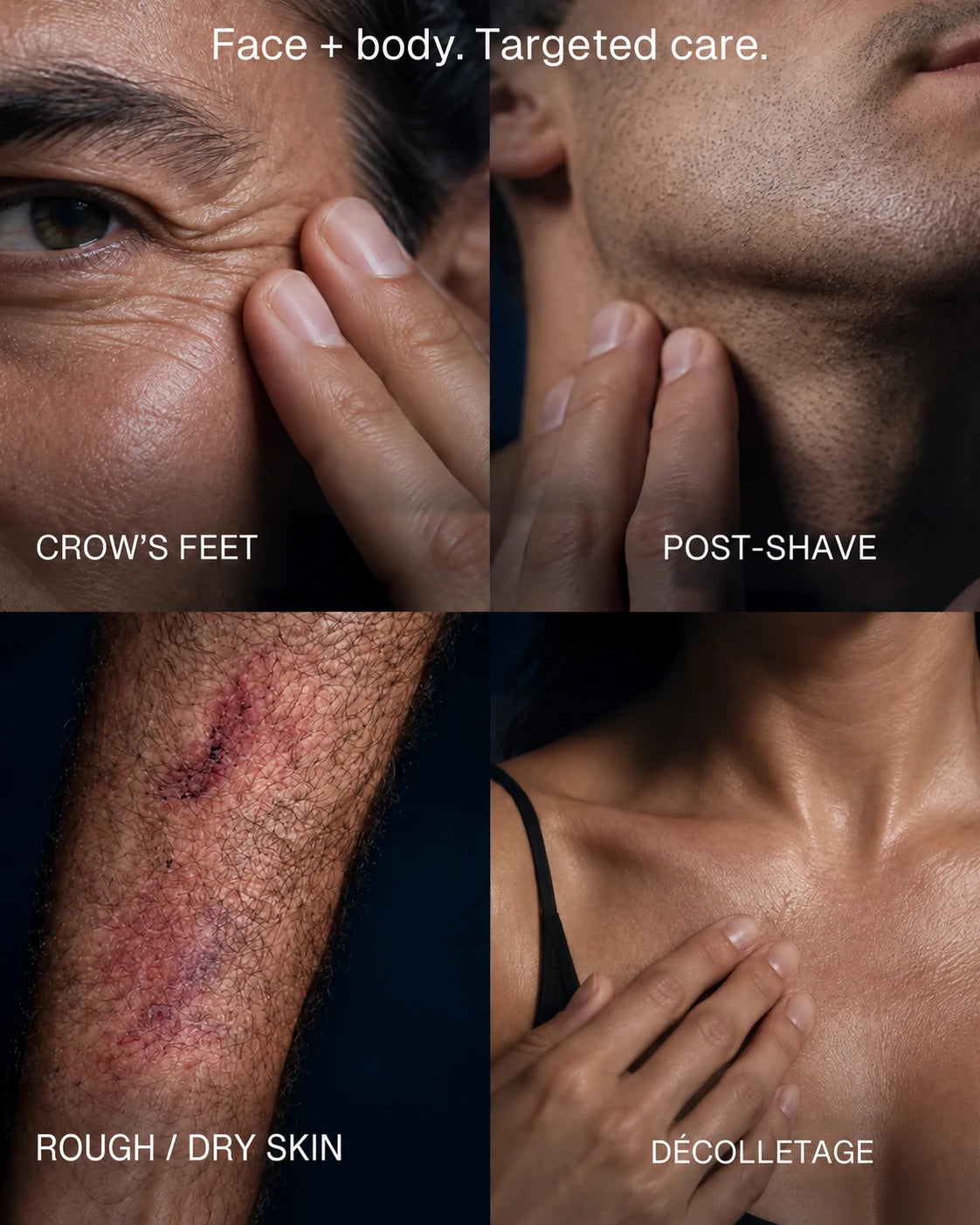
Use it where you want it:
- the jaw and neck after shaving
- crow's-feet and forehead lines
- rough, dry patches on the face or body
- hands, elbows and knees
Around shaving
Shaving can leave the jaw and neck feeling dry, tight or irritated. The American Academy of Dermatology's shaving guidance[2] recommends:
- wetting the skin and hair first
- using shaving cream or gel
- shaving in the direction the hair grows
- rinsing the blade after each swipe
- replacing blades regularly
- storing the razor somewhere dry
After shaving, rinse your skin and give it a few minutes if it feels sensitive. Then use the serum and cream as normal, and run the stick over the jawline, neck, around the mouth and any rough patches. In a hurry, the stick on its own is fine. The routine doesn't fall apart if you skip a step.
If shaving regularly leaves you with persistent razor bumps, inflammation or ingrown hairs, see a dermatologist rather than trying to sort it out with skincare alone.
How to use the Protocol: one, two or three steps
| Steps | What to use | Suits you if |
|---|---|---|
| One | Serum, or the balm stick | You want light, all-over GHK-Cu (serum) or mainly post-shave and dry-spot care (stick) |
| Two | Serum + cream | You want your active step and your hydration step |
| Two | Serum + stick | Your skin doesn't need much moisturiser but you want targeted care |
| Three | Serum, then cream, then stick | You want the full Protocol, morning and night |
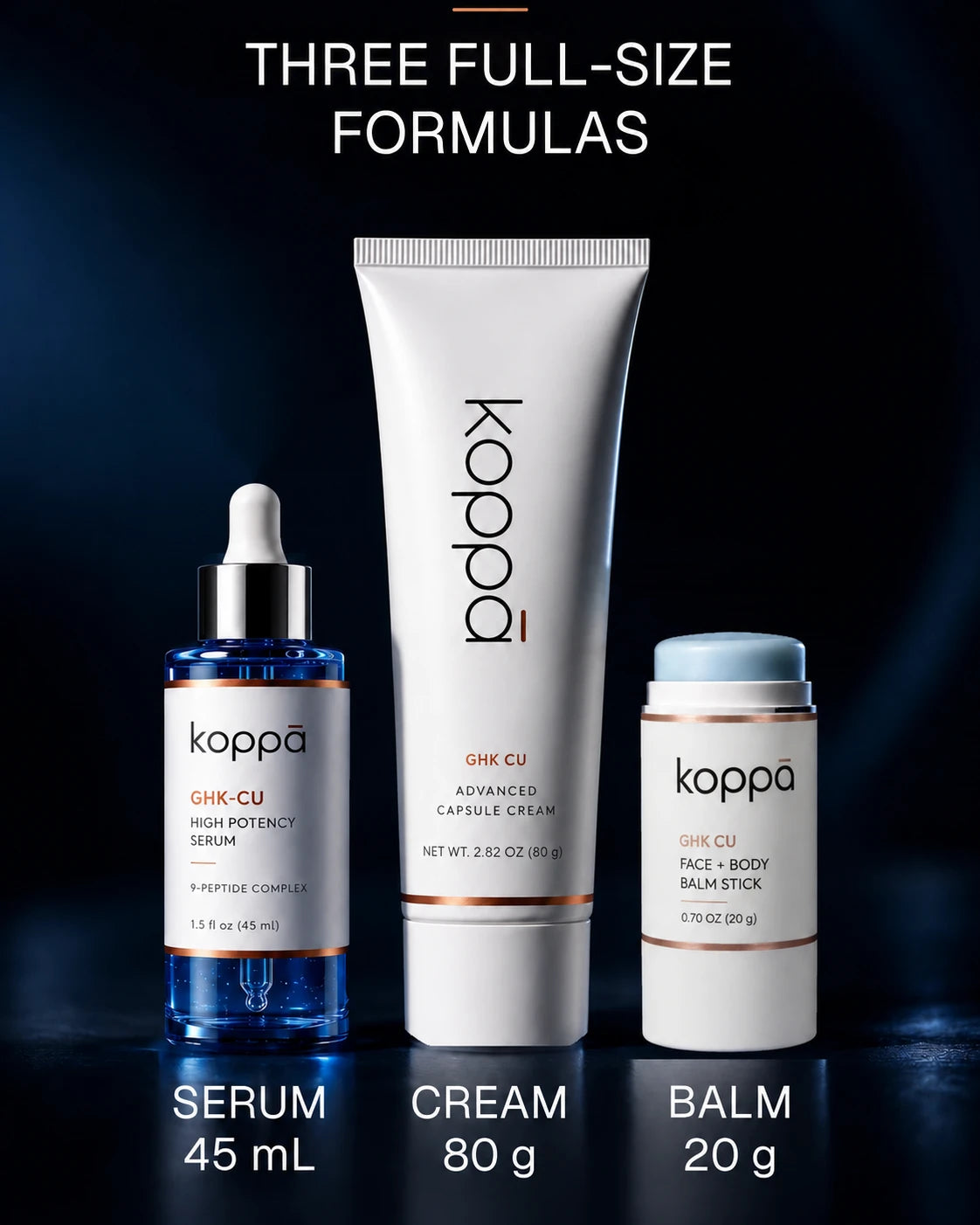
The GHK-Cu Protocol puts all three in one box, in full sizes: the 45 ml serum, the 80 g capsule cream and the 20 g balm stick. Serum on clean skin, then cream, then the balm on targeted areas, and finish mornings with SPF 30+.
Why use GHK-Cu at all?
GHK-Cu is a naturally occurring copper-binding peptide that has been studied for decades. A 2015 review in BioMed Research International[3] discusses its relationship with collagen synthesis, tissue repair and the enzymes involved in breaking down and rebuilding the skin's support structure.
One of the human studies most often cited is summarised in a 2018 review in the International Journal of Molecular Sciences[4]. In it, 71 women with sun-damaged skin used a GHK-Cu cream for 12 weeks. The review reports improvements in skin density and thickness, along with shallower visible fine lines.
What that means for men
The peptide works on the same collagen processes in men's skin, so the routine is the same.
Is men's skin different from women's?
In some measurable ways. A 1975 study in the British Journal of Dermatology[5] measured skin in a large group and reported higher collagen content in men than women across the ages studied, with collagen decreasing with age in both.
For an everyday routine, the practical takeaway is simpler: use a well-researched active, keep skin moisturised, wear sunscreen, and stick with it long enough to judge it properly. Our men's skincare page has more.
What if your skin is oily?
Men often assume that if their skin produces oil, they should skip moisturiser. Oil and hydration are not the same thing, and you can have oily skin that still feels dehydrated. The AAD explains that moisturiser works by helping trap water in the skin, so oily skin doesn't make it unnecessary.
The answer is lighter textures, not no skincare. That's why the serum is water-light, the cream hydrates without a heavy finish, and the stick has a matte finish. Adjust the amount, too: nobody needs the same quantity as everyone else. Our piece on GHK-Cu and oily skin goes further.
What if you already use retinol or vitamin C?
You don't need to throw out the rest of your routine. If you already use retinol, the simplest plan is GHK-Cu in the morning and retinol at night. If you use tretinoin or another prescription topical, follow your prescriber's instructions. Our GHK-Cu layering guide covers the common pairings.
With vitamin C, the simplest fix is different times of day: vitamin C in the morning, GHK-Cu at night. Our guide to copper peptides with vitamin C explains why.
GHK-Cu is made for use morning and night.
Where koppā fits in your routine
The GHK-Cu Protocol is three full-size formulas: the 2% serum (45 ml), the capsule cream with 0.5% encapsulated GHK-Cu (80 g) and the balm stick with 0.5% GHK-Cu and eight more peptides (20 g). The serum and cream are fragrance-free, and each product page lists the full ingredients and the GHK-Cu concentration. It is $175, against $190 bought separately. Check the product page for current availability and delivery information.
Each step is built for men who want skincare to be quick: the serum is water-light and absorbs fast with a non-greasy finish, the cream supports hydration and smoother, firmer-looking skin without a heavy feel, and the 20 g stick is hands-free and portable, so it goes in a gym bag or a shaving kit. Start with the serum on clean skin tonight, add the cream and stick as the routine sticks, and take a photo in the same light so you can see how your skin looks over the coming months.
Frequently asked questions
Do I need all three products?
No. The full Protocol is serum, cream and stick, but the routine is deliberately flexible. Use the serum for a simple all-over step, add the cream for hydration, and use the stick for targeted areas, post-shave skin and rough or dry spots.
Can I use the balm stick after shaving?
Yes. Let freshly shaved skin settle if it feels irritated, then use the stick on the jawline, neck and other dry or tight spots. It is a water-free balm with a matte finish.
Will a copper peptide serum make oily skin greasier?
Not if the texture is right. The koppā serum is water-light and absorbs with a non-greasy finish. If your skin is oily, start with a few drops rather than more product than you need.
How long should I wait between the serum and the cream?
Not long. Once the serum has absorbed, usually around a minute, apply the cream.
What's in the koppā Protocol and what does it cost?
The 45 ml GHK-Cu 2% High Potency Serum, the 80 g GHK-Cu Advanced Capsule Cream and the 20 g GHK-Cu Face + Body Balm Stick, all full size. It is $175, against $190 bought separately. Check the product page for current availability and delivery information.
The short version
Men's skincare doesn't need to be complicated. Serum for a light, all-over GHK-Cu step, cream for hydration without a heavy feel, and the balm stick for post-shave skin, rough patches and the neck. Use one, two or all three, add sunscreen in the morning when you're outside, and keep it simple enough to become a habit.
Sources and further reading
- American Academy of Dermatology's skincare tips for men aad.org
- American Academy of Dermatology's shaving guidance aad.org
- Loren Pickart et al. (2015). GHK Peptide as a Natural Modulator of Multiple Cellular Pathways in Skin Regeneration. BioMed Research International. DOI: 10.1155/2015/648108 pubmed.ncbi.nlm.nih.gov
- Loren Pickart et al. (2018). Regenerative and Protective Actions of the GHK-Cu Peptide in the Light of the New Gene Data. International Journal of Molecular Sciences. DOI: 10.3390/ijms19071987 mdpi.com
- A 1975 study in the British Journal of Dermatology academic.oup.com


