


Sensitive skin
Are copper peptides a better alternative to retinol for sensitive skin?

Copper peptides are usually gentler than retinol, so they are a reasonable swap if retinol keeps irritating your skin. They are not a stronger alternative: retinoids have decades of clinical trials for sun-related ageing, while topical GHK-Cu has a few small studies. If you tolerate retinol, you can keep it and use copper peptides in the morning or on alternate nights.
Product facts
Checked on koppabeauty.com, 8 November 2026. Prices in US dollars; checkout shows your local currency.
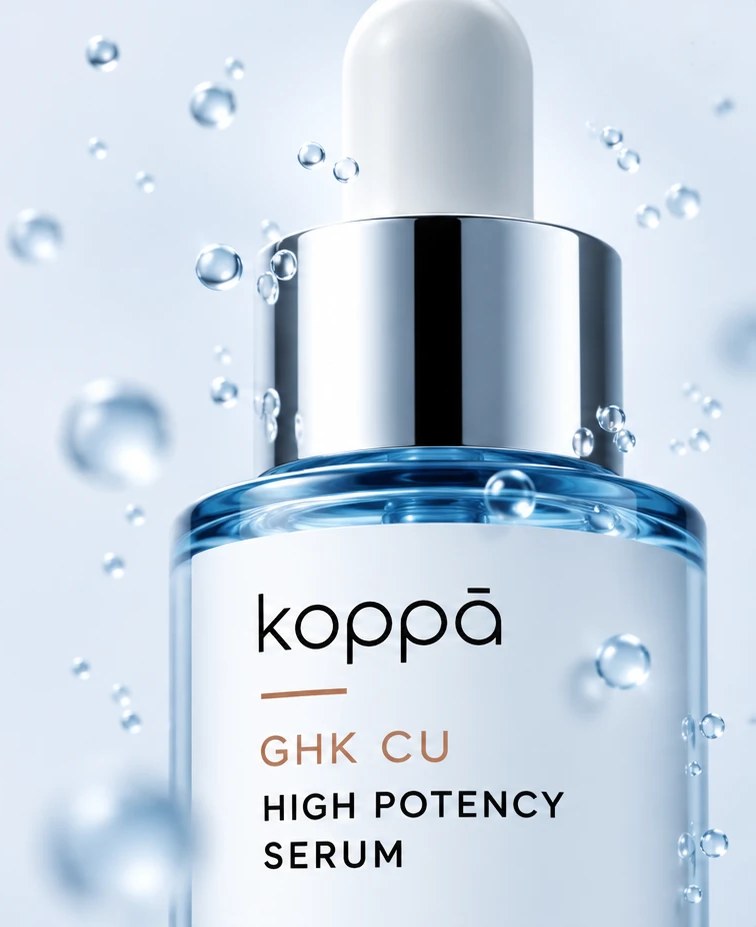
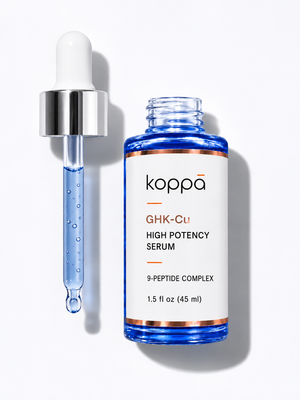
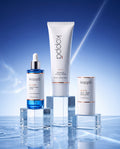
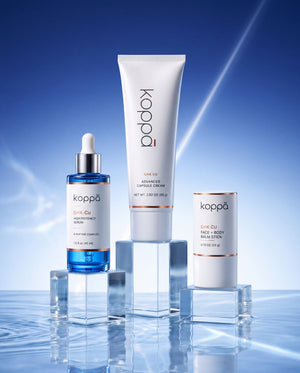
koppā 2% GHK-Cu High-Concentration Copper Peptide Serum
- GHK-Cu: 2% GHK-Cu (Copper Tripeptide-1)
- Also contains: Ceramide EOP, Ceramide NP, sodium hyaluronate and six supporting peptides
- Size and price: 45 mL, US$75
- Format: water-light, fragrance-free and silicone-free serum
- How to use: Three to four drops on clean face and neck, morning and/or evening, before moisturizer.
Full ingredients
Aqua, Trehalose, Glycerin, Copper Tripeptide-1, 1,2-Hexanediol, Betaine, Hydrolyzed Collagen, Panthenol, Polyglutamic Acid, Ceramide EOP, Pullulan, Sodium Hyaluronate, Acetyl Hexapeptide-8, Allantoin, Palmitoyl Tetrapeptide-7, Dipeptide Diaminobutyroyl Benzylamide Diacetate, Arginine, Carbomer, Hydrolyzed Sclerotium Gum, Ceramide NP, Dipotassium Glycyrrhizate, Carnosine, Collagen, Palmitoyl Tripeptide-5, Acetyl Octapeptide-3, Ethylhexylglycerin.
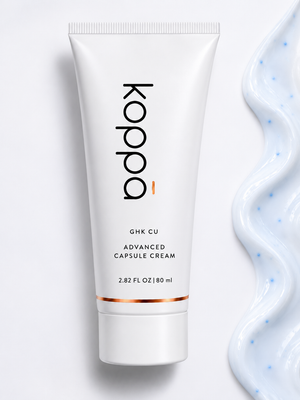
koppā GHK-Cu Moisturizing Cream: 0.5% Copper Peptide Face Cream (Advanced Capsule Cream)
- GHK-Cu: 0.5% GHK-Cu (Copper Tripeptide-1)
- Also contains: 5% niacinamide, 4% squalane and 3% jojoba oil
- Size and price: 80 g, US$70
- Format: fragrance-free, silicone-free face and neck cream; the blue capsules hold the GHK-Cu and break as you massage it in
- How to use: Apply to clean face and neck, morning and/or evening. If you use the serum, apply it first.
Full ingredients
Aqua, Glycerin, Niacinamide, Squalane, Butylene Glycol, Trehalose, Simmondsia Chinensis (Jojoba) Seed Oil, Euglena Gracilis Polysaccharide, Pentylene Glycol, Isononyl Isononanoate, Caprylic/Capric Triglyceride, Cetearyl Olivate, 1,2-Hexanediol, C14-22 Alcohols, Sorbitan Olivate, Copper Tripeptide-1, Tocopheryl Acetate, Tremella Fuciformis Polysaccharide, Portulaca Oleracea Extract, Arginine, Hydrolyzed Collagen, Leontopodium Alpinum Callus Culture Extract, Crithmum Maritimum Callus Culture Filtrate, Carbomer, C12-20 Alkyl Glucoside, Hydrolyzed Sodium Hyaluronate, Adenosine, Sodium Hyaluronate, Disodium EDTA, Algin, Acetyl Hexapeptide-8, Mannitol, Collagen, Tripeptide-1, Pentapeptide-3, Agar, Hydroxyethylcellulose, Gellan Gum.
Shipping and returns
- US: orders leave within 1 to 2 business days; standard delivery takes 5 to 9 business days from dispatch, about 6 to 11 business days in total. Standard shipping is US$3, free over US$100; Priority is US$10.
- Canada: orders leave within 1 to 2 business days, then about 5 to 9 business days in transit; customs can add 2 to 5 business days. Standard shipping is CA$3, free over CA$140; Express is CA$10. Duties and import taxes, if any, are billed by the carrier on arrival. Orders ship from outside Canada.
- Christmas order-by dates with standard shipping: Tuesday 8 December for the US, Tuesday 1 December for Canada. A koppā gift card is emailed within minutes, so it has no cutoff.
- Returns: unopened, unused products with intact seals within 30 days of delivery. US returns get a free prepaid label; outside the US the customer pays return postage. koppā does not offer gift wrap.
Copper peptides vs retinol, side by side
| Topical GHK-Cu (copper peptide) | Retinol and other retinoids | |
|---|---|---|
| Human evidence for the look of fine lines | Limited: one 40-person randomised trial and a few open studies | Strong: many randomised trials over decades, especially for prescription tretinoin |
| Typical irritation | Low on intact skin; stinging or redness possible | Common at first: dryness, peeling, redness |
| Sun sensitivity | None known | Can make skin more sensitive; SPF is essential |
| Pregnancy | Ask a doctor; little data | Retinoids are generally avoided |
| Time to judge | 8 to 12 weeks in studies | 3 to 6 months is common advice |
Our sources for the copper peptide column are in topical GHK-Cu: what the evidence says.
When swapping retinol for copper peptides makes sense
- Retinol still stings or flakes after you have tried a low strength, a few nights a week, over moisturizer.
- You have a reactive skin type and want something you can use daily without a break-in period.
- You are pregnant or planning to be and have been told to stop retinoids. Ask your doctor about any active.
Be clear about the trade: you are choosing comfort over the stronger evidence. Nothing on this page says copper peptides do what retinoids do.
Where bakuchiol fits
Bakuchiol is the other common retinol alternative. In a 12-week randomised study of 44 people, 0.5% bakuchiol and 0.5% retinol gave similar improvements in wrinkles and pigmentation, with less scaling and stinging for bakuchiol (Dhaliwal et al., British Journal of Dermatology, 2019). That is a better head-to-head trial than anything published for GHK-Cu against retinol. Copper peptides and bakuchiol can be used in the same routine.
Can I use copper peptides and retinol in the same routine?
Yes, with spacing. The simplest split: GHK-Cu in the morning under sunscreen, retinol at night. Or alternate nights. Layering both in one step is not known to be harmful, but it doubles the chance of irritation on sensitive skin, so we do not suggest it. A weekly plan is on our copper peptide morning and night routine page.
For long-term skin health
The most reliable long-term habit is daily broad-spectrum sunscreen. After that, a retinoid has the best evidence. Copper peptides are an option for people who cannot use one, or who want a gentle daily step alongside it. There are no long-term human trials of topical GHK-Cu.
koppā products for sensitive skin
Both are fragrance-free and silicone-free. The 2% serum adds two ceramides and hyaluronic acid. The 0.5% cream adds 5% niacinamide. Patch test either one first; fragrance-free does not mean nobody reacts.
Retinoid irritation on sensitive skin, and the alternatives
Retinoid irritation on sensitive skin is common in the first weeks: dryness, peeling and stinging. The usual alternatives people look at are copper peptides, bakuchiol, niacinamide and azelaic acid. Of those, bakuchiol has the best head-to-head data against retinol for efficacy. Copper peptides and retinol can also share one routine if you space them, which is often the better answer than choosing between them.
Frequently asked questions
Can I swap my retinol for a copper peptide formula to support skin longevity?
Yes, if retinol irritates you. You get a gentler daily step with less evidence behind it: retinoids have decades of trials, topical GHK-Cu a few small studies. Keep daily SPF 30 or higher, which matters most for long-term skin health.
Bakuchiol vs copper peptides: which is the better retinol alternative?
Bakuchiol has a 12-week head-to-head trial against retinol (44 people, similar results, less irritation). Copper peptides have no such trial. They do different jobs and can be used in the same routine.
Are copper peptides a better alternative to retinol for sensitive skin?
They are gentler for most people, so they suit skin that cannot tolerate retinol. They are not more effective: retinoids have far more clinical evidence for the look of fine lines and sun-related ageing.
Can I use copper peptides and retinol in the same skincare routine?
Yes, spaced out. Use copper peptides in the morning and retinol at night, or alternate nights. Avoid layering both at once on sensitive skin.
Is it better to use copper peptides or retinol for long-term skin health?
Daily sunscreen first, then a retinoid if you tolerate one; retinoids have the strongest long-term evidence. Copper peptides are a gentler option with no long-term human trials yet.
Do copper peptides make skin sensitive to the sun?
Not as far as anyone knows. Retinoids can. Use sunscreen every morning regardless.
The short version
If retinol irritates your skin, copper peptides are a reasonable, gentler swap, with less evidence behind them. If you tolerate retinol, keep it and use copper peptides at the other end of the day.
Sources
- American Academy of Dermatology. Retinoid or retinol? www.aad.org
- American Academy of Dermatology. Copper peptides. www.aad.org
- Dhaliwal S, et al. Prospective, randomized, double-blind assessment of topical bakuchiol and retinol for facial photoageing. British Journal of Dermatology, 2019. pubmed.ncbi.nlm.nih.gov
- Badenhorst T, et al. Effects of GHK-Cu on MMP and TIMP expression, collagen and elastin production, and facial wrinkle parameters. Journal of Aging Science, 2016. www.walshmedicalmedia.com