

clinical research
Does Drinking Water Help Your Skin? What Studies Found

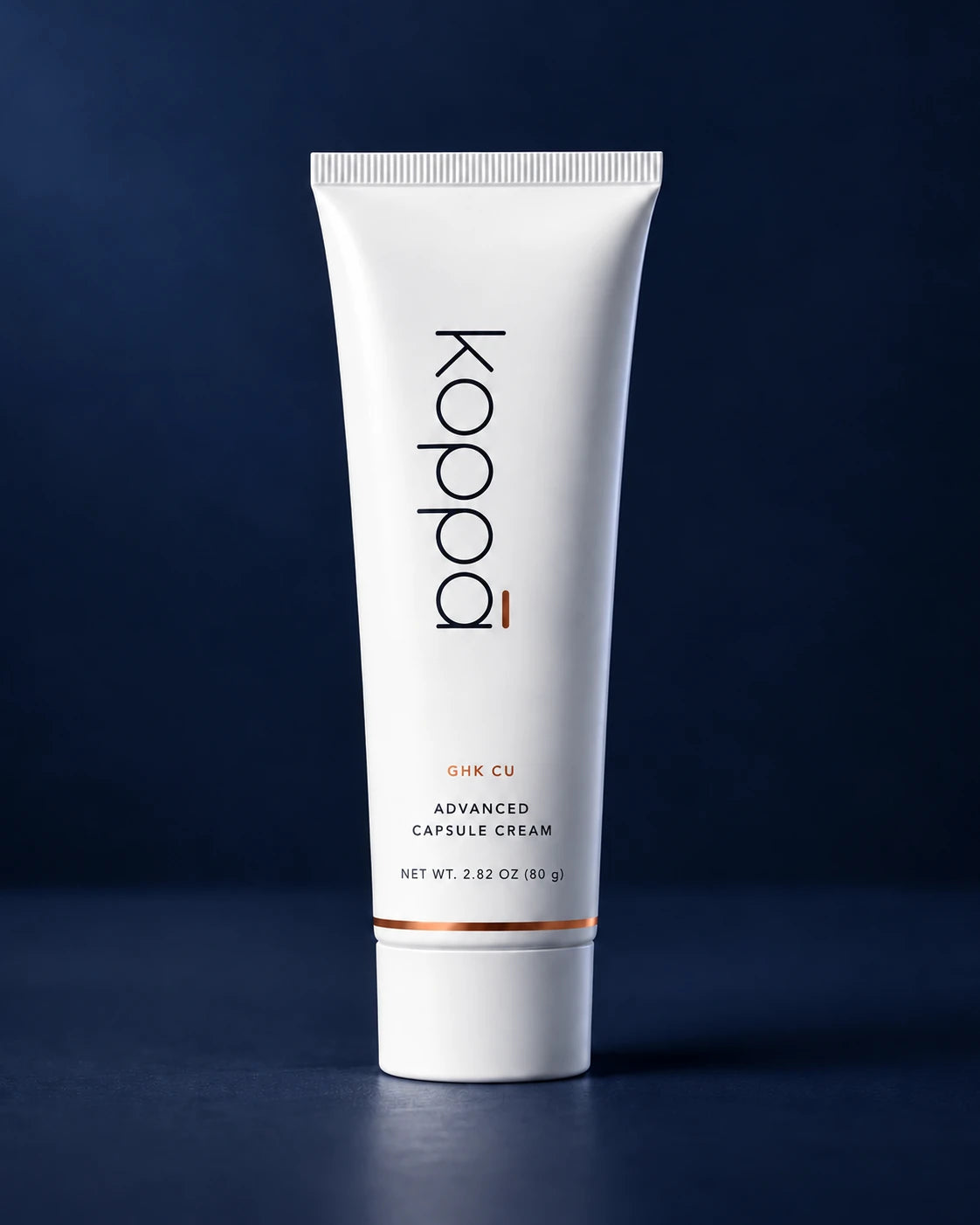
Drinking water is not a skincare step. It is a habit that is good for you for other reasons, and the research on skin is small: it measured slightly better hydration, mainly in people who drank little. For skin that feels dry, what goes on the skin matters more than what goes in the glass: koppā's GHK-Cu Advanced Capsule Cream pairs 0.5% encapsulated GHK-Cu with 5% niacinamide and 4% squalane in a cushiony, fragrance-free cream that supports hydration without a heavy finish.
That does not mean water does nothing. It means the honest answer has a few parts, and most of them are about who you are, not what you pour.
What is actually going on
The outermost layer of skin is called the stratum corneum, and the studies below measure how hydrated it is. It is also the layer a moisturizer works on.
What do studies say about drinking water and skin?
In 2015, researchers published a study in the journal Clinical, Cosmetic and Investigational Dermatology. They recruited 49 healthy women, average age 24.5, and asked about their usual drinking habits. Thirty eight of them drank less than 3,200 mL a day and eleven drank more. About 2 litres of extra water a day were added to the diet for one month. The team measured skin hydration at the surface and deeper down, water loss through the skin, and how stretchy and elastic the skin was, on the face, arm and leg, at the start, at day 15 and at day 30.
Hydration and the stretch measures changed, and the change was larger in the women who had been drinking less to begin with. That last part matters. It is the pattern you would expect if the benefit is about correcting a shortfall, not about adding more on top of enough.
In 2018, a research team published a systematic review in Skin Research and Technology. They searched two databases and found 216 records. Twenty three were read in full and six studies were included, in healthy adults with an average age between 24 and 56. Their summary is blunt: the evidence is weak in quantity and in method. Setting those problems aside, they saw a slight rise in hydration of the outer layer and of deeper skin after extra water, mostly in people who had been drinking less. They also saw small reductions in signs of dryness and roughness, and a slight increase in stretch and elasticity. The links with water loss through the skin, oil production and skin surface pH were unclear. The authors wrote that the biological mechanism is unknown, that it is unclear whether the effect exists in older people, and that more research is needed.

What helps dry skin?
The American Academy of Dermatology's advice for dry skin does not mention drinking water at all. It is about what you put on the skin and what you do to it:
- Keep baths and showers to five to ten minutes, in warm water.
- Use a gentle, fragrance free cleanser, and not so much that you get a thick lather.
- Moisturize more than once a day, especially while skin is still damp after a shower or bath, after washing your hands, and whenever skin feels dry.
- Add a humidifier to the bedroom if the air at home is dry.
If you drink very little water, drinking more is reasonable and may help a little. If you already drink plenty, moisturizer is where to put your effort, because the effect was seen mainly in people who started low.
Other habits are covered elsewhere in the journal. Our piece on what sleep studies found and our guide to cold weather skin are good places to go next.
Where koppā fits in your routine
Copper peptides are a topical ingredient, so they belong in the moisturizing part of the routine above. koppā's GHK-Cu Advanced Capsule Cream is built for that step: 0.5% encapsulated GHK-Cu with 5% niacinamide, 4% squalane and 3% jojoba in a cushiony, fragrance-free base, with visible blue capsules that release as you massage it in. It supports hydration and smoother, firmer-looking skin without a heavy finish, in an 80 g tube for $70. For an extra step underneath, the GHK-Cu 2% High Potency Serum pairs 2% GHK-Cu with six additional peptides in a water-light serum that absorbs quickly. We cover how hydrating ingredients are layered in copper peptides and hyaluronic acid.
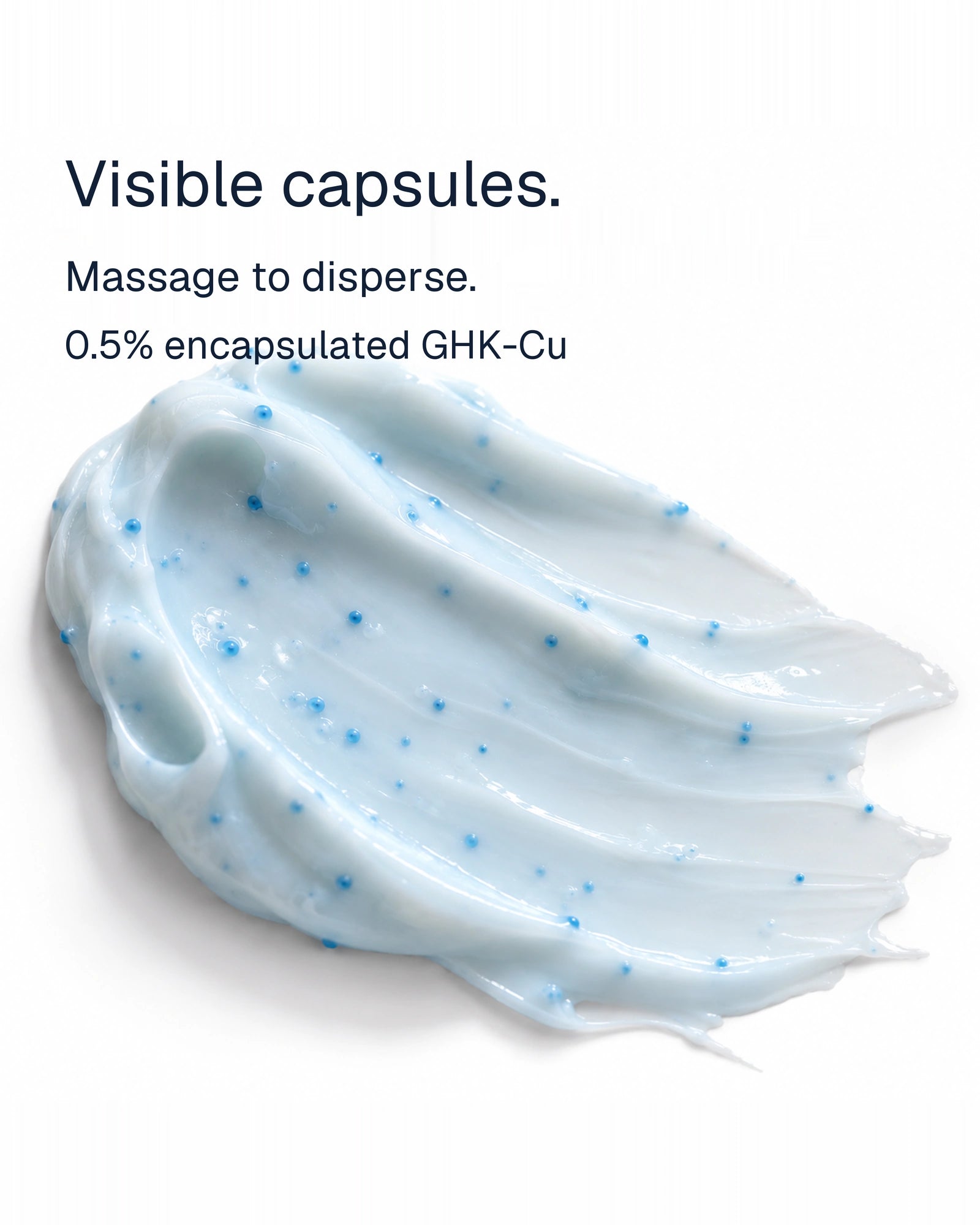
To start, massage the capsule cream in after cleansing and serum, morning and night.
Who to talk to
If dry skin does not settle after you have tried the steps above, or it keeps coming back, see a dermatologist. The AAD says persistent dry skin can be a sign of an underlying skin condition.

Frequently asked questions
Does drinking more water make skin look better?
Not in any way the research has shown. Small studies measured slightly higher skin hydration after extra water, mainly in people who drank little to begin with. They did not measure how skin looks.
How much water should I drink for my skin?
The studies don't set a figure for skin. The 2015 study added about 2 litres a day for a month as an experiment, and the change was largest in women who had been drinking less.
Why is my skin dry when I drink plenty of water?
The studies found the effect mainly in people who drank little, so once you drink enough, the difference comes from what you put on your skin. The AAD's dry skin advice focuses on shower length, cleanser, moisturizer timing and indoor humidity instead.
Is a moisturizer or water better for dry skin?
A moisturizer applied to damp skin is the first step the AAD recommends, and the one to build a dry-skin routine around.
What is in koppā's GHK-Cu Advanced Capsule Cream, and how do I use it?
koppā's GHK-Cu Advanced Capsule Cream combines 0.5% encapsulated GHK-Cu with 5% niacinamide, 4% squalane and 3% jojoba in a cushiony, fragrance-free base, and costs $70 for 80 g. Massage it in after cleansing and serum, morning and night; the visible blue capsules release as you work it into the skin.
The short version
Drinking more water raised skin hydration only slightly in small studies, and mainly in people who drank little to begin with. Those studies did not measure how skin looks, and the AAD's dry-skin advice centres on short warm showers, a gentle cleanser and moisturizing damp skin. For the moisturizing step, koppā's GHK-Cu Advanced Capsule Cream pairs 0.5% encapsulated GHK-Cu with 5% niacinamide and 4% squalane. Start by massaging it in after cleansing and serum, morning and night.


