


Best GHK-Cu Balms of 2026: Eight Compared, Label by Label
Eight copper peptide balms compared on what their labels state: GHK-Cu percentage, the full ingredient list, the base around the peptide, price per gram or ml, shipping and returns. We make koppā, our pick for a water-free, tallow-free balm with a stated percentage, and we name the categories it loses, including price per gram, cost per 1% of GHK-Cu, finished-product testing and returns.

A GHK-Cu balm puts the copper peptide GHK-Cu (Copper Tripeptide-1) into a thick, mostly oil-and-wax layer meant for dry spots on the face and body. The labels make them hard to compare: two of the eight balms here state a GHK-Cu percentage, three are beef tallow, four list water despite the word "balm", one uses a different copper peptide, and one is not shipping yet. We read every label, ingredient list, shipping page and returns policy on the brand's own site on 4 November 2026, and set them side by side.
Summary of recommendations
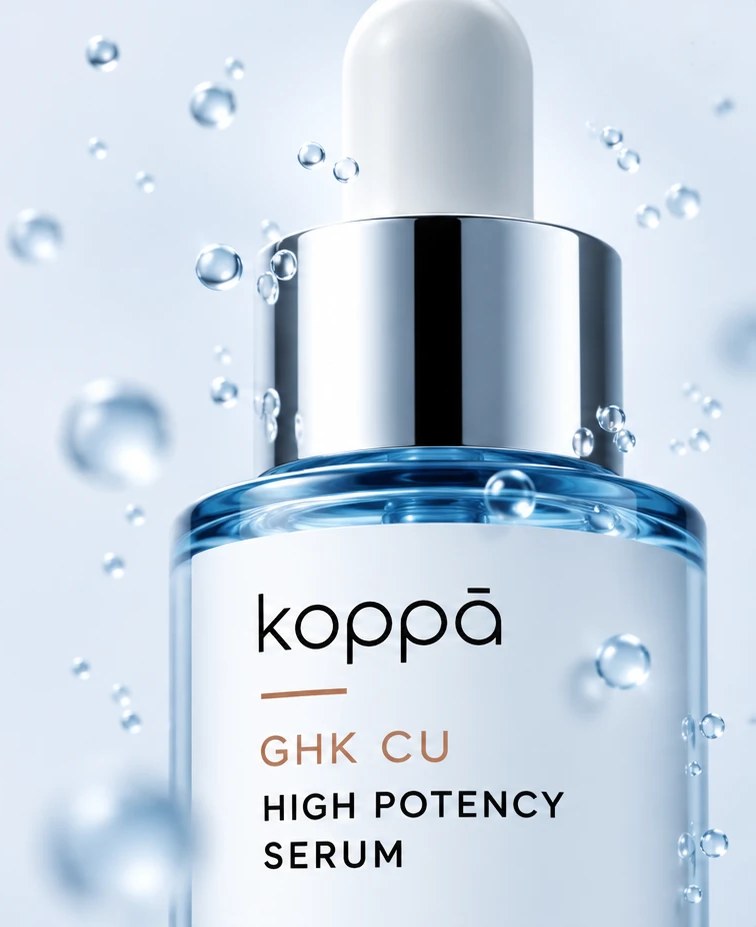
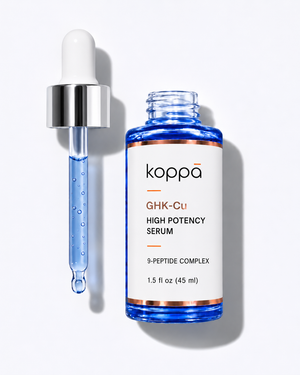
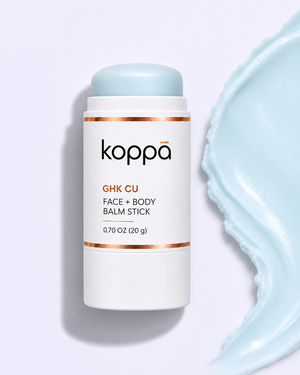
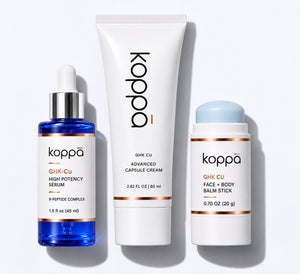
Best water-free, tallow-free balm with a stated GHK-Cu percentage: koppā GHK-Cu Face + Body Balm Stick (our own)
Lowest cost per 1% of stated GHK-Cu: Celvara Labs GHK-Cu Copper Renewal Balm
Lowest price per gram, and the largest jar: HealthyDerm Copper Peptide Whipped Tallow Honey Balm with Methylene Blue (5 oz XL)
Most finished-product testing, and the most generous returns: NIOD Copper Amino Isolate Lipid 1% (a different copper peptide)
Best for lips: NEOVA Cu3 Lip Repair
Shortest ingredient list: Happy Soul Organics Tallow Balm GHK-Cu Copper Peptide
Lowest ticket price, with copper peptide as a trace ingredient: Medicube PDRN Pink Collagen Volume Multi Balm
Not yet shipping: Peptide Sticks Collagen + Copper Stick (pre-order, first run due January 2027)
Our top pick: koppā GHK-Cu Face + Body Balm Stick
When we weigh the stated formula, the base, the format and the price together, this is the balm we would choose for targeted use on the face and body, but it is not the best on every count. It states 0.5% GHK-Cu, tied with Celvara for the highest stated percentage, and it is the only balm here with no water, no tallow and a full published ingredient list. It costs more per gram than every tallow jar and 2.5 times Celvara per unit for the same stated percentage, its finished-balm testing is unpublished, and its first ingredient is olive oil, which we discuss below.
US$45 for 20 g (US$2.25 per g); US$40.50 on subscription. US shipping US$3, free over US$100 and on subscriptions. Checked 4 November 2026.
Why you should trust us
koppā makes copper peptide skincare and nothing else, so GHK-Cu is the one ingredient we spend all our time on. We also make the first balm on this page. That is a conflict of interest, and the way we handle it is to show our working: every figure comes from the brand's own product, shipping and returns pages, read on the date stated, with the link beside it, so you can check any line yourself.
No brand paid to be included, and the links to other brands earn us nothing. koppā leads two of the twelve categories in our scorecard outright and shares two, and the scorecard names the leader of every other category. We have also corrected arguments our own earlier version of this page made: we no longer say a water-free base is needed to keep GHK-Cu stable1, and we no longer argue against tallow on oleic acid without saying that olive oil, koppā's first ingredient, is mostly oleic acid2. No human trial has tested GHK-Cu on the body, hands or lips3.
How we evaluated GHK-Cu balms
We chose eight balms that list a copper peptide and that people searching for a GHK-Cu balm are most likely to find, and compared them on five criteria:
Dose: does the label state a GHK-Cu percentage, and is the copper peptide GHK-Cu at all?
Base: is there water, tallow, honey, fragrance or essential oil in the ingredient list, and is the full list published?
Evidence: has the brand reported a test of the finished balm, and how was it done?
Cost: price per gram or ml, price per 1% of stated GHK-Cu, and US shipping.
Returns: can you send it back if it doesn't suit you?
Dose · Advantage: koppā and Celvara
Two of the eight state a GHK-Cu percentage: koppā and Celvara, both 0.5%. NIOD's product is called "1%", but the page does not say 1% of what, and its copper peptide is Copper Tripeptide-1 Palmitamide, a fat-soluble derivative, not GHK-Cu. The other five state no percentage. In Medicube's balm, Copper Tripeptide-1 is 45th of 57 ingredients.
Base · Advantage: koppā
koppā is the only balm here with no water, no tallow and a full published ingredient list. Celvara's newly published list puts water second, after tallow, with two preservatives. NIOD lists water fourth, NEOVA second and Medicube 25th. HealthyDerm and Happy Soul Organics list no water, but both combine tallow with manuka honey and no preservative. Peptide Sticks claims a water-free formula but has published no ingredient list.
Evidence · Advantage: NIOD
NIOD is the only brand reporting a test of its finished balm with a number of people: 41 people using it once a day for 12 weeks (skin softer by 40%, feeling firmer by 29%), and 41 people after a single application (crow's feet visibly reduced 13% overnight). It does not say whether these were instrumental or self-assessed, or describe a control. Medicube reports percentage improvements with no number of people. koppā says its balm has hydration and ingredient-stability documentation, but has not published it.
| Balm | Price and US shipping | Returns |
|---|---|---|
| koppā | US$45 / 20 g; US$40.50 on subscription (10% off, every 2 months). Shipping US$3, free over US$100 and on all subscriptions |
All sales final; damaged, broken or faulty items reported within 7 days of delivery are replaced or refunded |
| Celvara Labs | US$44.99 / 50 ml; US$38.24 a month on subscription (15% off). Shipping US$5.95, free over US$50 per its policy (its product-page cart says US$75) |
30 days from delivery, used or unused; buyer pays return postage |
| HealthyDerm | US$30 / 2 oz or US$46 / 5 oz XL; subscription 10% to 20% off. Shipping US$4.99, free over US$40 |
60-day guarantee on one opened product, first order only, with photo conditions; otherwise unopened within 60 days, buyer pays postage |
| Happy Soul Organics | US$30 / 2 oz or US$50 / 4 oz; 15% off on subscription. Shipping calculated at checkout; free on "qualifying orders", threshold not stated |
No returns or refunds once shipped; damage or defects reviewed case by case within 7 days |
| NIOD | US$93 / 15 ml; no subscription seen. Free shipping over US$25 |
365 days from purchase if at least 50% full; buyer pays return postage |
| NEOVA | US$42 / 0.5 fl oz; 5% off on auto-renew. Shipping US$9.95 (UPS 2nd day), free over US$100 |
30 days, unused and unopened; return authorisation by phone |
| Medicube | US$22 (regular US$26), size not stated; no subscription. Shipping US$6.99, free over US$80 in the continental US |
Damaged or defective only, within 30 days of purchase |
| Peptide Sticks | US$36 / 15 g on pre-order; 2 for US$68, 3 for US$96. Free US shipping on 2 or more sticks |
Refundable before shipping; opened skincare not returnable after |
koppā
- Price and US shipping
US$45 / 20 g; US$40.50 on subscription (10% off, every 2 months). Shipping US$3, free over US$100 and on all subscriptions
- Returns
All sales final; damaged, broken or faulty items reported within 7 days of delivery are replaced or refunded
Celvara Labs
- Price and US shipping
US$44.99 / 50 ml; US$38.24 a month on subscription (15% off). Shipping US$5.95, free over US$50 per its policy (its product-page cart says US$75)
- Returns
30 days from delivery, used or unused; buyer pays return postage
HealthyDerm
- Price and US shipping
US$30 / 2 oz or US$46 / 5 oz XL; subscription 10% to 20% off. Shipping US$4.99, free over US$40
- Returns
60-day guarantee on one opened product, first order only, with photo conditions; otherwise unopened within 60 days, buyer pays postage
Happy Soul Organics
- Price and US shipping
US$30 / 2 oz or US$50 / 4 oz; 15% off on subscription. Shipping calculated at checkout; free on "qualifying orders", threshold not stated
- Returns
No returns or refunds once shipped; damage or defects reviewed case by case within 7 days
NIOD
- Price and US shipping
US$93 / 15 ml; no subscription seen. Free shipping over US$25
- Returns
365 days from purchase if at least 50% full; buyer pays return postage
NEOVA
- Price and US shipping
US$42 / 0.5 fl oz; 5% off on auto-renew. Shipping US$9.95 (UPS 2nd day), free over US$100
- Returns
30 days, unused and unopened; return authorisation by phone
Medicube
- Price and US shipping
US$22 (regular US$26), size not stated; no subscription. Shipping US$6.99, free over US$80 in the continental US
- Returns
Damaged or defective only, within 30 days of purchase
Peptide Sticks
- Price and US shipping
US$36 / 15 g on pre-order; 2 for US$68, 3 for US$96. Free US shipping on 2 or more sticks
- Returns
Refundable before shipping; opened skincare not returnable after
One-time US list prices before promotions, checked on each brand's own site on 4 November 2026; shipping and returns read on each brand's own policy pages the same day. NIOD's returns are DECIEM's policy, read on a returns page that showed its Canadian edition. Policies change, so check before you order.
Cost · Advantage: HealthyDerm and Celvara
HealthyDerm's 5 oz XL is the cheapest per gram here, US$46 for 141.75 g (US$0.32 per g), but states no GHK-Cu percentage. Two balms state one: Celvara (US$1.80 per ml for each 1% of GHK-Cu) and koppā (US$4.50 per g; US$1.53 and US$4.05 on subscription). koppā's price reflects high-quality ingredients: raw GHK-Cu specified at 99% minimum purity, eight supporting peptides and a water-free, tallow-free base.
Returns · Advantage: NIOD
NIOD accepts returns for 365 days if the product is at least half full. Celvara takes used or unused product within 30 days, and HealthyDerm offers a conditional guarantee on one opened jar. koppā policy: All sales final; damaged, broken or faulty items reported within 7 days of delivery are replaced or refunded; NEOVA takes unopened returns only, Medicube defects only, and Happy Soul Organics nothing once shipped.
Overall value · Advantage: koppā, for a particular buyer
No balm wins every criterion. koppā's case is the combination: a stated GHK-Cu percentage, a full ingredient list, no water, no tallow, no fragrance, and a stick you apply without fingers. If price per gram or per 1% of GHK-Cu matters most, Celvara or HealthyDerm is the better buy, and we say so in their cards below.
Eight GHK-Cu balms compared
Start with where you will use it and what you want in the base. Each card gives the reason to choose that balm and the limits of what its label tells you.
Eight balms, one comparison
Scroll horizontally for all eight balms| Balm |
 koppā
GHK-Cu Face + Body Balm Stick
Best water-free, tallow-free · our own formula | Celvara Labs GHK-Cu Copper Renewal Balm Lowest cost per 1% of stated GHK-Cu | HealthyDerm Copper Peptide Whipped Tallow Honey Balm with Methylene Blue Lowest price per gram | NIOD Copper Amino Isolate Lipid 1% (CAIL) Most testing, best returns | NEOVA Cu3 Lip Repair Best for lips | Happy Soul Organics Tallow Balm GHK-Cu Copper Peptide Shortest ingredient list | Medicube PDRN Pink Collagen Volume Multi Balm Lowest ticket price, trace copper peptide | Peptide Sticks Collagen + Copper Stick Pre-order: not shipping until January 2027 |
|---|---|---|---|---|---|---|---|---|
| Copper peptide, as stated | 0.5% GHK-Cu, stated | 0.5% GHK-Cu, stated | Copper peptide; percentage not stated | Copper Tripeptide-1 Palmitamide; "1%" basis not stated | Bis (Tripeptide-1) Copper Acetate; percentage not stated | GHK-Cu copper peptides; percentage not stated | Copper Tripeptide-1, 45th of 57; percentage not stated | GHK-Cu named; percentage not set |
| Size | 20 g stick | 50 ml | 2 oz (56.7 g); XL 5 oz (141.75 g) | 15 ml | 0.5 fl oz (14.79 ml) | 2 oz (57 g) or 4 oz (113 g) | Not stated on medicube.us | 15 g stick |
| List price | US$45 | US$44.99 | US$30; XL US$46 | US$93 | US$42 | US$30 or US$50 | US$22 | US$36 (pre-order) |
| Price per g or ml | US$2.25 per g | US$0.90 per ml | US$0.53 per g; XL US$0.32 per g | US$6.20 per ml | US$2.84 per ml | US$0.53 or US$0.44 per g | Not computable: size not stated | US$2.40 per g |
| Full ingredient list published | Brand list, not stated as INCI order | 3 ingredients, brand list | Not yet published | |||||
| No water in the ingredient list | Water is 2nd | No water listed; contains honey | Water is 4th | Water is 2nd | No water listed; contains honey | Water is 25th | Claimed; no ingredient list | |
| No tallow | 60% beef tallow | Beef tallow | Beef tallow | Not yet published | ||||
| Fragrance-free, supported by the ingredient list | Not claimed; lists vetiver root extract | Unscented version only; the other has peppermint oil | Claimed, but lists four flower and fruit oils | No added fragrance claimed; no ingredient list | ||||
| Finished-product test reported by the brand | Documented, not published | Batch assays only; no efficacy test | Not stated | Yes: 41 people, 12 weeks | Study linked; no figures on the page | Not stated | Results stated, no number of people | None yet |
| Shop | Shop, $45 |
One-time list prices on each brand's own site, checked 4 November 2026, before promotions, tax and delivery. Balms sold in ounces are treated as weight ounces (1 oz = 28.35 g); fluid ounces are converted to ml. Grams and millilitres are different units, so we compare them only within a unit. koppā shopping buttons show current pricing in your selected currency. A percentage that is not stated is not evidence a formula contains none.
The full scorecard: which balm wins each category?
Twelve categories. koppā leads two outright and shares two.
| Category | Winner | Why |
|---|---|---|
| Highest stated GHK-Cu | Tie: koppā and Celvara, 0.5% |
NIOD's "1%" names a different copper peptide and does not say what it is 1% of. The other five state no percentage. |
| Lowest cost per 1% of stated GHK-Cu | Celvara, US$1.80 per ml per 1% |
US$0.90 per ml divided by 0.5. koppā is US$4.50 per g per 1% (US$4.05 on subscription). |
| Lowest price per g or ml | HealthyDerm XL, US$0.32 per g |
US$46 for 5 oz (141.75 g). Next: Happy Soul Organics 4 oz US$0.44 per g, then the 2 oz jars from both at US$0.53 per g. koppā is US$2.25 per g. Neither HealthyDerm nor Happy Soul states a GHK-Cu percentage. |
| Largest size | HealthyDerm XL, 5 oz (141.75 g) |
Then Happy Soul Organics 4 oz (113.4 g). koppā is 20 g. |
| Water-free and tallow-free, with a stated percentage and full ingredient list | koppā |
Celvara lists water second; HealthyDerm and Happy Soul are tallow and honey; Medicube, NIOD and NEOVA list water; Peptide Sticks claims water-free but has no ingredient list. |
| Largest stick with a stated size | koppā, 20 g |
Peptide Sticks is 15 g and not shipping; Medicube does not state a size. |
| Shortest ingredient list | Happy Soul Organics, 3 ingredients |
Tallow, GHK-Cu copper peptides and manuka honey (the peppermint version adds peppermint oil). No percentage stated. |
| Fragrance-free, supported by the ingredient list | Tie: koppā, Celvara, HealthyDerm and NEOVA |
No fragrance or essential oil in their lists. Medicube claims fragrance-free but lists geranium, ylang-ylang, bergamot and rose oils; NIOD does not claim it. |
| Most finished-product testing reported | NIOD |
41 people, 12 weeks, and 41 people after one application; brand-reported, no control described. Medicube gives percentages with no number of people. |
| Most generous returns | NIOD |
365 days if at least 50% full. Runner-up: HealthyDerm's conditional opened-jar guarantee. Happy Soul Organics takes no returns. |
| Best for lips | NEOVA Cu3 Lip Repair |
The only product here made for lips, with petrolatum first. koppā can be used on lips; Peptide Sticks says to avoid them. |
| Lowest free-shipping threshold | NIOD, US$25 |
Then HealthyDerm US$40 and Celvara US$50 (per its policy). koppā is free over US$100, or on any subscription. |
Highest stated GHK-Cu
- Winner
Tie: koppā and Celvara, 0.5%
- Why
NIOD's "1%" names a different copper peptide and does not say what it is 1% of. The other five state no percentage.
Lowest cost per 1% of stated GHK-Cu
- Winner
Celvara, US$1.80 per ml per 1%
- Why
US$0.90 per ml divided by 0.5. koppā is US$4.50 per g per 1% (US$4.05 on subscription).
Lowest price per g or ml
- Winner
HealthyDerm XL, US$0.32 per g
- Why
US$46 for 5 oz (141.75 g). Next: Happy Soul Organics 4 oz US$0.44 per g, then the 2 oz jars from both at US$0.53 per g. koppā is US$2.25 per g. Neither HealthyDerm nor Happy Soul states a GHK-Cu percentage.
Largest size
- Winner
HealthyDerm XL, 5 oz (141.75 g)
- Why
Then Happy Soul Organics 4 oz (113.4 g). koppā is 20 g.
Water-free and tallow-free, with a stated percentage and full ingredient list
- Winner
koppā
- Why
Celvara lists water second; HealthyDerm and Happy Soul are tallow and honey; Medicube, NIOD and NEOVA list water; Peptide Sticks claims water-free but has no ingredient list.
Largest stick with a stated size
- Winner
koppā, 20 g
- Why
Peptide Sticks is 15 g and not shipping; Medicube does not state a size.
Shortest ingredient list
- Winner
Happy Soul Organics, 3 ingredients
- Why
Tallow, GHK-Cu copper peptides and manuka honey (the peppermint version adds peppermint oil). No percentage stated.
Fragrance-free, supported by the ingredient list
- Winner
Tie: koppā, Celvara, HealthyDerm and NEOVA
- Why
No fragrance or essential oil in their lists. Medicube claims fragrance-free but lists geranium, ylang-ylang, bergamot and rose oils; NIOD does not claim it.
Most finished-product testing reported
- Winner
NIOD
- Why
41 people, 12 weeks, and 41 people after one application; brand-reported, no control described. Medicube gives percentages with no number of people.
Most generous returns
- Winner
NIOD
- Why
365 days if at least 50% full. Runner-up: HealthyDerm's conditional opened-jar guarantee. Happy Soul Organics takes no returns.
Best for lips
- Winner
NEOVA Cu3 Lip Repair
- Why
The only product here made for lips, with petrolatum first. koppā can be used on lips; Peptide Sticks says to avoid them.
Lowest free-shipping threshold
- Winner
NIOD, US$25
- Why
Then HealthyDerm US$40 and Celvara US$50 (per its policy). koppā is free over US$100, or on any subscription.
1. koppā GHK-Cu Face + Body Balm Stick: best water-free, tallow-free balm with a stated percentage
-
01

 Best water-free, tallow-free · our own formula
koppāGHK-Cu Face + Body Balm Stick
- Copper peptide, as stated
- 0.5% GHK-Cu, stated
- Size
- 20 g stick
- Your current price
- $45
- Best for
- Targeted spots on the face and body, in a stick with a stated GHK-Cu percentage and no water, tallow or fragrance
Our verdict When we weigh the stated formula, the base, the format and the price together, this is the balm we would choose for targeted use. Choose Celvara instead if the lowest cost per 1% of GHK-Cu matters most, or a tallow jar if you want the most balm for your money.
The full ingredient list (18 ingredients, updated October 2026) is olive oil, coconut oil, jojoba oil (stated 15%), candelilla wax, squalane (stated 10%), tapioca starch, meadowfoam seed oil and Myrothamnus flabellifolia extract, then Copper Tripeptide-1 ninth at a stated 0.5%, then tocopherol and eight more peptides without stated percentages: Acetyl Hexapeptide-8, Palmitoyl Tetrapeptide-7, Tridecapeptide-1, Dipeptide Diaminobutyroyl Benzylamide Diacetate, Carnosine, Palmitoyl Pentapeptide-4, Palmitoyl Tripeptide-5 and Arginine/Lysine Polypeptide. There is no water, so there is no preservative. The brand states fragrance-free, silicone-free and cruelty-free, and the list contains no animal-derived ingredient. GHK-Cu dissolves in water1; in a water-free stick it is likely dispersed rather than dissolved, which may affect how it is released, and no one has published a study of that.
Pros
- 0.5% GHK-Cu stated, tied with Celvara for the highest stated here
- The only balm here with no water, no tallow and a full published ingredient list
- Fragrance-free and silicone-free, per the brand, and the ingredient list supports both
- Eight more named peptides, including Palmitoyl Pentapeptide-4, which has its own 12-week trial in another moisturiser4
- A twist-up stick: no fingers in a jar, and a solid that travels
- US$3 US shipping, free over US$100 and on subscriptions; all sales final
Good to know
- US$2.25 per g in a 20 g stick, sized for the areas a balm is for rather than whole-body coverage
- US$4.50 per g for each 1% of GHK-Cu, in a water-free formula with every ingredient listed
- Tested for hydration and ingredient stability
- Olive oil leads a base with 15% jojoba and 10% squalane; the forearm study that found olive oil loosened the skin barrier tested neat olive oil5
- A solid balm: keep it out of direct heat
- All sales final; damaged, broken or faulty items reported within 7 days of delivery are replaced or refunded
Against the other seven, label by label. On stated GHK-Cu, koppā's 0.5% ties Celvara's, and no other balm states a GHK-Cu percentage. On the base, it is the only one combining no water, no tallow and a published ingredient list, and one of four whose list supports a fragrance-free claim. On price per gram or ml, it sits below NIOD, NEOVA and the unshipped Peptide Sticks and above the others here (Medicube states no size); the price reflects high-quality ingredients, with raw GHK-Cu specified at 99% minimum purity and eight supporting peptides. On evidence, NIOD reports far more testing of its finished product. We will not tell you the water-free base protects the GHK-Cu, because the stability study we know of found it stable in water1; what the base does avoid is the need for a preservative. If you already use a GHK-Cu serum on your face, the balm's job is the spots a serum or cream will not stay on.
The other seven, with pros and cons
Each one wins at least one thing koppā doesn't, apart from Peptide Sticks, which is not yet on sale. Prices are list prices before promotions on the brand's own site, checked 4 November 2026.
-
02Lowest cost per 1% of stated GHK-Cu
Celvara LabsGHK-Cu Copper Renewal Balm
- Copper peptide, as stated
- 0.5% GHK-Cu, stated
- Size
- 50 ml
- List price
- US$44.99
- Best for
- A tallow balm that states its GHK-Cu percentage, at the lowest cost per 1% here
Our verdict Choose it if you want a stated percentage at the lowest cost per 1% and you are happy with tallow. Do not buy it expecting a water-free balm: water is its second ingredient.
States 0.5% GHK-Cu as active peptide content in a 60% grass-fed beef tallow base, with 2% niacinamide and 5% dimethyl isosorbide, plus manuka honey, jojoba and vitamin E without percentages. Its full ingredient list, published on the product page since our October check, reads: tallow, water, honey, jojoba seed oil, dimethyl isosorbide, niacinamide, tocopherol, Copper Tripeptide-1 (8th of 11), hydroxyacetophenone, potassium sorbate and methylene blue (listed as colourant CI 52015). So it is a preserved, water-containing balm. The brand says each batch is third-party assayed for GHK-Cu, microbes and heavy metals; the certificate panel was empty when we checked. It is marketed for skin after weight loss.
celvaralabs.comPros
- 0.5% GHK-Cu stated, tied with koppā
- US$1.80 per ml per 1% of GHK-Cu, the lowest here; US$1.53 on subscription
- Full ingredient list now published
- Preserved, which suits a formula containing water and honey
- Returns accepted used or unused within 30 days
Cons and things to know
- US$44.99 for 50 ml on celvaralabs.com, 4 November 2026
- Water second and tallow first: not a water-free balm
- Contains methylene blue
- Sold in a jar
- Buyer pays return postage; its two pages give different free-shipping thresholds (US$50 and US$75)
-
03Lowest price per gram
HealthyDermCopper Peptide Whipped Tallow Honey Balm with Methylene Blue
- Copper peptide, as stated
- Copper peptide; percentage not stated
- Size
- 2 oz (56.7 g); XL 5 oz (141.75 g)
- List price
- US$30; XL US$46
- Best for
- The most tallow balm for the money, for body use in quantity
Our verdict Choose it for the lowest price per gram and a guarantee that covers an opened jar. You are not told how much copper peptide it contains.
A whipped balm of grass-fed beef tallow, raw manuka honey, jojoba oil, sunflower lecithin, vitamin E, copper peptide and methylene blue. The page says "six ingredients" but lists seven, with copper peptide sixth as printed, and gives no percentage. The product page does not state a size; HealthyDerm's XL page calls the XL a 5 oz value size for people already using "the 2 oz jar". The brand says no fragrance, no preservatives and no essential oils, and suggests using it at night, because methylene blue tints the skin blue.
healthyderm.comPros
- US$0.32 per g for the 5 oz XL, the lowest here
- The largest jar here
- Free US shipping from US$40
- A 60-day guarantee that covers one opened product
- Subscriptions up to 20% off
Cons and things to know
- US$30 (compare-at US$59) on healthyderm.com, 4 November 2026; XL US$46
- No GHK-Cu percentage
- Size not stated on the product page
- Honey in an unpreserved fat; no published test of its microbial stability
- The guarantee is first order only, needs a before photo within 7 days and 60 days of daily use
- Jar; US only, not Alaska or Hawaii
-
04Most testing, best returns
NIODCopper Amino Isolate Lipid 1% (CAIL)
- Copper peptide, as stated
- Copper Tripeptide-1 Palmitamide; "1%" basis not stated
- Size
- 15 ml
- List price
- US$93
- Best for
- A tested night gel-balm for the face, if a different copper peptide suits you
Our verdict Choose it if finished-product testing and an easy return matter most and you will use it on the face at night. It is not GHK-Cu, and the GHK-Cu research does not cover it.
NIOD files CAIL under the format "balm", describes it as a copper peptide gel and directs it as the last step at night on the face and neck. Its copper peptide is Copper Tripeptide-1 Palmitamide (Pal-GHK-Cu), which the brand calls an oil-friendly form: GHK-Cu with a fatty acid attached, a different ingredient. The "1%" is in the name only. The 21-ingredient list starts with squalane, caprylic/capric triglyceride, glycerin and water, and is preserved. The brand calls it vegan, alcohol-free, silicone-free and "oil-free", which sits oddly with squalane and a triglyceride listed first and second. Testing reported by NIOD: 41 people for 12 weeks (softer +40%, feels firmer +29%) and 41 people after one application (crow's feet visibly reduced 13% overnight), with no control described.
niod.comPros
- The most finished-product testing reported of any balm here
- 365-day returns if at least half full
- Vegan, per the brand; full ingredient list; preserved
- Free shipping over US$25
Cons and things to know
- US$93 for 15 ml on niod.com, 4 November 2026
- US$6.20 per ml, the most expensive here
- Not GHK-Cu: a palmitoylated derivative, and the "1%" is not defined
- Contains water: a gel-balm, not a solid
- Directed for the face and neck at night, per the brand
- Buyer pays return postage
-
05Best for lips
NEOVACu3 Lip Repair
- Copper peptide, as stated
- Bis (Tripeptide-1) Copper Acetate; percentage not stated
- Size
- 0.5 fl oz (14.79 ml)
- List price
- US$42
- Best for
- Dry or chapped lips, in a petrolatum ointment
Our verdict Choose it if your target is your lips. Petrolatum, its first ingredient, is the best-documented occlusive here; the copper peptide dose is not stated.
A lip ointment with petrolatum first, then water, microcrystalline wax, paraffin, glycerin and Bis (Tripeptide-1) Copper Acetate (6th of 10), preserved with benzyl alcohol. NEOVA describes its copper complex as GHK-Cu and gives no percentage. It is sold for all lips, especially after procedures and sun, wind or cold, and to be used alone or under lip colour. The page links a clinical study document but gives no figures; we did not open it.
neova.comPros
Cons and things to know
- US$42 for 0.5 fl oz on neova.com, 4 November 2026; 5% off on auto-renew
- No percentage stated
- Contains water
- US$9.95 shipping under US$100
- Returns unused and unopened, with a phone call for authorisation
-
06Shortest ingredient list
Happy Soul OrganicsTallow Balm GHK-Cu Copper Peptide
- Copper peptide, as stated
- GHK-Cu copper peptides; percentage not stated
- Size
- 2 oz (57 g) or 4 oz (113 g)
- List price
- US$30 or US$50
- Best for
- A three-ingredient tallow balm in a tin
Our verdict Choose it only if you want the shortest list and accept no stated dose and no returns of any kind.
Three ingredients: organic grass-fed beef tallow, GHK-Cu copper peptides and raw manuka honey. A peppermint version adds peppermint essential oil. No percentage is stated. The brand says the peptide is third-party tested for purity, which describes the raw material, not the finished balm, and calls the balm "non-pore clogging" without citing a test. It is made to order, sold in a stainless-steel tin, and the brand warns it can soften and separate in a hot car. Prices have risen since our October check, from US$24 and US$40.
happysoulorganics.comPros
- Three ingredients
- An unscented version
- Stainless-steel tin; bulk packs sold
- 15% off on subscription
Cons and things to know
- US$30 for 2 oz or US$50 for 4 oz on happysoulorganics.com, 4 November 2026
- No GHK-Cu percentage
- No returns or refunds once shipped: final sale
- Honey with no preservative
- Free-shipping threshold not stated
-
07Lowest ticket price, trace copper peptide
MedicubePDRN Pink Collagen Volume Multi Balm
- Copper peptide, as stated
- Copper Tripeptide-1, 45th of 57; percentage not stated
- Size
- Not stated on medicube.us
- List price
- US$22
- Best for
- A twist-up multi-active stick that happens to include a copper peptide
Our verdict Choose it for PDRN, collagen and retinol in a stick at a low price, not for GHK-Cu: copper peptide is near the end of a 57-ingredient list.
A twist-up balm built on esters and waxes, with PDRN (sodium DNA), collagen, NAD, caffeine, retinol and 14 peptide or sh-polypeptide entries. Copper Tripeptide-1 is 45th of 57 ingredients and water 25th (our October version said 40th and 24th). The brand claims it is free from artificial colorants and fragrance, but the list includes geranium, ylang-ylang, bergamot and rose oils. Medicube reports results from a "Global Institute of Dermatological Sciences" test (under-eye hollowness +25.7%, lip lines +12.1%, crow's feet +10.7%, among others) without the number of people, duration or control.
medicube.usPros
- US$22, the lowest ticket price here
- Twist-up stick; full ingredient list published
- Many named actives
Cons and things to know
- US$22 (regular US$26) on medicube.us, 4 November 2026; not on sale that day
- Size not stated, so no price per gram
- Copper peptide is a trace ingredient
- Four flower and fruit oils despite a fragrance-free claim; contains retinol
- Returns for damage or defects only
-
08Pre-order: not shipping until January 2027
Peptide SticksCollagen + Copper Stick
- Copper peptide, as stated
- GHK-Cu named; percentage not set
- Size
- 15 g stick
- List price
- US$36 (pre-order)
- Best for
- A water-free copper peptide stick, once it exists
Our verdict Not buyable today. The brand says its formula is not finalised, so every claim about it is provisional.
A 15 g stick naming Matrixyl 3000, GHK-Cu, collagen peptides, hyaluronic acid and panthenol. The brand says the first run is scheduled to ship in January 2027 once the formula clears stability and safety testing, that the formula is still with its contract formulator and has not been finalised, and that use levels are still being set. It claims water-free, with no added fragrance, dyes, essential oils, drying alcohols or menthol, and says to stay outside the orbital bone and avoid the lips.
peptidesticks.comPros
- The only other stick here claiming to be water-free
- Refundable before it ships
Cons and things to know
- US$36 on pre-order on peptidesticks.com, 4 November 2026; first run due January 2027
- No ingredient list and no percentages yet
- No testing yet; the brand says it cannot give a results timeline
- Opened sticks not returnable once shipped
Which copper peptide balms did we leave out?
We looked at three more tallow balms and left them out because they add nothing the tallow jars above do not already show. Peptide Labz Copper Peptide Tallow Balm (US$29.99) states no size, percentage or ingredient list on its page, though it claims to be water-free. Santa Cruz Paleo GHK-CU Whipped Tallow Balm (US$28) adds vanilla extract for scent and states no percentage. HealthyDerm's Colostrum Tallow Honey Balm (US$30) is the same base with bovine colostrum instead of methylene blue. All checked on the brands' own pages on 4 November 2026.
Two products on this page sit at the edge of the category, and we kept them with a warning: NIOD's CAIL uses a different copper peptide, and Medicube's multi balm contains Copper Tripeptide-1 only as a trace ingredient.
What does a balm actually do for dry skin?
A balm is mostly oils and waxes. What those do to water loss has better human evidence than anything about the copper peptide inside.
Petrolatum is the benchmark
In human volunteers whose skin barrier had been stripped with acetone, petrolatum sped up barrier recovery and moved into the outer layer of the skin6. A review states that petrolatum at 5% or more can cut water loss through the skin by more than 98%, and that lanolin, mineral oil and silicones cut it by 20% to 30%, though it gives no source for the second figure7. Another review describes petrolatum as repairing a delipidised barrier immediately, and notes that some formula ingredients, emulsifiers among them, may weaken it8. Of the balms here, only NEOVA uses petrolatum.
Plant oils are not all alike
In two randomised studies in 19 adults over 4 to 5 weeks, neat olive oil applied to the forearm reduced the integrity of the skin's outer layer and caused mild redness, while sunflower seed oil preserved it and improved hydration5. Olive oil is mostly oleic acid; coconut oil is about 49% lauric acid and 6% oleic, and was as effective and safe as mineral oil for dry skin in the trials one review describes, which also notes jojoba's high oxidative stability2. In a 4-week double-blind trial in 52 adults with eczema, virgin coconut oil reduced staphylococcal colonisation and eczema scores more than virgin olive oil9. These were neat oils, not balms: none of these studies tested koppā's stick, which blends olive and coconut oils with jojoba, squalane and wax.
Single applications show small differences
In 21 people given one application of nine lipids, none differed on normal skin; on skin irritated with a detergent, canola oil gave lower water loss than water alone, while shea butter and petrolatum did not differ from water10. Waxes, which give a balm its structure, have little research of their own: a 2023 review of beeswax, co-written by employees of a beeswax brand, found only five clinical studies, three of them in animals11.
Tallow, honey and oleic acid: what does the evidence say?
There is almost no human research on tallow on the skin, for or against. A 2024 scoping review of 19 studies found "significant research gaps", most evidence without human subjects, two questionnaire studies (78 and 83 people) on how moisturising it felt, and conflicting evidence on side effects; it lists tallow's main fatty acids as oleic, palmitic and stearic acid, in that order12.
The case against tallow usually rests on oleic acid. In the rabbit-ear test, a model that traces back to 1972 work on "acne cosmetica"13, oleic acid and its peroxides produced large comedones, and squalene peroxides did too, while squalane was not singled out14. In mice and skin cells, free oleic acid caused scaly, abnormal skin and raised water loss, but a triglyceride form of oleic acid had no effect1516, and tallow, like olive oil, is mostly triglyceride. The rabbit ear over-predicts what happens in people: in a 4-week human back-patch study of 6 people, finished products made with "comedogenic" ingredients were not necessarily comedogenic17.
We are not going to use that argument against tallow. koppā's balm lists olive oil first, and olive oil consists mainly of oleic acid2; olive oil also reduced the skin barrier's integrity in people5. What we can say about the tallow jars is what their labels show: two of the three state no GHK-Cu percentage, and they are animal-derived, which matters if you avoid animal ingredients.
Honey in a balm
Honey is a supersaturated sugar solution, a humectant, and antimicrobial through hydrogen peroxide or, in manuka, methylglyoxal; cosmetic use levels are typically 1% to 10%18. In 14 adults with eczema, neat manuka honey applied overnight for 7 days improved lesions against the untreated side, without blinding19. No study we found tests honey inside a tallow balm, or the microbial stability of an unpreserved tallow and raw honey balm. Celvara, which contains water and honey, adds two preservatives; HealthyDerm and Happy Soul Organics add none.
Tallow-free GHK-Cu balm
The koppā GHK-Cu Balm Stick is a tallow-free GHK-Cu balm: 0.5% GHK-Cu in olive, coconut and jojoba oils, candelilla wax, squalane and meadowfoam seed oil, with no animal fat, no beeswax, no honey and no added colour, 20 g for $45. Most GHK-Cu balms sold online are whipped beef tallow with manuka honey, which some people love for richness and others avoid for texture, smell or preference. If you want a rich jar balm for large areas, a tallow balm is one option; if you want a stated percentage, a full published ingredient list, no tallow and a stick you can carry, the koppā stick is the one. Celvara is the one tallow balm we found that also states its percentage (0.5%).
Does a water-free base keep GHK-Cu more stable?
Not that anyone has shown. In a laboratory preformulation study, GHK-Cu stayed stable in water and in buffers from pH 4.5 to 7.4 for at least two weeks at 60 °C, and broke down under alkaline and oxidising stress1. So the evidence points at alkali and oxidants, not water, as the threat. A 2026 laboratory study measured liposomal GHK-Cu in emulsion and serum matrices, but tested no water-free base20, and a 2026 evidence review found that formulation changes how copper is carried, with delivery studies rarely separating free copper from intact GHK-Cu3. We found no published study of GHK-Cu stability or release in a water-free balm or stick, koppā's included.
What a water-free balm does do is remove the need for a preservative, since microbes need water. A balm containing water, like Celvara, NIOD or NEOVA, needs one, and all three use one. The earlier version of this page said koppā's base was chosen to support GHK-Cu stability; the research does not show water-free is better for that, so we have stopped saying it.
Does a balm help GHK-Cu get into the skin?
It has not been shown, and the research suggests it is unlikely to help much. GHK-Cu is strongly water-loving (log D about −2.4)1. In human skin samples, copper from a 0.68% water-based GHK-Cu solution, applied in excess for 48 hours, passed through and was retained in the skin, but that measured copper, not intact peptide, from water, not a balm21. Reviews of occlusion find it often, but not always, increases absorption22, that it seems to boost very fat-soluble compounds more than very water-soluble ones23, and that a compound's partition coefficient does not reliably predict the effect24.
So a balm earns its place as its own water-free moisture layer rather than as a seal for a serum, and you should be wary of any balm that does. A balm's established job is slowing water loss from the surface.
Can you use a copper peptide balm on the body, hands or lips?
You can, but no human trial has tested GHK-Cu on the body, hands or lips. The human GHK-Cu studies are of facial creams and serums and one eye cream, and a 2026 evidence review called the clinical evidence sparse, "promising but unproven"3. The eye cream study, 41 women over 12 weeks against placebo and a vitamin K cream, is known only from a 2002 conference abstract described in a review25.
The only lip trial with a GHK-related peptide we found used palmitoyl-GHK without copper, in an open-label 4-week study of 32 women using a two-step product that also contained growth factors and hyaluronic acid, with no control group26. Palmitoyl Pentapeptide-4, one of the eight supporting peptides in koppā's balm, improved the look of photoaged facial skin in a 12-week split-face study of 93 women at 0.0003% in a moisturiser, run by its manufacturer4; that is a different formula and a different peptide.
For body skin, the stronger evidence is for retinol: in a 24-week trial on the arms of 36 people with a mean age of 87, 0.4% retinol lotion improved fine wrinkling against its vehicle27. For lips, petrolatum is the best-documented occlusive67.
Are copper peptide balms safe?
No serious side effect has been linked to topical GHK-Cu in the published research. The cosmetic safety panel that assessed Copper Tripeptide-1 found it safe as used in cosmetics28. Copper itself is a very weak skin sensitiser: in a review of patch-test studies, about 3.8% of people tested in selected, mostly symptomatic groups reacted to copper29.
The rest of the balm matters more. Medicube's balm lists four flower and fruit oils and retinol, Happy Soul Organics' peppermint version contains an essential oil, and NIOD lists vetiver root extract; patch test any of them, and any balm containing honey, on a small area first. If your skin is eczema-prone or reacts easily, note that olive oil leads the koppā ingredient list and reduced barrier integrity in a human study of the neat oil5; test it on a small patch before using it widely. Ask a doctor first if you have a known copper allergy29 or a condition affecting how your body handles copper, such as Wilson disease. We found no study of GHK-Cu in pregnancy: that means it has not been studied, not that it is unsafe.
Who is a copper peptide balm for, and who should look elsewhere?
A copper peptide balm suits you if you want a thick, targeted layer on dry spots such as the neck, hands, elbows, knees or dry patches, you want the copper peptide in a format you can carry, or you already use a GHK-Cu serum or cream on your face and want something for elsewhere.
Look elsewhere, or at a different balm on this page, if you:
want the most product per dollar for large areas: a tallow jar such as HealthyDerm's XL (US$0.32 per g) or a plain body lotion; a 20 g stick is the wrong tool for legs and arms;
want a stated percentage at the lowest cost per 1%: Celvara;
want to be able to return it after opening: NIOD (365 days, at least half full) or HealthyDerm (conditional guarantee);
want test data on the finished product: NIOD (brand-reported, 41 people);
want something for your lips specifically: NEOVA Cu3 Lip Repair, or plain petrolatum;
avoid animal ingredients: skip the three tallow balms; koppā, NIOD (vegan, per the brand), NEOVA and Medicube list no tallow;
have eczema-prone skin or know olive oil disagrees with you: note that it is koppā's first ingredient;
have a copper allergy: avoid copper peptide products, or ask a doctor first.
Alternatives to a copper peptide balm
Daily sunscreen. In a randomised trial of 903 adults over 4.5 years, people told to use sunscreen daily showed 24% less skin ageing than those using it at their own discretion30.
Retinol on body skin. A 24-week trial on the arms of older adults found 0.4% retinol improved fine wrinkling against its vehicle27, which is more body-skin evidence than exists for GHK-Cu.
Plain petrolatum for lips and very dry patches. It has the best-documented effect on water loss of anything on this page67.
A GHK-Cu cream or serum for the face. A balm is a targeted step, not the main facial product; see our copper peptide cream guide and copper peptide serum guide.
Our method in detail
We compare disclosed formulas against ingredient research and any product-specific evidence the brand reports.
| Check | What we looked at | Why it matters |
|---|---|---|
| Stated GHK-Cu | Whether the label gives a GHK-Cu percentage, and what the figure measures. |
A percentage of peptide, of a different copper peptide, or of an undefined "complex" can describe different things. |
| Copper peptide identity | Copper Tripeptide-1, Bis (Tripeptide-1) Copper Acetate, Copper Tripeptide-1 Palmitamide, or an unnamed "copper peptide". |
The GHK-Cu research covers GHK-Cu; a palmitoylated derivative is a different ingredient. |
| Complete ingredient list | Whether one is published, and where the copper peptide and water sit in it. |
Order cannot tell you an unstated percentage, but it shows whether the peptide is a major or a trace ingredient, and whether "balm" means water-free. |
| Base | Water, tallow, honey, waxes, oils and preservatives. |
The base decides what the balm does to water loss and whether it needs a preservative. |
| Fragrance | The brand's claim, read against the ingredient list. |
Several "fragrance-free" claims here are contradicted by flower or fruit oils in the list. |
| Price per g or ml | Dated list price divided by the size, plus price per 1% of stated GHK-Cu. Ounces in jars treated as weight ounces. |
A consistent basis; we do not convert grams to millilitres. |
| Shipping and returns | The brand's own US shipping and returns pages, the same day. |
The real cost and risk of trying a balm. |
| Evidence level | Lab, animal and human studies of the ingredients and the base, and any brand-reported test of the finished balm. |
We say what was actually tested, by whom, and how many people took part. |
Stated GHK-Cu
- What we looked at
Whether the label gives a GHK-Cu percentage, and what the figure measures.
- Why it matters
A percentage of peptide, of a different copper peptide, or of an undefined "complex" can describe different things.
Copper peptide identity
- What we looked at
Copper Tripeptide-1, Bis (Tripeptide-1) Copper Acetate, Copper Tripeptide-1 Palmitamide, or an unnamed "copper peptide".
- Why it matters
The GHK-Cu research covers GHK-Cu; a palmitoylated derivative is a different ingredient.
Complete ingredient list
- What we looked at
Whether one is published, and where the copper peptide and water sit in it.
- Why it matters
Order cannot tell you an unstated percentage, but it shows whether the peptide is a major or a trace ingredient, and whether "balm" means water-free.
Base
- What we looked at
Water, tallow, honey, waxes, oils and preservatives.
- Why it matters
The base decides what the balm does to water loss and whether it needs a preservative.
Fragrance
- What we looked at
The brand's claim, read against the ingredient list.
- Why it matters
Several "fragrance-free" claims here are contradicted by flower or fruit oils in the list.
Price per g or ml
- What we looked at
Dated list price divided by the size, plus price per 1% of stated GHK-Cu. Ounces in jars treated as weight ounces.
- Why it matters
A consistent basis; we do not convert grams to millilitres.
Shipping and returns
- What we looked at
The brand's own US shipping and returns pages, the same day.
- Why it matters
The real cost and risk of trying a balm.
Evidence level
- What we looked at
Lab, animal and human studies of the ingredients and the base, and any brand-reported test of the finished balm.
- Why it matters
We say what was actually tested, by whom, and how many people took part.
Our "best for" labels describe the need each balm suits, based on its disclosed formula. Product information comes from each brand's own pages on 4 November 2026; if a brand changes its formula or price, our figures will be out of date until our next check. Things we could not verify: HealthyDerm's standard jar size on its own product page, Medicube's size and true stock, Celvara's certificates and which free-shipping threshold applies, NIOD's US returns page and its definition of "1%", the contents of NEOVA's linked study, and Happy Soul Organics' free-shipping threshold.
How to use the koppā copper peptide balm stick
A targeted step, on its own or after moisturiser.
-
01
Clean, dry-feeling skin
Apply one light pass to clean, dry-feeling skin on the face, neck, hands or other areas you want to target. It can be used on the lips.
-
02
Alone, or after moisturiser
Use it alone for targeted care, or as the last step after your serum and moisturiser.
-
03
Finish with sunscreen in the morning
SPF every morning; no balm on this page replaces it.
-
04
Keep strong acids and vitamin C at the other end of the day
Use copper peptides at the opposite end of the day from low-pH vitamin C and exfoliating acids, and patch test anything new. Keep the stick out of direct sun and hot cars, as it softens in heat.
Questions about GHK-Cu balms
What is the best GHK-Cu balm?
It depends on your priority. Of the eight balms we checked on 4 November 2026, only koppā and Celvara state a GHK-Cu percentage, 0.5% each. koppā's Face + Body Balm Stick, which we make, is the only one that is also water-free and tallow-free with a full ingredient list; its price (US$4.50 per g for each 1% of GHK-Cu, against Celvara's US$1.80 per ml) reflects raw GHK-Cu specified at 99% minimum purity and eight supporting peptides. NIOD's CAIL has the most brand-reported testing but uses a different copper peptide.
Do GHK-Cu tallow balms state how much copper peptide they contain?
Mostly not. Of the three tallow balms here, only Celvara states a percentage, 0.5%; HealthyDerm and Happy Soul Organics name a copper peptide without a percentage. Celvara is also the only one of the three that publishes a full ingredient list using standard ingredient names.
Is tallow comedogenic?
It has not been established in people. Oleic acid, the main fatty acid in tallow12, produced comedones in rabbit ears14, but that model over-predicts, and in a small human study finished products made with "comedogenic" ingredients were not necessarily comedogenic17. A 2024 scoping review found almost no human data on tallow on the skin12. Olive oil, which leads koppā's balm, is also mostly oleic acid2.
Is a water-free balm better for GHK-Cu stability?
Unproven. In a laboratory study, GHK-Cu was stable in water at pH 4.5 to 7.4 for two weeks at 60 °C and broke down under alkaline and oxidising stress1, and no published study tests GHK-Cu in a water-free base. What a water-free balm such as koppā's does avoid is the need for a preservative.
Does a balm help copper peptides absorb?
How much do balms reduce water loss?
It depends on the base. A review states petrolatum at 5% or more can cut water loss through the skin by more than 98%, and lanolin, mineral oil and silicones by about 20% to 30%7. Plant oils vary: in a 4-week human study, sunflower seed oil supported the skin barrier while olive oil reduced its integrity5.
Is honey in a balm good for skin?
Can I use a copper peptide balm on my body, hands or lips?
You can, but no human trial has tested GHK-Cu on the body, hands or lips; the human studies are of facial creams, serums and one eye cream325. koppā's balm stick is directed for the face, neck, hands and other body areas, and can go on lips. For body skin, retinol has an arm trial27; for lips, NEOVA Cu3 Lip Repair is the lip-specific product here.
Is there a GHK-Cu balm without tallow?
Yes. koppā's balm stick uses olive, coconut and jojoba oils, candelilla wax, squalane and meadowfoam seed oil, with no water, tallow, beeswax or honey. Medicube's multi balm, NIOD's CAIL and NEOVA's Cu3 Lip Repair also contain no tallow, but all three contain water.
What does the "1%" in NIOD Copper Amino Isolate Lipid mean?
NIOD does not say. The product is named Copper Amino Isolate Lipid 1% and lists Copper Tripeptide-1 Palmitamide, a fat-soluble derivative of GHK-Cu, but the page does not state what the 1% is a percentage of. It is not comparable with the 0.5% GHK-Cu that koppā and Celvara state.
Which copper peptide balm is best for lips?
Are copper peptide balms safe?
Copper Tripeptide-1 was assessed as safe as used in cosmetics28, and copper is a very weak sensitiser, with about 3.8% positive patch tests in selected groups29. Patch test balms containing essential oils or flower oils (Medicube, Happy Soul's peppermint version) or honey. Ask a doctor first if you have a copper allergy or Wilson disease.
Can I return a balm after opening it?
Only at some brands. NIOD accepts returns for 365 days if at least half full, Celvara within 30 days used or unused (you pay postage), and HealthyDerm under a conditional 60-day guarantee. koppā policy: All sales final; damaged, broken or faulty items reported within 7 days of delivery are replaced or refunded; NEOVA accepts unopened returns only, Medicube defects only, and Happy Soul Organics no returns.
Is this comparison sponsored?
No. No brand paid to be included, and links to other brands earn us nothing. We make the first balm on the page and say so at the top; every other figure links to the brand's own page so you can check it.
Which GHK-Cu balm is best for sensitive skin?
koppā's GHK-Cu Balm Stick is the balm we would choose for sensitive skin. It is water-free, so it needs no preservative, and it has no fragrance, essential oils, silicones, tallow or honey; copper itself is a very weak skin sensitiser29. Patch test it on your inner arm for seven to ten days first, as with anything new.
What is the best copper peptide body balm?
For the body, look for a balm that states its GHK-Cu percentage, has no fragrance and comes in a format you can apply to hands, elbows and knees without mess. koppā's GHK-Cu Balm Stick, which we make, states 0.5% GHK-Cu in a water-free, fragrance-free 20 g stick, and is used on the backs of the hands, cuticles, elbows, knees, neck and chest. For a whole arm or leg, a body lotion covers the larger area more easily.
Scientific references and product sources
References are numbered as cited. Where a study was in cells, animals or skin samples rather than people, or was reported only in a review, the text says so. Product facts come from each brand's own pages, linked on each product.
- 1.Badenhorst T, Svirskis D, Wu Z. Physicochemical characterization of native glycyl-l-histidyl-l-lysine tripeptide for wound healing and anti-aging: a preformulation study for dermal delivery. Pharm Dev Technol. 2016;21(2):152-160. (Laboratory study.) Read the paper
- 2.Lin TK, Zhong L, Santiago JL. Anti-inflammatory and skin barrier repair effects of topical application of some plant oils. Int J Mol Sci. 2017;19(1):70. (Review.) Read the paper
- 3.Mateescu DM, Gavrilescu DM, Mincioaga RI, et al. GHK-Cu as a bioactive metallopeptide and drug-delivery cargo. Pharmaceutics. 2026;18(9):1077. (Systematic evidence-mapping review.) Read the paper
- 4.Robinson LR, Fitzgerald NC, Doughty DG, Dawes NC, Berge CA, Bissett DL. Topical palmitoyl pentapeptide provides improvement in photoaged human facial skin. Int J Cosmet Sci. 2005;27(3):155-160. Read the paper
- 5.Danby SG, AlEnezi T, Sultan A, et al. Effect of olive and sunflower seed oil on the adult skin barrier: implications for neonatal skin care. Pediatr Dermatol. 2013;30(1):42-50. Read the paper
- 6.Ghadially R, Halkier-Sorensen L, Elias PM. Effects of petrolatum on stratum corneum structure and function. J Am Acad Dermatol. 1992;26(3 Pt 2):387-396. Read the paper
- 7.Purnamawati S, Indrastuti N, Danarti R, Saefudin T. The role of moisturizers in addressing various kinds of dermatitis: a review. Clin Med Res. 2017;15(3-4):75-87. (Review.) Read the paper
- 8.Lodén M. Role of topical emollients and moisturizers in the treatment of dry skin barrier disorders. Am J Clin Dermatol. 2003;4(11):771-788. (Review.) Read the paper
- 9.Verallo-Rowell VM, Dillague KM, Syah-Tjundawan BS. Novel antibacterial and emollient effects of coconut and virgin olive oils in adult atopic dermatitis. Dermatitis. 2008;19(6):308-315. Read the paper
- 10.Lodén M, Andersson AC. Effect of topically applied lipids on surfactant-irritated skin. Br J Dermatol. 1996;134(2):215-220. Read the paper
- 11.Nong Y, Maloh J, Natarelli N, et al. A review of the use of beeswax in skincare. J Cosmet Dermatol. 2023;22(8):2166-2173. (Review.) Read the paper
- 12.Russell MF, Sandhu M, Vail M, et al. Tallow, rendered animal fat, and its biocompatibility with skin: a scoping review. Cureus. 2024;16(5):e60981. Read the paper
- 13.Kligman AM, Mills OH Jr. "Acne cosmetica". Arch Dermatol. 1972;106(6):843-850. Read the paper
- 14.Motoyoshi K. Enhanced comedo formation in rabbit ear skin by squalene and oleic acid peroxides. Br J Dermatol. 1983;109(2):191-198. (Animal study.) Read the paper
- 15.Katsuta Y, Iida T, Inomata S, Denda M. Unsaturated fatty acids induce calcium influx into keratinocytes and cause abnormal differentiation of epidermis. J Invest Dermatol. 2005;124(5):1008-1013. (Mouse and cell study.) Read the paper
- 16.Katsuta Y, et al. Function of oleic acid on epidermal barrier and calcium influx into keratinocytes is associated with NMDA-type glutamate receptors. Br J Dermatol. 2009;160(1):69-74. (Mouse and cell study.) Read the paper
- 17.Draelos ZD, DiNardo JC. A re-evaluation of the comedogenicity concept. J Am Acad Dermatol. 2006;54(3):507-512. Read the paper
- 18.Burlando B, Cornara L. Honey in dermatology and skin care: a review. J Cosmet Dermatol. 2013;12(4):306-313. (Review.) Read the paper
- 19.Alangari AA, Morris K, Lwaleed BA, et al. Honey is potentially effective in the treatment of atopic dermatitis: clinical and mechanistic studies. Immun Inflamm Dis. 2017;5(2):190-199. Read the paper
- 20.Ogórek K, Mierzwa M, Drozd M, Sobiepanek A, Matczuk M. Characterization of copper tripeptide-loaded lipid carriers and their stability in complex cosmetic matrices. J Chromatogr A. 2026;1789:467540. (Laboratory study.) Read the paper
- 21.Hostynek JJ, Dreher F, Maibach HI. Human skin retention and penetration of a copper tripeptide in vitro as function of skin layer towards anti-inflammatory therapy. Inflamm Res. 2010;59(11):983-988. (Skin-sample study.) Read the paper
- 22.Zhai H, Maibach HI. Effects of skin occlusion on percutaneous absorption: an overview. Skin Pharmacol Appl Skin Physiol. 2001;14(1):1-10. (Review.) Read the paper
- 23.Hafeez F, Maibach H. Occlusion effect on in vivo percutaneous penetration of chemicals in man and monkey: partition coefficient effects. Skin Pharmacol Physiol. 2013;26(2):85-91. (Review.) Read the paper
- 24.Hafeez F, Maibach H. Do partition coefficients predict effects of occlusion on percutaneous penetration in vitro? Cutan Ocul Toxicol. 2013;32(4):299-303. (Review.) Read the paper
- 25.Pickart L, Margolina A. Regenerative and protective actions of the GHK-Cu peptide in the light of the new gene data. Int J Mol Sci. 2018;19(7):1987. (Review; reports the Leyden 2002 eye cream abstract.) Read the paper
- 26.Trookman NS, Rizer RL, Ford R, Mehta R, Gotz V. Clinical assessment of a combination lip treatment to restore moisturization and fullness. J Clin Aesthet Dermatol. 2009;2(12):44-48. Read the paper
- 27.Kafi R, et al. Improvement of naturally aged skin with vitamin A (retinol). Arch Dermatol. 2007;143(5):606-612. Read the paper
- 28.Johnson W Jr, Bergfeld WF, Belsito DV, et al. Safety assessment of Tripeptide-1, Hexapeptide-12, their metal salts and fatty acyl derivatives, and Palmitoyl Tetrapeptide-7 as used in cosmetics. Int J Toxicol. 2018;37(3 Suppl):90S-102S. Read the paper
- 29.Fage SW, Faurschou A, Thyssen JP. Copper hypersensitivity. Contact Dermatitis. 2014;71(4):191-201. (Review.) Read the paper
- 30.Hughes MC, Williams GM, Baker P, Green AC. Sunscreen and prevention of skin aging: a randomized trial. Ann Intern Med. 2013;158(11):781-790. Read the paper