


body care
Copper Peptides for Crepey Skin: GHK-Cu for Hands and Arms

Hands and arms show sun and age early, and most routines stop at the jawline. A copper peptide step for them is simple: a balm stick by the sink for the day, a few drops of serum at night, and sunscreen on the backs of your hands every morning.
Below: why hands and arms often show skin ageing early, what crepey skin actually is, where copper peptides fit, which koppā product suits which area, and a routine that works around constant hand-washing.
Why do hands show age early?
Hands get a lot of sun and very little protection. The Cleveland Clinic lists the backs of the hands, along with the face, neck, arms and upper chest, as the places sun damage most often shows. It also points out that UV exposure happens while you're driving. Hands on a steering wheel are in the sun more than you'd think.
Then there's washing. Soap, hand sanitiser and hot water all strip away some of the oils that keep skin soft, many times a day. Dry skin shows every fine line more sharply. Put the two together, years of sun and daily stripping, and you get skin that looks thinner and more lined than your face.
What is crepey skin?
Crepey is a description, not a diagnosis. It means skin that's thin and finely wrinkled, like crepe paper. In a Cleveland Clinic article, dermatologist Dr Amy Kassouf says it tends to show up under the eyes and on the arms, and names the main causes:
- Sun. UV breaks down elastin, the stretchy fibres that let skin bounce back.
- Age. Skin makes less of its own oil after 40, so it dries out more easily.
- Big weight changes, which stretch and then loosen the skin.
- Dryness and some medicines, including long-term steroid tablets.
A topical is at its best on the dryness and the look of fine lines. Our piece on skin laxity after weight loss covers loose skin after big weight loss.

Can copper peptides help crepey skin?
GHK-Cu (copper tripeptide-1) is a small peptide your body already makes, three amino acids long, carrying a copper ion. You have less of it as you age: about 200 ng/mL in the blood at 20, around 80 by 60. In research settings, it nudges skin to make more collagen, elastin and the water-holding molecules that keep skin plump. That's all background from a 2018 review in the International Journal of Molecular Sciences[1].
The same review reports a 12-week study in which 71 women used a GHK-Cu facial cream. Their skin measured denser and thicker, looked less lax, and showed shallower fine lines. For crepey skin, which is mainly thin skin, density and thickness are the interesting part.
What the evidence covers
The study tested one face cream on 71 women for 12 weeks. The skin cells that make collagen work the same way on your hands as on your face, so the idea carries over, though we're not aware of a published study on hands themselves. No koppā product has been tested in a clinical trial.
Take a photo of the backs of your hands in the same light before you start, so you can compare as you go.
A simple routine for hands and arms
The main problem with hands is that product keeps getting washed off. Build the routine around that.
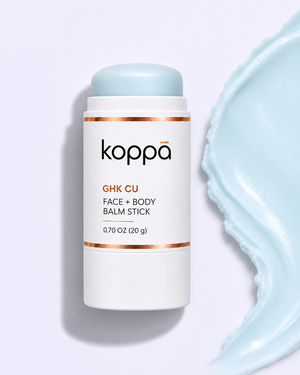
- After washing, reapply. One pass of the GHK-Cu Balm Stick over the backs of your hands and cuticles. It is a solid stick, so your palms stay clean and you can go straight back to your keyboard or phone.
- Sunscreen on the backs of your hands every morning, and again after you wash if you're outdoors. The Cleveland Clinic recommends broad-spectrum SPF 30 or higher every day on skin clothing doesn't cover.
- At night, three to four drops of the 2% GHK-Cu Serum on the backs of the hands, then the balm stick or a rich hand cream on top if your skin is dry. Night is when your hands stay unwashed for hours.
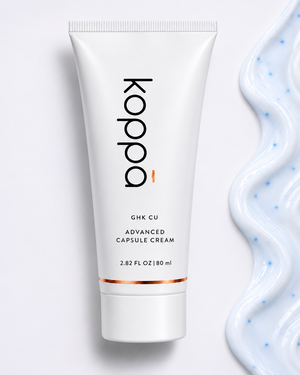
- For arms, one light pass of the balm stick over crepey patches, or the GHK-Cu Moisturizing Cream over a wider area.
If you already use copper peptides on your face, this is mostly habit. Take the last of the serum on your fingers down onto the backs of your hands, and keep the stick by the sink. Our guide to choosing between the serum, cream and stick goes through which format suits which area.
Which koppā product for hands and arms?
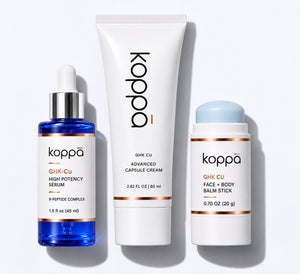
All three koppā products state their GHK-Cu percentage and are fragrance-free. Pick by where you are using it and how often that skin gets washed.
| Where and when | Product | Why this one |
|---|---|---|
| Backs of the hands and cuticles, through the day | GHK-Cu Balm Stick, 0.5% GHK-Cu, 20 g | Solid and water-free, with 15% jojoba oil and 10% squalane. Reapply after washing without using your fingers. Leaves a soft sheen, not a greasy film. |
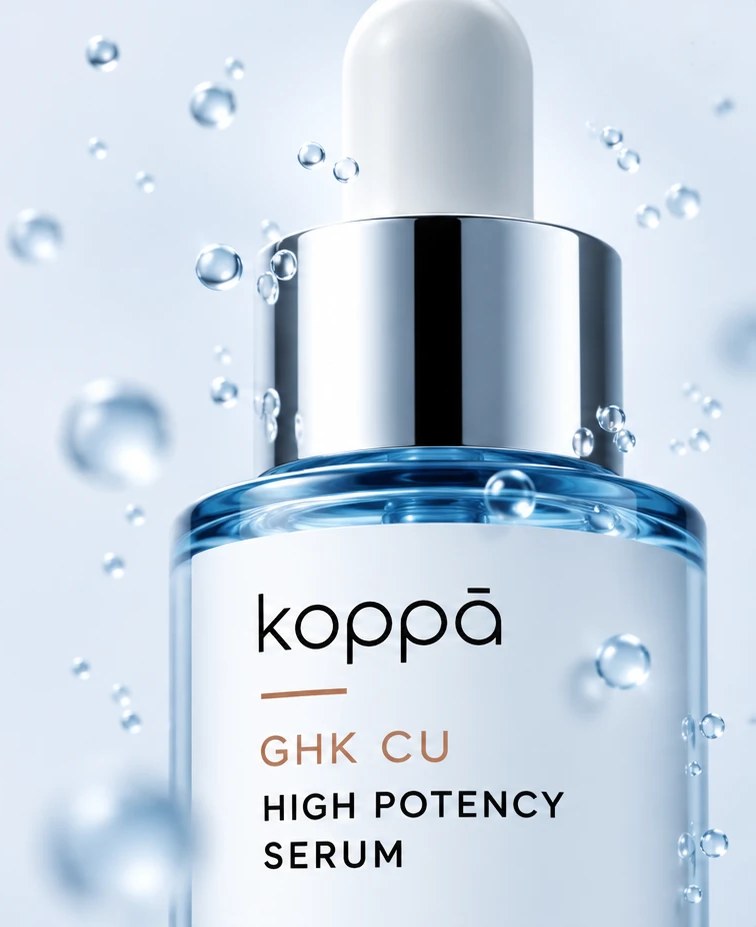
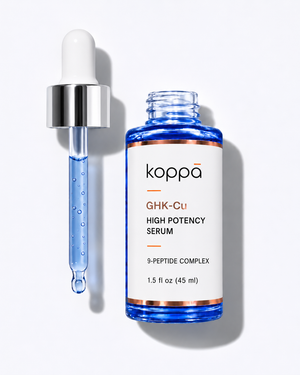
| Backs of the hands, at night | 2% GHK-Cu Serum, 45 ml | The highest GHK-Cu percentage in the range, in a water-light layer that sits under the balm or a hand cream. |
| Forearms, upper arms and chest | GHK-Cu Moisturizing Cream, 0.5% GHK-Cu, 80 g | Spreads over a wide area, with 5% niacinamide and squalane for dry skin. |
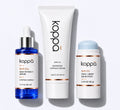
| Face, neck, hands and arms together | GHK-Cu Protocol, all three full sizes | Costs less than buying the three separately, and covers the day and night steps above. |
If you buy one thing for your hands, make it the Balm Stick. It is the step you will actually repeat, and it fits in a pocket or by the sink.
What to pair with GHK-Cu on hands and body
Hydrating ingredients like hyaluronic acid, glycerin and urea sit happily alongside copper peptides and help with the dryness side of crepey skin. Keep vitamin C and strong exfoliating acids for a different time of day, since they work against copper peptides in the same step. Our GHK-Cu layering guide covers each pairing, and copper peptides for the neck and décolletage looks at the other area most routines forget.
Frequently asked questions
Which koppā product is best for hands?
The GHK-Cu Balm Stick. Hands are washed many times a day, so the format that is easiest to reapply does the most. It is a 20 g solid stick with 0.5% GHK-Cu and eight supporting peptides, water-free and fragrance-free. Add the serum at night if you want a second step.
Can I use my face GHK-Cu products on my hands?
Yes. Nothing about a copper peptide formula needs to be hand-specific. The practical difference is how often you apply it: hands get washed many times a day, so reapplying matters more. A solid stick is the easiest format for that, and the serum suits the night, when your hands stay unwashed for hours.
Is the balm stick greasy on hands?
No. It goes on in one pass and leaves a soft sheen. Because it is a stick, the product goes on the backs of your hands and stays off your palms.
Can I travel with it?
Yes. It is a 20 g solid stick, not a liquid, so it sits outside the carry-on liquids limit. Dry cabin air is one of the things it was developed for.
Does crepey skin on arms respond the same way?
The biology is the same as on hands, and arms usually get washed less, so a cream or balm stays on longer.
Will copper peptides fade age spots on my hands?
GHK-Cu research focuses on collagen and skin density rather than pigment. Sunscreen stops spots getting darker, and any spot that is new, growing or changing should be checked by a doctor.
How long before I notice a difference in crepey skin?
Consistency matters more than any date: the face studies on copper peptides ran for 12 weeks of daily use. Hands feel softer and less dry straight after the balm. Use it every day and take a before photo so you can compare in the same light.
The short version
Hands and arms show age early because they get years of sun and daily washing. Crepey skin is mostly thin, dry, sun-worn skin. Copper peptides support collagen and skin density in research, and the face studies are encouraging. Sunscreen every morning, a balm you reapply after washing, and a serum at night cover it.
Start with the koppā GHK-Cu Balm Stick for hands, or take the GHK-Cu Protocol for the serum, cream and balm together.
Sources and further reading
- Loren Pickart et al. (2018). Regenerative and Protective Actions of the GHK-Cu Peptide in the Light of the New Gene Data. International Journal of Molecular Sciences. DOI: 10.3390/ijms19071987 mdpi.com